
Phase 1 Orthodontics Pembroke Pines Ages 6-10
Your kid's teeth are coming in crooked, and you're wondering if it's time to panic or just wait it out.
Maybe you spotted an overbite forming last month, or their teacher mentioned they're breathing through their mouth in class.
As a parent in Pembroke Pines, that nagging feeling that something needs to happen soon is real, and it makes sense.
Here's what most parents don't realize: catching dental issues early between ages 6 and 10 isn't about rushing into braces.
It's about guiding your child's jaw growth before permanent teeth create bigger problems down the road.
The American Association of Orthodontists recommends a first evaluation around age 7, not to scare you, but to give your kid's smile the best shot at developing naturally and straight.
Phase 1 orthodontics is the preventive stage that stops small issues from turning into expensive headaches later.
At SMILE-FX Orthodontic & Clear Aligner Studio, we make this whole process stress-free for you and your kid.
No fear-based tactics, no overselling—just real expertise that puts your child's growth first.
What Phase 1 Orthodontics Actually Is and Why It Matters
Think of Phase 1 as the early intervention stage before permanent teeth fully arrive.
Your child still has baby teeth mixed with permanent ones coming in, and their jawbones are still growing and reshaping.
This window between ages 6 and 10 is golden because their bones are soft and responsive to gentle guidance.
If you correct a crossbite or guide jaw growth now, you might cut future treatment time in half.
Not every kid needs Phase 1 treatment, though.
Sometimes just monitoring their growth is the smartest move, and we're honest about that.
The goal isn't to put braces on every child who walks through the door.
The goal is to set them up for a healthy, confident smile without unnecessary intervention.
At SMILE-FX, our board-certified orthodontists use cutting-edge technology like low-dose 3D scans and AI-driven planning to spot issues early and create a personalized roadmap for your kid's smile.
No guesswork, just science-backed guidance that actually works.
Common Early Signs Your 6-10 Year Old Might Need Phase 1 Treatment
You don't need a dental degree to notice when something seems off with your kid's teeth.
Here are the red flags that show up most often:
Crowding and Overlapping Teeth: When baby teeth start getting pushed out of the way or overlapping, it's usually a sign the permanent teeth don't have enough space.
Early intervention with tools like palatal expanders can guide jaw growth and create the room needed naturally.
Crossbite: This is when the top teeth sit inside the bottom teeth when biting down.
It sounds weird, but it throws off jaw development and can cause imbalances that get worse over time.
Catching it now means fixing it without surgery or major intervention later.
Open Bite: Your kid bites down and there's a gap between their top and bottom front teeth.
This often pairs with mouth breathing or tongue thrusting and needs early attention.
Mouth Breathing: If your child is breathing through their mouth instead of their nose, it changes how their face and jaw develop.
It sounds simple, but mouth breathing at this age can ripple into bigger alignment issues down the road.
Thumb Sucking Past Age 5: A little thumb sucking is normal for toddlers, but if it's still happening at 6, 7, or 8, it's shifting tooth position and jaw shape.
We can help break that habit gently while protecting your kid's smile.
Underbite or Overbite: When the lower jaw is too far forward or the upper teeth stick out too much, early treatment can guide growth in the right direction.
The earlier you address it, the less drastic the correction needs to be later.
Why Pembroke Pines Families Trust SMILE-FX for Early Orthodontics
You've got options in South Florida, but here's why parents in Pembroke Pines keep coming back to us.
We're just 10-15 minutes down Pines Boulevard from your neighborhood, and the expertise you get is worth every second of the drive.
We're not a high-volume mill cranking through kids in assembly-line fashion.
Each child gets a personalized plan based on their unique growth patterns and smile goals.
Convenience That Actually Works: Easy access from I-75, dedicated parking, and flexible scheduling around school pickups at Panther Run or Silver Trail Middle.
We get it—your family's busy, and finding time for orthodontic visits shouldn't be a nightmare.
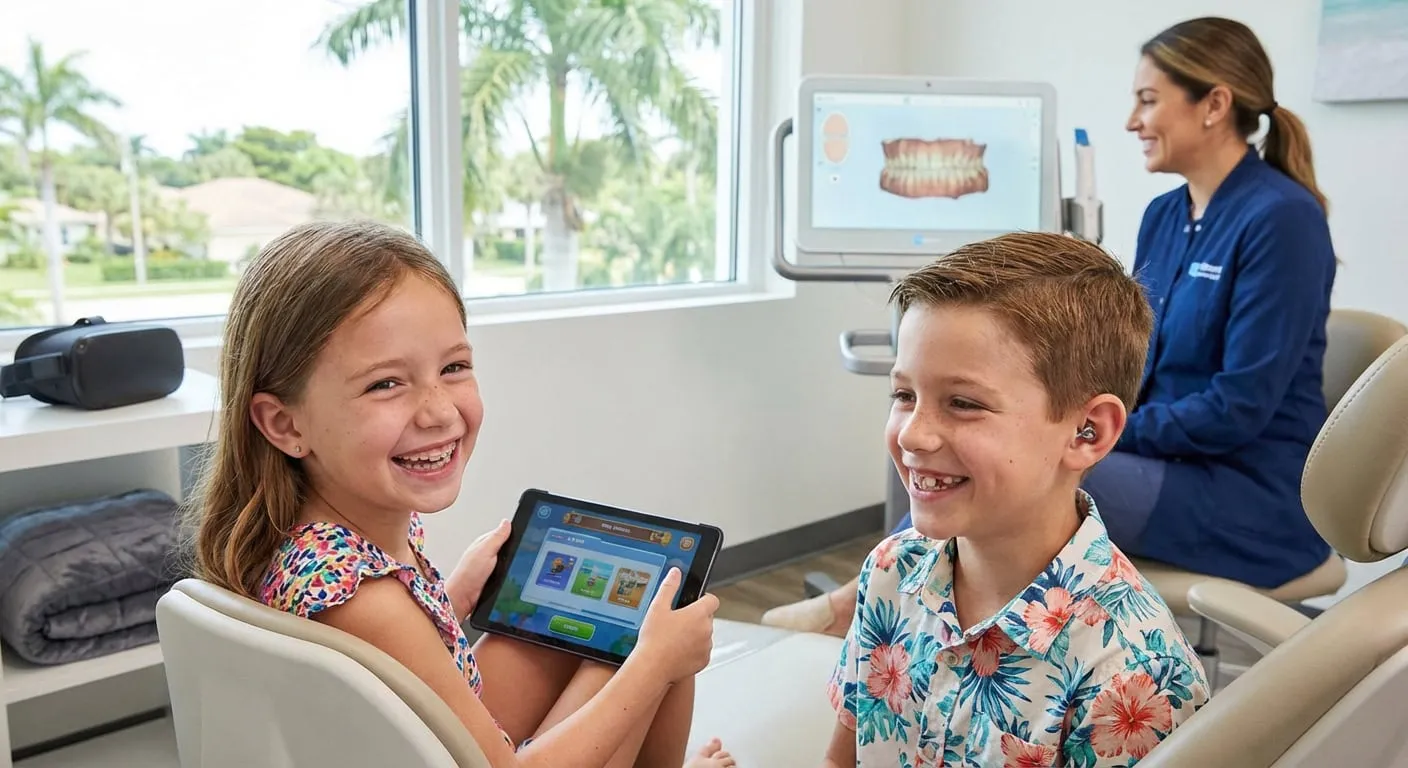
A Kid-Friendly Environment That Matters: Your child walks into a VIP suite designed for kids, not intimidating like a traditional dental office.
Noise-canceling headphones, personal TVs playing shows they actually want to watch, weighted blankets, games, snacks, and VR headsets.
We've trained our entire team to make kids feel comfortable and in control.
Board-Certified Expertise You Can Trust: Our orthodontists aren't general dentists dabbling in braces.
They're specialists with advanced training who've worked through thousands of cases and know exactly what they're doing with growing jaws and developing smiles.
Pediatric dentists across South Florida trust us, and that says something real.
Results That Actually Stick: Early intervention doesn't just look better, it works better.
By addressing issues now, we often cut future treatment time by up to 50 percent.
Your investment in Phase 1 saves time, money, and stress down the road.
What Actually Happens During Phase 1 Treatment
Phase 1 typically runs between 6 to 12 months, then we pause while your child continues growing and their permanent teeth come in.
It's not constant treatment for years like some people think.
We use gentle appliances like palatal expanders, custom aligners, or light braces depending on what your kid needs.
The goal is to work with their natural growth, not fight against it.
Your first visit is where the real work starts.
You and your child come in for 30-45 minutes, and we get to know you both.
No pressure, just a conversation about what you've noticed and what you're hoping for.
We take low-dose digital X-rays and 3D scans, explain everything in simple terms your kid can understand, and map out exactly what we're seeing.
Then we create a personalized growth roadmap that shows what happens next, whether that's treatment, monitoring, or a combination of both.
Your child leaves that first appointment knowing they're not being judged, they're being helped.
The Real Difference Between Phase 1 and Waiting Until the Teen Years
Some parents think they'll just wait and see if things straighten out on their own.
Sometimes that's the right call, and we'll tell you that honestly.
But when intervention is needed, waiting until your kid is 13 or 14 means working with a fully developed jaw that's harder to guide.
It also means bigger, longer, more invasive treatment down the line.
Early treatment uses the body's natural growth to do most of the heavy lifting.
Later treatment fights against growth and requires more force, more time, and more adjustment.
The AAO guidelines exist because the science is clear: early intervention is smarter.
Your kid gets straighter teeth faster, with less discomfort, and often without needing extensive treatment as a teenager.
Real Questions Parents Ask About Phase 1 in Pembroke Pines
Do all kids at age 7 need Phase 1 treatment? No, and we won't pretend otherwise.
Some kids have plenty of room, good alignment, and healthy growth patterns already in motion.
For them, watching and waiting is the right move.
Others benefit massively from early intervention.
That's why the first evaluation is about getting real answers for your specific child, not a sales pitch.
What if my kid is nervous about visiting an orthodontist? We hear this constantly, and it's totally valid.
Most kids have anxiety about dental stuff because they've had bad experiences or heard scary stories.
Our entire environment and approach is designed to flip that script.
Your child isn't lectured or scolded—they're treated like a person whose comfort and opinion matter.
How much does Phase 1 cost? Costs vary based on what your child needs, but early intervention is almost always cheaper than waiting until bigger problems develop.
We work with most insurance plans and offer flexible payment options that fit real family budgets.
At your free consultation, we'll talk numbers straight up with no hidden surprises.
What if Phase 1 doesn't work? It works because we're working with natural growth instead of against it.
In rare cases where something shifts unexpectedly, we adjust the plan.
Treatment isn't set in stone—it evolves as your child grows.
Phase 1 Fits Into Your Child's Bigger Smile Journey
Phase 1 is just the first act in your child's smile story.
After we pause Phase 1 treatment, we monitor growth for a few years while permanent teeth come in.
Around age 11 or 12, if additional treatment is needed, we move into Phase 2 with braces or clear aligners to fine-tune alignment and create that finished, confident smile.
By starting early, Phase 2 is usually shorter and less intense because we've already done the heavy lifting in Phase 1.
It's a smarter, kinder approach to getting your kid the smile they deserve.
Start With a Free 3D Scan and Smile Consultation
You don't need to commit to anything to get answers.
Book a free 3D scan and VIP smile consultation at SMILE-FX and see exactly what we see.
We'll show you your child's unique growth pattern, explain what's happening, and give you honest recommendations based on science and experience, not sales.
You'll leave that appointment knowing whether Phase 1 orthodontics is right for your 6-10 year old in Pembroke Pines or whether monitoring is the smarter move.
Either way, you've got a clear plan and a trusted team in your corner.
Check out real reviews from families just like yours who've been through Phase 1 with us, and see what their kids are saying about the experience.
Then reach out and let's get your child's smile on the right track with phase 1 orthodontics Pembroke Pines ages 6-10.
What Happens After Phase 1 Orthodontics: The Complete Timeline for Your Child's Smile
Phase 1 treatment wrapped up, and now you're wondering what comes next.
Your kid's jaw has shifted, some space got created, and things are looking better already.
But there's this gap between now and when they're a teenager where their permanent teeth are still coming in.
That waiting period isn't downtime—it's actually critical for making sure everything stays on track.
Let me walk you through what really happens between Phase 1 and Phase 2 orthodontics, and why the monitoring period matters more than most parents realize.
The Observation Period: Why We Don't Just Send You Home
After Phase 1 ends, treatment pauses but our relationship with your kid's smile doesn't.
Most parents think we're done, then they freak out when they get a call about a follow-up appointment.
That appointment is the whole point though.
Your child's jaw is still growing, their permanent teeth are erupting in waves, and we need to watch how everything aligns as it comes in.
Think of it like this: Phase 1 set the foundation, but the house is still being built.
If we don't keep an eye on it, something might shift that we need to catch early.
We typically schedule monitoring visits every 6 to 9 months during this window.
These aren't long appointments—usually 15 to 20 minutes—but they're important for catching any surprises before they become problems.
We check how new permanent teeth are positioning themselves, whether the jaw is growing evenly, and if any bite issues are developing.
Most of the time, everything's fine and we just reassure you and see you again in a few months.
Sometimes we spot something that needs gentle attention, and we can adjust before it gets bigger.
Understanding the Eruption Timeline: When Permanent Teeth Actually Come In
Your kid's permanent teeth don't all show up at once.
It's staggered over several years, and knowing the pattern helps you spot if something's off.
Around ages 10 to 12, the first and second molars usually come in.
These are big teeth, and they set the bite pattern for everything else.
If they're coming in crooked or positioned wrong, we catch it and can make small adjustments now instead of major ones later.
Between ages 11 and 13, the canines and premolars fill in.
This is when crowding sometimes shows up even if there was plenty of space before.
Growth is unpredictable, and sometimes jaws don't grow as much as we hoped during Phase 1.
By age 12 or 13, most permanent teeth have arrived, but roots are still developing for another couple of years.
This is usually when we're ready for Phase 2 if it's needed, because we can see the full picture now.
How Growth Changes Everything: What Phase 1 Achieved and What's Still Possible
Phase 1 created space and guided jaw growth while your kid was still young.
But here's the thing nobody mentions: kids' jaws keep growing until their late teens.
Sometimes that additional growth works in our favor and fixes things we couldn't completely correct in Phase 1.
Sometimes it throws a curveball and we need to adjust our plan.
This is why the observation period isn't just about waiting.
We're actively tracking growth and seeing if Phase 1 achievements are holding up, if growth is improving the bite, or if we need to step in again.
A kid who had moderate crowding in Phase 1 might end up fine just because their jaw grew more than expected.
Another kid might need Phase 2 because growth revealed an underbite that wasn't obvious before.
At SMILE-FX, our cutting-edge technology tracks these changes precisely, so we're making decisions based on real data, not guesses.
The Signs That Phase 2 Is Coming: How to Know When Braces or Clear Aligners Are Next
Most kids do need some kind of Phase 2 treatment, but not always.
Some get lucky and their Phase 1 work plus natural growth gets them to a good spot.
For kids who do need Phase 2, we usually know by age 11 or 12.
We start having conversations with parents about what's coming, what the options look like, and what the timeframe feels like.
You might notice your kid's bite is getting a little crowded again, or their alignment shifted.
That's us noticing it at the same time through monitoring appointments, so nothing catches you off guard.
Phase 2 is when we do the finishing work: fine-tuning bite alignment, closing any remaining gaps, and getting teeth perfectly straight.
Traditional braces, clear aligners, or Invisalign are all options depending on what your kid's situation is and what they're comfortable with.
The advantage of Phase 2 after Phase 1 is that it's usually way shorter and less dramatic than if we'd tried to fix everything as a teenager.
Instead of 2 to 3 years of heavy treatment, you're looking at 12 to 18 months of refinement.
What You Actually Need to Do During the Monitoring Period
Your job during the observation window is pretty straightforward.
Show up to appointments as scheduled.
We're tracking everything else.
Keep an eye out for obvious stuff though: if your kid's bite is shifting noticeably, if new crowding shows up, if they're having trouble chewing, or if they're mouth breathing again.
These things warrant a call to us outside of regular monitoring.
Maintaining good oral hygiene matters a lot more now because permanent teeth are erupting and their roots are still developing.
Cavities or gum problems during this phase can mess with how teeth position themselves.
Keep up with regular dental checkups from your family dentist too.
We're partners in this—they're watching for cavities and gum health, we're watching for alignment and growth patterns.
If your kid had a palatal expander in Phase 1, make sure it's not being missed or that it's not stuck.
Sometimes kids adjust to it and parents forget it's even there, but it's still doing work.
The Conversation About Phase 2 Options: Making It Real
When we know Phase 2 is coming, we sit down and talk through options together.
Some kids want braces because their friends have them.
Some kids are desperate to avoid them and want clear aligners.
Some families have insurance considerations or budget preferences.
We work with what makes sense for your family, not what makes the most sense for us.
At SMILE-FX, we treat all kinds of cases, so we're not pushing you toward one option.
We're explaining what each choice means for treatment length, effectiveness, and what your kid actually has to do to make it work.
Clear aligners require discipline because your kid has to wear them and keep them clean.
Braces are on all the time, so there's less responsibility from your kid, but there are food restrictions and cleaning is more involved.
Both work great when done right.
The best choice is the one your kid will actually comply with.
Real Talk About Costs and Insurance During Phase 2
If Phase 1 was covered by insurance, Phase 2 might be too.
Some plans treat them as one case and divide coverage across both phases.
Some treat them separately.
We handle all of this with your insurance, so there are no surprises.
If Phase 1 cost you money out of pocket, you probably have some idea what Phase 2 costs.
Usually it's similar or sometimes less because the heavy lifting was already done.
We offer payment plans that actually work for families, not plans that pretend to work.
Our goal is to make Phase 2 affordable, not impossible.
Common Questions About the Monitoring Period
Do we have to come back for monitoring if everything looks fine? Yes, because "looks fine" to you and "is developing perfectly" to us are different things.
A tooth might look straight but be erupting at an angle that will cause problems in a year.
Monitoring catches this before it becomes your problem.
What if we move away from Pembroke Pines during this period? We'll set you up with a treatment plan and monitoring protocol that any orthodontist can follow.
Bring your records and explain the Phase 1 work that was done, and they'll pick up where we left off.
We want you to stay with us, but we're realistic about life happening.
Can we speed this up and just go straight to Phase 2? Not really, because we don't know yet what Phase 2 actually needs to do.
Jumping ahead before permanent teeth are in is how you end up doing treatment twice.
Patience here saves you time later.
What if Phase 1 didn't work the way we hoped? We adjust.
Sometimes growth does something different, sometimes we need a different appliance or a different approach.
Treatment plans aren't rigid—they evolve as your kid grows.
Keeping Your Kid Engaged With Their Own Smile
During this monitoring period, your kid is old enough to understand what's happening and what's coming.
Bring them into the conversation.
Show them their 3D scans and explain what we're watching for.
Kids are way more likely to show up for appointments and take care of their teeth if they feel like participants, not subjects.
Some kids get excited about the idea of Phase 2 and having a smile they're proud of.
Some kids would rather not think about it.
Either way, honesty and inclusion beats surprises and secrecy.
Real families in our practice talk about their kids' experiences, and what we hear over and over is that kids respond best when they feel heard and understood.
The Bridge Between Phases: Making Sure Nothing Gets Lost
Phase 1 ends but your orthodontic care doesn't just pause and restart.
It continues in a different mode.
We keep detailed records of everything Phase 1 accomplished.
When Phase 2 starts, we build on that foundation instead of starting from scratch.
This is why continuity of care matters.
If you move your kid to a different orthodontist between phases, that history stays with you, but the personal relationship and detailed knowledge of your kid's specific growth pattern doesn't transfer the same way.
At SMILE-FX, we stay connected with your family during the whole journey, which means no information gets lost and no momentum gets wasted.
Preparing Your Kid Mentally for Phase 2
If your kid had a good experience in Phase 1, Phase 2 is usually less intimidating.
They know what to expect from appointments, they're comfortable in the office, and they understand what braces or aligners actually feel like.
The unknown part is gone, which is huge for kids' anxiety.
That said, Phase 2 involves more visible appliances for most kids.
Braces are obvious, and some kids feel self-conscious about that.
Clear aligners are less obvious, but they require responsibility.
We talk kids through both scenarios before Phase 2 starts, so they're mentally prepared and they feel like they had a say in the choice.
Kids who choose their own treatment path are way more committed to making it work.
Timeline Expectations: When Phase 2 Actually Starts
Most kids are ready for Phase 2 between ages 11 and 13.
Some go a little earlier if growth is ahead of schedule.
Some go a little later if we're waiting for more permanent teeth to erupt.
There's no universal rule because every kid's development is different.
We give you a realistic timeline at the end of Phase 1 based on your specific kid's growth pattern and what we're seeing during monitoring.
That timeline might shift a bit as your kid grows, and we'll keep you updated.
Knowing roughly when Phase 2 is coming helps you plan financially and mentally.
Making the Most of Your Free Consultation to Understand the Full Picture
When you first come in, ask about the complete orthodontic journey, not just Phase 1.
A good orthodontist should paint the whole picture for you: what Phase 1 does, what the monitoring period looks like, when Phase 2 might be relevant, how long everything takes, and what it costs.
If someone only talks about Phase 1, they're not giving you the full story.
Book a FREE 3D scan and VIP smile consultation where we explain the complete treatment path for your child, answer your real questions, and show you exactly what we see with our cutting-edge technology.
No pressure, no overselling, just straightforward information about what your kid's smile journey actually looks like from start to finish.
That way you're never surprised, you always know what's coming, and you can make decisions that work for your family.
The Complete Guide to Orthodontic Treatment Timing: From Early Intervention to Adult Correction in South Florida
You're sitting in the waiting room wondering if you should have waited longer, started sooner, or just picked a different path entirely.
The reality is this: there's no one perfect age to get orthodontic treatment, but there are smart windows of opportunity that most people miss.
If you're a parent in South Florida trying to figure out when your kid actually needs braces or clear aligners, or if you're an adult thinking you missed your chance years ago, this matters.
The difference between starting treatment at the right time versus the wrong time can save you thousands of dollars and years of discomfort.
Why Timing Matters More Than Most People Realize
Your teeth don't just sit there staying the same forever.
They shift throughout your entire life based on jaw growth, muscle tension, and how your bite works together.
A kid's jaw is still developing, which means we can guide growth instead of fighting against it.
An adult's jaw is done growing, which means we work with what's there and use different strategies.
The best orthodontist near me isn't just someone with credentials, it's someone who understands this timing piece and doesn't oversell treatment you don't need yet.
At SMILE-FX, our board-certified orthodontists map out the complete timeline for your specific situation instead of pushing whatever treatment makes money today.
Early Intervention: The Ages 6-10 Window Nobody Talks About
Phase 1 orthodontics between ages 6 and 10 isn't about straightening teeth, it's about guiding jaw development.
This is when permanent teeth are still coming in and bones are soft enough to be guided.
If your kid has crowding, a crossbite, or an underbite showing up right now, this is the golden window.
The American Association of Orthodontists recommends a first evaluation around age 7, and there's real science behind that recommendation.
Early intervention can cut future treatment time in half because you're working with natural growth, not against it.
Kids who get early orthodontic care often need shorter Phase 2 treatment in their teens, which means less time in braces or aligners and way less cost overall.
This is the best orthodontist for kids South Florida approach that actually works.
The Monitoring Years: Ages 11-13 and Why Patience Matters
After Phase 1 ends, there's usually a monitoring period where permanent teeth are erupting and you're tracking growth.
This isn't downtime where nothing's happening.
Your kid's jaw is still developing, new teeth are coming in, and small shifts happen that need watching.
Missing these monitoring appointments is how you end up with bigger problems that cost more to fix.
Every 6 to 9 months we take a look, check alignment, and decide if small adjustments are needed or if things are progressing perfectly on their own.
Sometimes kids grow in a way that actually fixes issues Phase 1 didn't completely solve.
Sometimes we catch something early that would've been expensive later.
Either way, knowing what's happening beats guessing.
Phase 2 and Teen Years: The Real Straightening Begins
By age 12 or 13, most kids have enough permanent teeth that we can see the full picture.
If Phase 2 is needed, this is when braces or clear aligners typically start.
The advantage of getting Phase 1 done first is that Phase 2 is usually 12 to 18 months instead of 2 to 3 years.
You're refining alignment, not doing massive jaw movement and tooth repositioning.
Most teens would rather skip orthodontia altogether, but many actually prefer Invisalign or clear aligners over traditional braces because they're less visible at school.
The tradeoff is compliance: aligners only work if your kid actually wears them.
Braces work regardless because they're attached to your teeth.
We talk through both options with your family and let your kid have a say in which route makes sense.
Adult Orthodontics: It's Never Too Late
Maybe you're 25, 35, or 55 and you've always wanted a straighter smile but thought the ship sailed years ago.
It didn't.
Adult orthodontics in Aventura and across South Florida is booming because people finally realize that straight teeth aren't just a teenage thing.
Teeth shift throughout your entire life anyway, so you might as well guide them in the right direction.
The difference with adult treatment is that your jaw isn't growing anymore, so we're not relying on growth to do the heavy lifting.
We're using brackets, wires, or aligners to move teeth directly into position.
Adult cases sometimes take a little longer than teen cases, but modern technology has cut that time down dramatically.
Someone starting braces or aligners at 40 typically sees results in 18 to 24 months, which is totally reasonable.
Orthodontics for adults Miami has become mainstream because employers and partners actually care about smiles, and more importantly, people care about how they feel about themselves.
Does Insurance Cover Braces? The Money Question Everyone's Asking
This is the question that stops people from even scheduling a consultation.
The answer is: sometimes yes, sometimes no, and it depends on your specific plan.
Most dental insurance plans cover orthodontia for kids because there's clear medical benefit in correcting bite issues and guiding jaw growth.
Coverage for adults varies wildly.
Some plans cover nothing, some cover up to 50 percent, and some have an annual maximum that gets split across your treatment.
The only way to know is to call your insurance company with your plan number and ask specifically about orthodontic coverage.
If you don't have insurance or your coverage is limited, that's when financing comes in.
Affordable braces South Florida doesn't mean cheap braces that don't work.
It means payment plans that actually fit your budget.
Many practices advertise $0 down braces financing South Florida, and we work with that too, but make sure you understand the interest rates and monthly payments before signing anything.
Technology That Changes Treatment Timing
The orthodontics your parents got is nothing like what we do now.
Modern cutting-edge technology like 3D imaging, AI-driven planning, and advanced brackets means treatment happens faster and more accurately.
We can see exactly how your teeth will move before we even start, which cuts surprises down to almost zero.
SureSmile technology used by top-rated orthodontist Fort Lauderdale practices like ours creates custom wires that move teeth more efficiently.
Clear aligners use 3D modeling to map out every single tooth movement step by step.
This tech-driven approach shortens treatment time across the board, which means faster results whether you're 8 or 58.
What Happens If You Wait Too Long
There's always a temptation to wait and see if things fix themselves.
Sometimes they do, but usually they don't.
Crowding doesn't get better on its own, it gets worse as your jaw runs out of space.
Bite problems don't resolve without intervention, they cause jaw pain, uneven wear on your teeth, and speech issues.
Waiting until your kids are teenagers or adults means your orthodontist has to work much harder and longer to fix problems that could've been guided during growth years.
It also means your kids spend more time self-conscious about their teeth during the years they care most about how they look.
The cost difference between starting early and starting late is usually at least 30 to 50 percent more for late starts.
Complex Cases Need The Right Specialist
Some kids and adults have bite problems that go beyond basic crowding or spacing.
An underbite, severe overbite, asymmetrical jaw growth, or a combination of issues needs someone who knows what they're doing.
This is where the difference between a general dentist doing braces and a specialist becomes real.
The best orthodontist for complex cases South Florida is someone with advanced training who's treated thousands of cases and knows how to handle the tough ones.
SMILE-FX treats all kinds of complex cases and our specialists have the training and experience to solve problems that other practices aren't comfortable handling.
If someone tells you they can't fix your bite, it might be worth getting a second opinion from a board-certified specialist.
Invisalign Cost South Florida: What You're Actually Paying For
Clear aligners cost roughly the same as traditional braces in most cases, but people assume they're more expensive because they're more popular.
Invisalign cost South Florida ranges from about 3,000 to 8,000 dollars depending on how complex your case is and how long treatment takes.
What people don't realize is that clear aligners require you to do more of the work: wearing them 22 hours a day, keeping them clean, and remembering to switch to new trays on schedule.
If your kid or you aren't disciplined about that, you'll waste money because the treatment won't work.
Traditional braces cost about the same but don't require that discipline because they're always on your teeth doing the work.
The right choice depends on your specific situation, your compliance level, and what matters most to you visually.
Finding Your Ideal Timing: The Consultation That Matters
The best way to figure out your actual timeline is to get a real evaluation from someone who knows what they're doing.
Not a sales pitch, just a honest assessment of where you are and what makes sense next.
When you come in for a braces near me search, you want someone who says "wait and monitor" when that's the right call, not someone who says "start treatment immediately" because that's how they make money.
A top-rated orthodontist near me understands that your timeline matters more than their schedule.
Book a FREE 3D scan and VIP smile consultation where we look at your complete situation, explain what we see, and map out what actually makes sense timing-wise for your family.
You'll walk out knowing whether treatment makes sense now, in 6 months, or down the road, and you'll have a clear plan either way.
No pressure, no sales talk, just real guidance based on science and experience.