
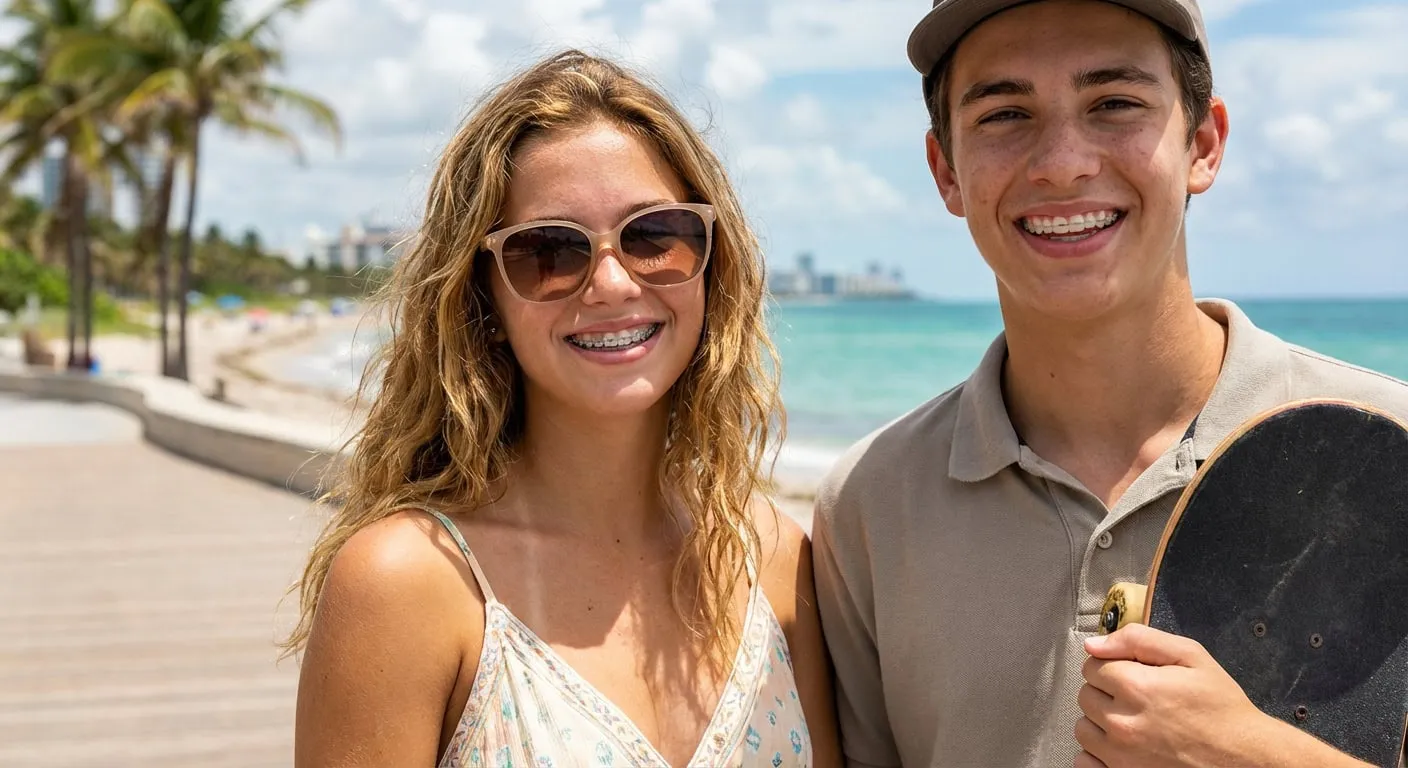
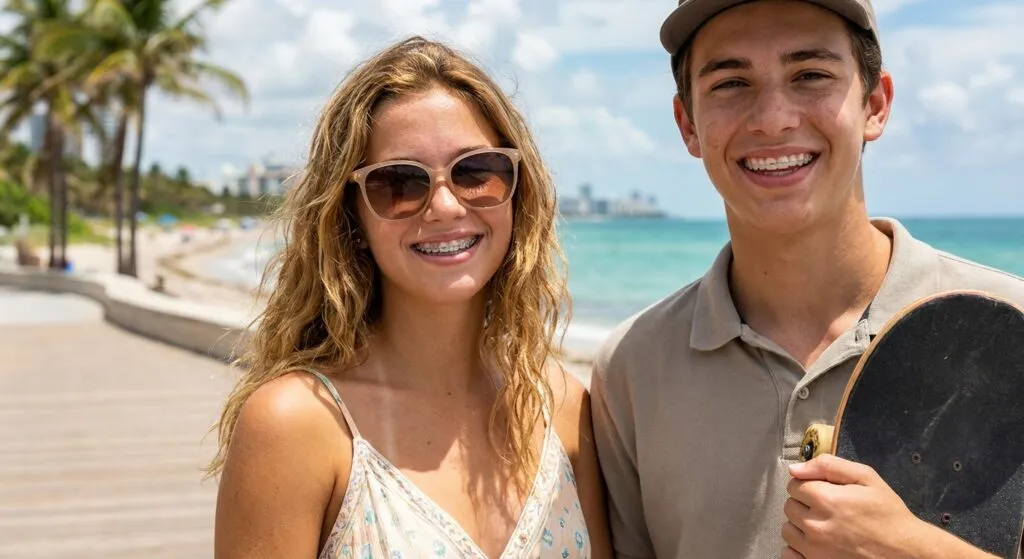
Braces vs Invisalign for Teens in Broward
Your teen just got told they need braces or aligners.
Your first thought?
"Great, now my kid's going to hate me for the next two years."
Here's the thing: that doesn't have to be your story.
The choice between braces and Invisalign in Broward County isn't just about picking one and hoping for the best.
It's about understanding what actually works for your kid's life, their sports schedule, and their comfort level.
At SMILE-FX Orthodontics in Miramar, we've guided hundreds of South Florida families through this exact decision.
And what we've learned is that there's no one-size-fits-all answer.
Some teens thrive with traditional braces.
Others do way better with clear aligners.
The key is knowing the real differences so you can pick what actually sticks for your situation.
The Real Talk About Teen Orthodontics
Let's be honest: getting your teenager to stick with any orthodontic treatment requires more than just picking the right appliance.
It requires picking something they'll actually use consistently.
Most teens have packed schedules.
They're juggling school, sports, social events, and probably more screen time than you'd like to admit.
So when you're deciding between braces for teens and clear aligners, you're not just thinking about teeth.
You're thinking about whether they'll forget to wear it, whether it'll break during football practice, and whether they'll actually show up to appointments.
Teen orthodontics is about balancing three things: effectiveness, follow-through, and convenience.
Metal and ceramic braces deliver rock-solid control for complex cases like severe crowding or bite problems.
Invisalign and clear aligners work great for mild to moderate issues, but they need your teen wearing them 22 plus hours daily.
That's the honest difference.
Braces: The Reliable Workhorse
Traditional metal braces have been the gold standard for a reason.
They work.
Clinical data shows braces achieve predictable results in 18 to 24 months for most teens.
You can't lose them.
Your kid can't forget to wear them.
They're fixed to your teeth, so there's no compliance question.
For active South Florida teens playing football, lacrosse, or competing in other sports, braces are tough.
They can take a hit and keep going.
Your teen can eat a sandwich without removing anything.
They can play sports without worrying about losing an aligner on the field.
That peace of mind matters.
Ceramic braces blend in way better than people think.
If aesthetics matter to your teen, ceramic options are nearly invisible.
They look less "metal mouth" and more just part of your smile.
The downside?
Braces require more careful brushing and flossing because wires and brackets trap food.
The first few days can feel sore as your teeth adjust.
And if your teen plays contact sports, they might want a mouthguard, which takes a little getting used to.
Check out our complete braces options to see what works best for your situation.
Invisalign and Clear Aligners: The Invisible Play
If your teen cares about how they look during treatment, Invisalign and other clear aligners are the move.
Nobody notices them.
Your kid can smile for photos, record videos, and hang out with friends without feeling self-conscious about their teeth.
Aligners are removable, which means eating is way easier.
No restrictions on what they can eat.
Brushing and flossing is simpler because you just take them out.
That's a big deal for teens who are already not great at dental hygiene.
The problem?
They only work if your teen actually wears them.
Twenty-two plus hours daily isn't a suggestion.
It's a requirement.
If your kid is the type to lose things, forget commitments, or push back on rules, clear aligners might become a battle.
With Invisalign success, we're talking about a teenager who's willing to keep the trays in most of the day, every day.
They're great for mild to moderate cases, but they're not the move for severe crowding or complex bite issues.
At SMILE-FX, we use AI-powered planning to make aligners work faster and better.
Many of our teens finish treatment in 12 to 18 months rather than the typical 18 to 24 months you'd see elsewhere.
That's the benefit of working with specialists who have the right technology.
Learn more about clear aligner options here.
Durability and Sports: What Actually Matters for Broward Teens
Here's what we hear all the time from parents whose kids play sports: "My teen plays three sports.
What if braces break?"
Fair question.
Braces are incredibly durable.
They're designed to take punishment.
Invisalign trays are clear plastic.
They can crack if your teen doesn't remove them before sports, gets hit in the face, or drops them.
If your teen is serious about football, lacrosse, baseball, or any contact sport, braces handle it better.
They won't crack.
They won't get lost.
Your kid plays hard, and the braces stay put.
If your teen plays less aggressive sports like tennis, swimming, or track, Invisalign works fine as long as they remember to take them out during practice.
The Hygiene Question
Teeth cleaning matters, and honestly, it's one area where aligners have a real advantage.
With braces, food gets trapped around brackets and wires.
Brushing takes longer and requires more technique.
Flossing is harder because you have to thread it around wires.
With aligners, your teen just removes them, brushes and flosses normally, then puts them back in.
It's simple.
Less room for mistakes.
And when you're dealing with a teenager who might already be cutting corners on dental care, that simplicity counts.
That said, some teens forget to brush before putting aligners back in, which defeats the purpose.
The reality is that dental hygiene is more about your teen's habits than about which appliance you choose.
Comfort and Adjustment Time
Braces feel weird for about three to five days when they first go on.
Your teen's mouth feels sore, their teeth ache a little, and eating soft foods for a few days becomes the new normal.
After that, they mostly forget the braces are there.
Aligners feel milder when you switch to a new set.
The adjustment is gentler and shorter.
But the tradeoff is that your teen has to swap aligners every one to two weeks, so there's constant low-level adjustment happening.
Using our remote monitoring technology, we can track how your teen's teeth are moving and make adjustments without them having to come in as often.
Less time in the chair, more freedom for their schedule.
What's Really Different About Getting Treatment in Miramar
Working with a board-certified orthodontist who specializes in teens makes a difference.
We see the same cases over and over, so we know what works and what doesn't.
General dentists offering braces or aligners might be fine for simple cases, but complex situations get referred to us anyway.
Why come straight to a specialist?
Because we have the right technology, we understand teen psychology, and we build treatment plans around the way your kid actually lives.
We're not running an aligner mill where every case gets the same treatment.
Each teen gets a plan that fits their life.
Families from Pembroke Pines drive to us because they know we're 10 minutes away and we have after-school appointments.
Parents from Hollywood trust our bilingual care.
Weston families love that we offer virtual check-ins so they don't have to drive every time.
Davie and Fort Lauderdale parents prioritize our evening hours and emergency support.
That's not marketing talk.
That's actual convenience built into how we run the practice.
See what makes us different at SMILE-FX's approach.
The Payment Reality
Neither braces nor Invisalign should break your budget.
We work with most insurance plans and maximize what your coverage actually gives you.
For what insurance doesn't cover, we offer interest-free payment plans so you're not stressed about the cost.
Every family's situation is different, and we're transparent about what things actually cost.
In your free consultation, we show you exactly what you're paying for and what your options are.
No surprises, no upselling.
So Which One Should Your Teen Actually Get?
If your teen plays contact sports, isn't great at remembering things, or has a complex bite issue, braces win.
If your teen cares about appearance during treatment, is responsible about following through, and has a mild to moderate orthodontic issue, clear aligners make sense.
The truth is somewhere in between for most kids, which is why talking to a specialist matters.
We've worked with hundreds of Broward County teens.
We know what works and what doesn't.
And we build plans that your kid will actually stick with because we understand that the best treatment is the one that gets finished.
Ready to figure out what's right for your teen?
Book your free 3D scan and VIP smile consultation at SMILE-FX here.
We'll show you exactly what we're working with, give you honest recommendations, and answer every question you have.
No pressure, just real talk about what your teen needs.
SMILE-FX Orthodontics: Braces and clear aligners for teens across Broward County that actually work because we build them around how your kid lives.
What Happens After Your Teen Gets Braces or Clear Aligners: The Real Timeline and What to Expect
You just scheduled your teen's orthodontic appointment.
Now you're wondering what comes next.
How long does treatment actually take?
What's life like with braces or aligners?
When do you see real changes?
These questions keep running through your head because you want to know if your teen will have a straight smile before prom or graduation.
Here's what nobody tells you: the first week is the weirdest.
The second month is when things get real.
And by month six, most teens stop thinking about their orthodontic treatment altogether because it just becomes part of their routine.
I've walked families through this process hundreds of times at SMILE-FX.
Every single one of them asks the same questions.
Every single one of them worries about the same stuff.
And every single one of them comes out surprised at how normal it all becomes.
The First Week: When Your Teen's Mouth Feels Like an Alien Landscape
Day one with braces feels big.
Your kid comes home and their mouth feels weird.
Not painful necessarily, but weird.
The brackets are smooth once they adjust, but the wires feel like they're doing something.
That's because they are.
With clear aligners, day one is gentler.
Your teen puts in a new set of trays and feels mild pressure.
It's less shocking to the system than traditional braces, but it's still pressure.
The real move here is soft foods for the first three to five days.
Soup, yogurt, mashed potatoes, pasta without chunks.
Your teen can eat normally again pretty fast, but those first few days matter.
Pain medicine?
Not usually needed, but ibuprofen helps if soreness shows up.
Most teens feel sore for about three days with braces.
With aligners, soreness is milder and usually gone faster.
Weeks Two Through Four: The New Normal Kicks In
By week two, your teen's mouth has adapted.
The wires don't feel foreign anymore.
Eating is easier.
They're figuring out what foods work and what doesn't.
This is when the real work starts.
Not the work of wearing the braces or aligners, but the work of keeping teeth clean.
This matters way more than people think.
With traditional braces, your teen needs to learn a new brushing technique.
Brush at an angle, get under the wire, get above the bracket.
It takes practice, but it becomes automatic.
Electric toothbrushes help a ton here because they do more of the work.
With clear aligners, your teen needs to remember to remove them before eating and before brushing.
Sounds simple.
Isn't always simple when you're a teenager.
Schedule a quick check with your general dentist around week three or four.
Not required, but smart.
They can spot hygiene issues early and help your teen dial in the right technique.
Month Two: When Progress Becomes Visible
This is the magic month.
Your teen starts seeing actual changes.
Teeth that were crooked are shifting.
Gaps are closing.
This is when excitement kicks in because the treatment is working.
With braces, month two is when your orthodontist might make adjustments.
Tighter wires, new configurations.
This keeps teeth moving in the right direction.
With clear aligners, you're moving to the next set of trays.
That's when your teen feels the pressure again, but it's less intense than day one because they understand what's happening.
This is also when your teen should get comfortable with their appointment schedule.
At SMILE-FX, we use advanced technology to track tooth movement, which means fewer in-person visits.
Your teen comes in less often, which keeps their schedule flexible.
Month Three to Six: This Is My Life Now
By month three, orthodontic treatment stops being something your teen thinks about.
It becomes part of their day like brushing their teeth.
Changes are stacking up now.
A tooth that was severely crowded is straightening out.
An overbite is correcting.
These shifts take time, but they're happening consistently.
This is when most teens actually want to show people their progress.
They're proud of it.
You'll catch them smiling at their own teeth in the mirror.
Appointment intervals stretch out a bit at this point.
Instead of monthly visits, you might come in every six to eight weeks.
Less disruption to their schedule.
More freedom to just live.
Common Questions Parents Ask at This Stage
Can my teen still play sports?
Absolutely.
Braces are tough.
Clear aligners just need to come out before the game or practice.
We work with athletes all the time, and most of them finish treatment on schedule with no issues.
What if the braces break?
It happens.
Not often, but it happens.
Hard candy, sticky candy, biting into apples with front teeth.
When it breaks, call us.
We get your teen in quickly.
Emergency appointments are part of what we do.
Will my teen's teeth get white?
Teeth whitening works better after treatment when brackets are off.
But your teen's teeth will look whiter naturally once they're straight and gaps are closed.
The geometry changes everything.
How often does my teen need to come in?
Every four to eight weeks after the initial phase.
Some months it's less.
We work around school schedules, not the other way around.
Month Six Through Twelve: Significant Transformation
If your teen started with moderate crowding or spacing issues, they're looking at a noticeably different smile by now.
This is the month where your teen's friends start commenting on the changes.
Bite correction takes longer than spacing correction.
If your teen had an overbite, underbite, or crossbite, these corrections are happening in the background.
You might not see them as obviously, but the teeth are moving.
Appointment frequency stays the same.
Every four to eight weeks keeps treatment moving forward without overcomplicating your schedule.
Clear aligner wearers should be trading in their trays every one to two weeks at this point.
It's a rhythm that becomes automatic.
Your teen doesn't have to think about it.
Month Twelve to Eighteen: Seeing the Full Picture
Most moderate cases are wrapped up somewhere in this window.
Your teen might be getting ready for the final phase, which is retention.
Retention is what keeps teeth from drifting back to where they started.
It's not optional.
It's the difference between a straight smile that lasts and a smile that slowly reverts.
There are different retention options.
Fixed retainers glued behind teeth that don't come off.
Removable retainers you wear at night.
Most teens do a combo of both.
This is when your teen really understands that orthodontics is about long-term thinking.
The braces or aligners did the work.
The retainer keeps the work done.
Eighteen to Twenty-Four Months: Finishing Strong
Complex cases or severe bite problems take the full timeline.
By month eighteen to twenty-four, your teen's teeth are where they're supposed to be.
The final appointments are about locking everything in place.
Making sure the bite is perfect.
Making sure symmetry is balanced.
Making sure the smile matches the face.
Then the braces come off or the aligners stop.
This moment hits different.
Your teen sees their face without brackets for the first time in years.
Siblings notice immediately.
Friends comment.
It's real.
After Treatment: The Retention Game Starts
Retention is where most people mess up.
They get the braces off, feel relieved, and stop thinking about their teeth.
Six months later, teeth start shifting back.
Your teen needs to understand that wearing a retainer at night isn't optional.
It's the price of keeping the smile you just paid for.
At SMILE-FX, we make retainers part of the conversation from day one.
Not as a surprise at the end, but as the reality of what comes next.
Your teen wears a retainer for the first year every single night.
After that, most people shift to just wearing it a few nights a week.
Some wear it forever.
Depends on how much their teeth want to move back.
What About Cost Over the Treatment Timeline?
Treatment cost gets broken into monthly or bi-weekly payments.
You're not paying everything upfront.
You're spreading it across the months you're getting treatment.
At SMILE-FX, we work with your insurance to maximize benefits.
We also offer interest-free payment plans so the financial piece doesn't stress you out while your teen's teeth are straightening.
Your first consultation includes a full breakdown of costs, timeline, and payment options.
No surprises, no upselling.
Real Talk: Managing Your Teen's Expectations
Tell your teen before treatment starts that the first week feels weird.
Tell them by month two they'll see progress and get excited.
Tell them by month six it's just normal life.
Tell them that this is temporary discomfort for permanent results.
Most teens understand that.
Some need reminding.
The teens who do best are the ones who understand the why.
Why they need straight teeth.
Why the retainer matters.
Why the appointments aren't optional.
Parents who explain the long view instead of forcing the treatment see way better results.
Your teen takes ownership.
That changes everything.
Choosing the Right Team for the Journey
Getting your teen through orthodontic treatment successfully means working with a practice that understands teens.
Not just their teeth, but their schedule, their psychology, their sports commitments.
Our board-certified specialists at SMILE-FX see hundreds of teens every year.
We know what works.
We know what doesn't.
We build treatment plans that fit real life, not just textbook orthodontics.
We've got evening appointments so your teen doesn't miss school.
We've got virtual check-ins so you don't drive every time.
We've got emergency slots so a broken bracket doesn't derail the week.
We're in Miramar, close to Pembroke Pines, Hollywood, Davie, Weston, and Fort Lauderdale.
Most families are less than fifteen minutes away.
FAQ: Treatment Timeline and What to Expect
How long does orthodontic treatment usually take for teens?
Typically eighteen to twenty-four months for moderate cases.
Complex bite problems can take up to twenty-four months or slightly longer.
Some mild spacing cases wrap up in twelve to eighteen months.
Will my teen be in constant pain?
No.
The first few days feel weird and slightly sore.
After that, occasional mild soreness when adjustments happen.
Nothing that stops them from normal activities.
Can my teen eat normal food with braces?
Yes, after the first week.
Avoid super hard, sticky, or crunchy foods.
Basically, nothing that would break a tooth without braces.
Clear aligners come out for eating, so no restrictions.
How often does my teen see the orthodontist?
First month is more frequent to monitor adjustment.
After that, every four to eight weeks.
With our technology, some check-ins happen virtually.
What's the difference in timeline between braces and clear aligners?
Braces and aligners take similar timeframes for most cases.
Clear aligners might move slightly faster with the right patient who wears them consistently.
Braces are more predictable for complex cases.
Do teeth stay straight after treatment?
Only if your teen wears a retainer.
Teeth naturally want to drift.
Retainers stop that drift.
Lifelong retainer wear is standard, especially nighttime wear.
Ready to Get Started?
The best time to start orthodontic treatment is when your teen is ready mentally and their teeth are ready developmentally.
That's usually between ages twelve and eighteen, but every teen is different.
Schedule a free consultation with us.
We'll take a 3D scan, show your teen exactly what their teeth look like now and what they can look like after.
Then we'll talk timeline, options, and what makes sense for your family.
Book your free 3D scan and VIP smile consultation at SMILE-FX here.
No pressure.
Just real information so you can make the right choice.
SMILE-FX Orthodontics: Braces, Invisalign, and clear aligners for teens, kids, and adults across Broward County with a treatment timeline you can count on.
Fixing Your Teen's Bite Problems: What You Need to Know About Bite Correction in South Florida
Your kid's teeth look okay on the surface, but when they bite down, something's off.
Maybe their top teeth stick out too far.
Maybe their bottom jaw is pushed forward.
Maybe their teeth don't meet right when they chew.
You're wondering if this actually matters or if it's just cosmetic stuff that doesn't affect anything.
Here's what I tell parents: bite problems are way bigger than how your teen's smile looks.
A bad bite affects how they chew, how they speak, how they sleep, and whether their jaw hurts when they're older.
This isn't vanity stuff.
This is function stuff.
At SMILE-FX Orthodontics in Miramar, we handle bite correction every single day.
And what I've seen is that most families don't even realize their teen has a bite problem until someone points it out.
Once they understand what's happening, they get why fixing it matters.
The Different Types of Bite Problems and What They Actually Mean
Not all bite problems are the same.
An overbite means the top teeth stick out too far in front of the bottom teeth.
Your teen can see this when they look at themselves in the mirror.
It can affect how they speak and sometimes makes them self-conscious about their smile.
An underbite is the opposite.
The bottom teeth stick out past the top teeth.
This one usually needs fixing because it affects chewing and jaw function more noticeably.
A crossbite happens when some of the top teeth sit inside the bottom teeth when biting down.
This one messes with how your teen chews and can cause one side of their jaw to work harder than the other.
Open bite means there's a gap between the top and bottom teeth when your teen's mouth is closed.
This one affects speech and eating.
These aren't just cosmetic issues.
A bad bite puts stress on your teen's jaw joints.
Over time, that leads to jaw pain, headaches, and problems that get more expensive to fix when they're older.
Why Bite Correction Matters More Than You Think
Your teen might not care about their bite right now.
But in ten years, when they're dealing with TMJ pain or worn-down teeth, they'll wish someone had fixed it.
Bite problems cause uneven wear on teeth.
Some teeth take more force than they should because the bite isn't balanced.
This leads to faster wear, more cavities in certain spots, and teeth that break easier.
Jaw pain is real.
I've had parents tell me their teen went through high school complaining about headaches that disappeared once we fixed their bite.
Not always, but often enough that it's worth paying attention to.
Speech can be affected too.
If your teen has an open bite, they might have a slight lisp or whistle when they say certain sounds.
Fixing the bite fixes the speech issue.
Sleep can be impacted as well.
A severe overbite or underbite can affect how your teen's airway sits when they're sleeping.
Not always a huge deal, but something worth knowing.
How the Best Orthodontist South Florida Approaches Bite Correction
Bite correction takes a different approach than just straightening crowded teeth.
You need someone who thinks about the whole picture, not just individual teeth.
When your teen comes to SMILE-FX for a consultation, we don't just look at their teeth.
We look at their jaw structure, how their teeth come together, and whether there's any functional issue.
We take 3D scans that show us exactly how their bite sits.
Our cutting-edge technology lets us plan bite correction with precision.
We can show your teen exactly what their bite will look like after treatment.
No guessing, no hoping it works out.
The board-certified specialists at SMILE-FX have spent years focusing on bite correction.
This isn't their side gig.
It's their main thing.
Braces vs Clear Aligners for Bite Correction
Here's a real question people ask: can clear aligners fix bite problems, or do you need traditional braces?
The answer is both can work, but it depends on how severe the bite problem is.
Mild to moderate overbites and underbites respond well to clear aligners.
Severe cases or complex bite issues usually need traditional braces because they give more control.
With clear aligners, your teen's bite is corrected through the trays themselves.
Each new set moves the teeth and jaw slightly until the bite is right.
The catch is your teen has to wear them 22 plus hours every single day.
If they forget or take them out too much, bite correction takes longer.
With braces, the orthodontist has more control.
They can make precise adjustments to move the jaw and teeth exactly how they need to go.
Braces are more predictable for complex bite problems.
Some teens do great with one option, some with the other.
That's why the consultation matters.
The right option depends on your teen's specific situation.
What Happens During Bite Correction Treatment
The timeline for bite correction is usually a bit longer than straightening crowded teeth because you're moving the entire bite, not just individual teeth.
Most moderate bite problems take 18 to 24 months.
Severe cases might take up to 24 months or longer.
In the first few months, you'll see the teeth start moving into position.
The bite itself takes longer to correct because jaw movement is more gradual.
But by month six or seven, you'll notice your teen's bite is noticeably different.
Progress isn't always visible month to month.
Some months you don't see much change.
Then suddenly the bite clicks into place and everything looks different.
This is normal.
Your teen comes in every four to eight weeks for adjustments or to check progress.
We track everything with our technology, so sometimes visits can happen virtually, saving you a trip.
Does Insurance Actually Cover Bite Correction?
This is the question every parent asks.
Most dental insurance covers orthodontics for bite problems because they're considered a health issue, not cosmetic.
The coverage usually includes 50 percent of the treatment cost, with a yearly maximum of around 1,000 to 1,500 dollars.
That means your insurance might cover 50 percent up to a certain amount per year, and you pay the rest.
It's not nothing, but it's not covering the whole thing either.
At SMILE-FX, we work with your insurance to figure out exactly what you're covered for.
We don't surprise you at the end with bills you weren't expecting.
We show you the numbers upfront.
If your insurance doesn't cover everything, we offer interest-free payment plans.
You're not paying thousands upfront.
You're spreading it across the months of treatment.
Finding the Right Orthodontist for Bite Correction Near You
Not every orthodontist is the same.
Some are great at crowding and spacing.
Others really focus on bite problems and jaw correction.
You want someone who knows bite correction inside and out.
Look for a board-certified orthodontist South Florida who specializes in functional bite correction.
Board certification means they've passed rigorous exams and keep up with continuing education.
It's not a guarantee they're the best, but it's a good starting point.
Check reviews.
Look for patterns.
Are parents happy?
Do their kids finish treatment on time?
Do they handle complications well?
Our patient reviews tell the story better than anything I can say.
Families from Pembroke Pines, Hollywood, Davie, Weston, and Fort Lauderdale trust SMILE-FX because we deliver results.
If you're looking for the best orthodontist for bite correction in South Florida, proximity matters.
You don't want to drive 45 minutes for every appointment.
We're in Miramar, which puts most South Florida families within 15 minutes.
Affordable Braces and Bite Correction Options
Bite correction doesn't have to drain your wallet.
Affordable braces South Florida doesn't mean cutting corners on quality.
It means finding a practice that doesn't charge ridiculous fees and actually works with your insurance and budget.
We offer $0 down financing.
You don't pay anything to get started.
Treatment begins, and you pay monthly installments that fit your budget.
This is huge for families.
You're not stuck choosing between bite correction for your kid and paying rent.
You can do both.
Real Talk: Does Your Teen Actually Need Bite Correction?
Not every kid needs bite correction.
Some have perfectly fine bites and just crowded teeth.
Some have no bite issues and no crowding.
The question is whether your teen's bite affects function or causes problems down the road.
If their teeth come together normally and they don't have jaw pain, headaches, or speech issues, bite correction might be optional.
If they have a noticeable overbite, underbite, crossbite, or open bite, fixing it prevents problems later.
This is where the consultation matters.
We'll look at your teen's bite and tell you straight up whether it needs fixing or if it's fine as is.
We're not going to push treatment you don't need.
Getting Started With Bite Correction
The first step is booking a consultation.
We take a 3D scan that shows exactly what your teen's bite looks like.
We show your teen their bite on screen.
We explain what's happening.
We show them what it'll look like after treatment.
Then we talk options.
Braces or clear aligners?
How long will it take?
What will it cost?
What does your insurance cover?
You walk out with real answers, not vague promises.
Book your free 3D scan and VIP smile consultation at SMILE-FX here.
No pressure.
Just real information about whether bite correction makes sense for your teen.
SMILE-FX Orthodontics: board-certified orthodontist South Florida specializing in bite correction for teens, kids, and adults across Broward County.