
Phase 1 Orthodontics for Ages 6-10 in Miramar
Your kid's teeth are coming in crooked, and you're wondering if it's time to panic or just wait it out.
That's the question I get asked constantly as someone who's been in the orthodontics space for years, and it's the right one to ask.
The truth is, catching bite problems early—when your child is between 6 and 10—can save you thousands of dollars and your kid from years of complicated treatment later.
This is where Phase 1 orthodontics comes in, and it's not about slapping braces on every kid who walks through the door.
At SMILE-FX Orthodontics in Miramar, we use a different approach entirely.
We focus on targeted early intervention using low-force techniques that work with your child's natural growth patterns, not against them.
Think of Phase 1 like catching a small leak before it floods the whole house.
It's about creating space for permanent teeth, breaking habits like thumb sucking, and preventing the kind of serious alignment issues that need extraction or surgery down the road.
Our board-certified orthodontists are the only ones trusted as the number-one partner by pediatric dentists across South Florida, and we use cutting-edge digital scanning and AI-guided planning to get results that actually stick.
What Exactly Is Phase 1 Orthodontics and Why Does It Matter
Phase 1 is early interceptive treatment, meaning we're working with your child's jaw while it's still growing and developing.
Your kid's jaw doesn't stop growing until their late teens, so we're essentially working with nature to guide things in the right direction.
Most kids between 6 and 10 still have a mix of baby teeth and permanent teeth coming in.
This is actually the perfect window to fix things like:
- Crowding issues before they become severe
- Crossbites that affect how the upper and lower jaws relate to each other
- Habits that shift teeth, like thumb sucking or tongue thrusting
- Breathing problems that impact jaw development
- Space problems that will definitely cause crowding later
The beauty of starting now is that you might completely avoid Phase 2 treatment or make it way shorter and simpler.
Some kids won't need Phase 2 at all.
Others will need minimal braces work because we've already done the heavy lifting during the growth years.
Compare that to waiting until your kid is 12 or 13 when their jaw is already mostly done growing, and suddenly you're looking at more invasive options like extractions or years of full braces.
That's not the path we take.
Common Signs Your Child Might Need Phase 1 Treatment
You don't need a dental degree to spot potential issues.
Most parents notice something's off before we even mention it.
Here's what to look for:
Crowding or gaps between teeth: This one's obvious. If baby teeth are overlapping or spaced way too far apart, it usually signals that permanent teeth won't have enough room. We fix this with palatal expanders that gently create more space.
Crossbites: This is when the upper and lower teeth don't line up side to side. One side of the bite is "crossed." This one matters because it affects how the jaw grows and can cause real problems with chewing and speaking.
Mouth breathing: If your kid's always got their mouth open instead of breathing through their nose, it impacts how the jaw develops. It can lead to a narrow upper jaw and all kinds of downstream issues. We run airway-focused scans to check this.
Thumb sucking or tongue thrusting: These habits physically shift teeth and the jaw. The good news is kids around this age are usually ready to break them with the right motivation and gentle habit-breaker appliances.
Overbite or underbite: When the front teeth stick way out or the lower jaw sticks forward, early intervention can make a huge difference.
The key thing to know is that many kids self-correct as they grow, and not every kid with one of these signs needs treatment.
That's exactly why we offer free consultations.
We can tell you straight up whether your child needs help or just needs monitoring.
Around 70% of kids we see don't need early treatment—we just watch them grow.
That's not a sales tactic; that's honest orthodontics.
How Phase 1 Treatment Actually Works
Phase 1 uses appliances that are way gentler than traditional braces.
Most commonly, we use palatal expanders.
These are custom-made devices that gradually widen the upper jaw to create space for teeth.
Your child gets a small key, and you turn it a tiny bit each night.
Over a few months, the jaw expands naturally without force or discomfort.
We also use habit-breaker appliances for thumb sucking or tongue thrust.
These aren't punishment devices—they're designed to remind your child to break the habit gently.
Combined with motivation and encouragement from parents, they work surprisingly well.
The entire Phase 1 process usually takes 12 to 24 months depending on what we're correcting.
After that, your child enters a period of monitoring called the "resting phase" where we watch the permanent teeth come in.
Then, if needed, Phase 2 might start around age 11 or 12 with braces or clear aligners to finalize everything.
But because we've already done so much work during Phase 1, Phase 2 is typically shorter and easier.
Why Families from Pembroke Pines, Hollywood, and Weston Choose SMILE-FX
Location matters, especially when you've got kids and a packed schedule.
We're right in the heart of Broward County, and families from all over the area drive to us because they know we deliver.
From Pembroke Pines, it's just 10 to 15 minutes down Pines Boulevard to reach us.
Parents from Hollywood hop on I-95 for a quick 18-minute drive.
Weston families take the Sawgrass Expressway and get here in 15 minutes.
Even folks from Davie, Cooper City, and Fort Lauderdale make the drive because they understand the difference between generic orthodontics and board-certified expertise that actually cares.
We're not a high-volume factory pushing treatments on kids who don't need them.
We're selective, we're honest, and we know what we're doing.
Our patient reviews speak for themselves, and families keep coming back because we treat their kids like our own.
Scheduling is flexible too.
Early mornings, weekends, virtual consults—we work around school and soccer practice.
You can even book a virtual consultation if you want to chat before coming in.
What Happens at Your First Orthodontic Visit
The first appointment is not what most parents expect.
Your kid walks in and it doesn't feel clinical or scary.
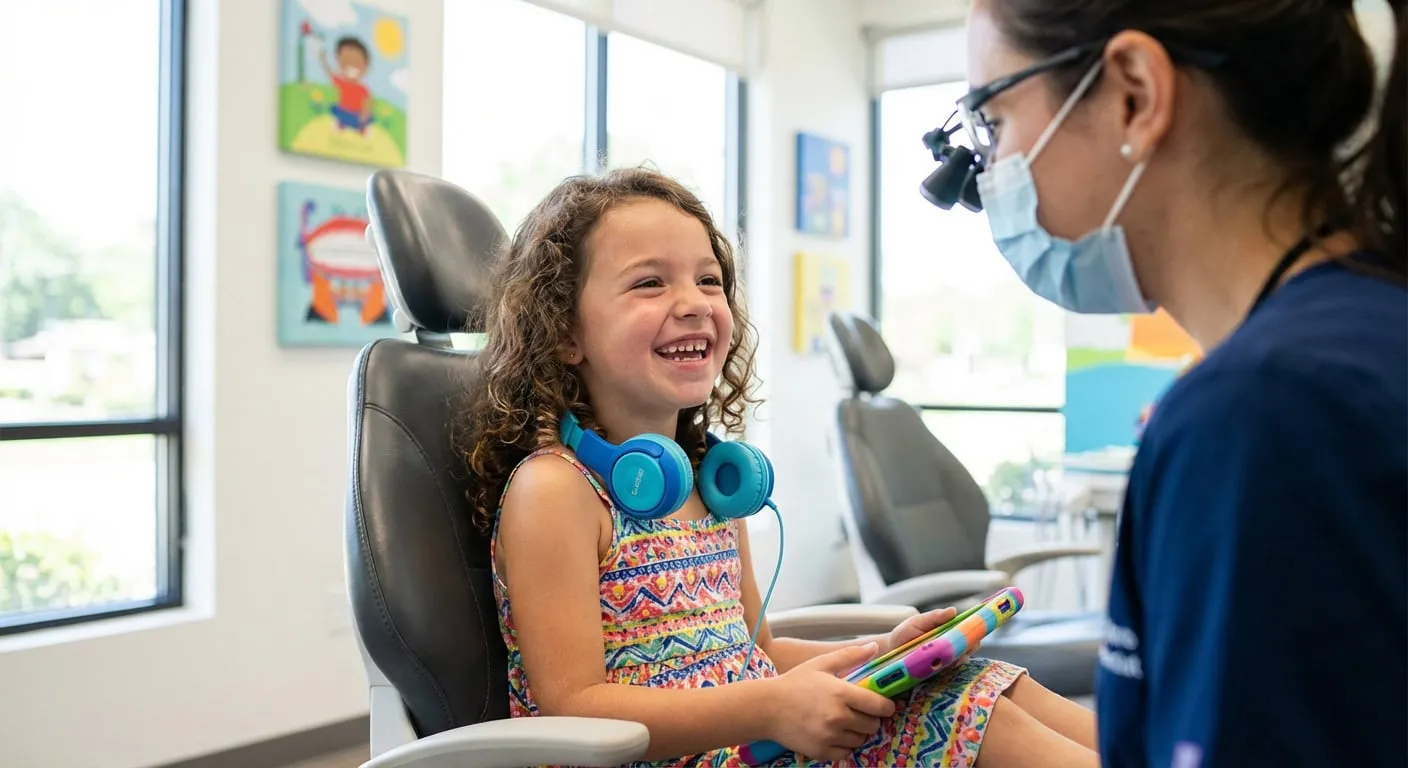
We've got a VIP suite with snacks, games, VR headsets, weighted blankets, noise-canceling headphones, and kid-friendly TVs.
We're trying to make this comfortable, not intimidating.
The appointment itself runs about 45 to 60 minutes.
We start by listening to your concerns and your child's story.
Then we do a gentle exam, take photos, and run low-dose digital X-rays or a quick CBCT scan.
These scans are way safer than old-school images and they give us a complete picture of how your child's teeth and jaw are developing.
By the end, you'll have a custom growth plan tailored to your child's specific needs.
Our staff keeps kids comfortable the whole time while we keep you informed every step of the way.
Check out how we're different from standard orthodontic offices and see our cutting-edge technology.
Early Intervention Prevents Bigger Problems Later
Here's the thing about Phase 1 that most people don't realize: it's not just about straighter teeth.
It's about setting your child up for a lifetime of healthy jaw function, proper breathing, and confident smiles.
When we catch crossbites early, we prevent the uneven jaw growth that causes pain and dysfunction later.
When we expand a narrow upper jaw, we improve airway space, which helps with breathing and sleep.
When we break thumb-sucking habits, we stop teeth from shifting into bad positions.
All of this compounds into real benefits by the time your child is a teenager.
Their Phase 2 treatment—if they even need it—is shorter, less invasive, and way less expensive.
That's the math on Phase 1 orthodontics.
It looks like more now, but it saves everything later.
Real Talk About Cost and Insurance
Parents always ask about the financial side, and I get it—orthodontics sounds expensive.
Phase 1 treatment typically costs less than full braces would, and when you factor in that it might eliminate the need for Phase 2 or cut Phase 2 dramatically short, the numbers make sense.
Most insurance plans cover a portion of Phase 1 if there's a clear interceptive need.
We work directly with insurance companies and offer flexible payment plans so you're not stressed about money.
Come in for your free consultation and we'll break down the exact costs for your child's situation.
No surprises, no pressure.
Why Board-Certified Matters for Your Child
Not all orthodontists are created equal.
We're board-certified, which means we passed rigorous exams and stay current with the latest techniques and research.
We're also the only ones trusted as the number-one partner by pediatric dentists across South Florida.
That's not a marketing line—that's built on years of delivering results and treating kids with genuine care.
Visit our board-certified specialists page to learn more about our team.
The Growth Window Closes—Act Now if You're Wondering
Your child's jaw is only growing and developing for so long.
Once they hit their mid-teens, most of that growth is done, and treatment becomes more complicated and invasive.
If you're even wondering whether Phase 1 might help your 6 to 10-year-old, now's the time to find out.
Schedule a free 3D scan and VIP smile consultation at SMILE-FX Orthodontics today.
We'll tell you exactly what your child needs—or doesn't need—and give you a clear path forward.
Families from Pembroke Pines to Fort Lauderdale trust us because we deliver honest, expert-level Phase 1 orthodontics for kids without the sales pitch.
That's how we do it.
Phase 2 Orthodontics and Beyond: What Your Teen Needs to Know About Braces and Clear Aligners
So your kid made it through Phase 1 and now you're staring down Phase 2 treatment.
You're wondering what comes next, how long it'll take, and whether braces or clear aligners are the right move for your teenager.
Here's the thing nobody tells you: Phase 2 is way different from Phase 1.
Most of your kid's permanent teeth are in now, and we're not working with growth anymore—we're working with precision.
This is where the real smile transformation happens, and the choices you make matter a lot.
I've worked with hundreds of teens and their parents through this phase, and I can tell you straight: the right approach can make the difference between a kid who's proud to smile and one who's self-conscious about their teeth for years.
When Does Phase 2 Start and Why Timing Matters
Phase 2 typically kicks off around age 11 or 12, but timing depends on your kid's specific situation.
If you did Phase 1 early, your teen might start Phase 2 sooner because we've already laid the groundwork.
If you skipped Phase 1 and are jumping straight to Phase 2 at 13 or 14, that's fine too—we just work with what we've got.
The key is that most permanent teeth need to be in before we start.
We're not waiting for the last few molars in the back, but we need the main players on the field.
This is when we can make big moves with braces or Invisalign to get everything aligned perfectly.
The average Phase 2 treatment runs 18 to 24 months, though some cases wrap faster if your teen's bite and jaw are already pretty close to where they need to be.
Braces vs. Clear Aligners: Which Path for Your Teen
This is the question every parent asks, and there's no one-size-fits-all answer.
Both work, but they work differently, and your kid's lifestyle and bite complexity matter a lot.
Traditional braces are the workhorse.
They're brackets bonded to teeth with a wire running through them.
We tighten the wire every few weeks to gradually move teeth into position.
The advantages are real: they work on almost every bite problem, they're hard to lose or forget about, and they tend to be slightly faster in complex cases.
The downside is they're visible, they require more careful eating, and they need more cleaning time.
But here's what I see happen: most teens adjust fast.
After a week or two, braces just become part of their face.
Kids get creative with colors, and some actually enjoy having them.
Clear aligners like Invisalign are the flexibility play.
Your teen gets a series of custom-made trays that slowly move teeth into position.
They take them out to eat, drink anything besides water, and brush.
The big wins: they're nearly invisible, there are no food restrictions, and cleaning is easier.
The catch is they require real discipline.
Your teen needs to wear them 20 to 22 hours a day for them to work.
They also cost more upfront than traditional braces in some cases.
If your kid's bite is severe, clear aligners might not be the best first choice, though we can often use them for Phase 2 even if Phase 1 involved other appliances.
Real talk: I ask every teen this question.
"Are you going to wear these every day?"
If they're honest and say maybe not, we go with braces.
If they commit to the routine, aligners work beautifully.
What Happens During Phase 2 Treatment
Whether your teen chooses braces or aligners, the process follows a similar pattern.
First, we take detailed 3D scans and photos to plan the exact movements we need to make.
Our cutting-edge technology lets us map out where every single tooth needs to go before we even start.
Your teen can actually see the treatment plan on a screen.
They know exactly what their smile will look like at the end.
That alone makes a huge difference in motivation.
Then we begin active treatment.
Appointments happen every 6 to 10 weeks depending on whether they're in braces or aligners.
For braces, we tighten and adjust.
For aligners, we hand them the next set and track progress.
Both require care at home: brushing, flossing or using a water flosser, and keeping everything clean.
We give your teen tools to make this easy, and our staff is always here to answer questions.
The Comfort Question: What to Expect
I get asked this constantly, and I'll be straight with you.
There's some discomfort, especially the first week.
With braces, the pressure and slight soreness is normal—it means the teeth are moving.
Most teens take over-the-counter ibuprofen for a few days and feel fine.
Clear aligners cause similar gentle pressure, usually manageable by day three or four.
The sore spots happen when something rubs, and we fix those fast with small adjustments.
Eating takes getting used to with braces—your teen learns what foods to avoid and gets good at eating carefully.
Aligners mean no food restrictions at all, which is a real perk.
The key to comfort is communication.
If your teen's struggling, tell us immediately.
Small tweaks make a big difference, and we want this experience to be manageable, not painful.
Dealing with Social Pressure and Confidence
Let's be honest: the teenage years are rough for appearance stuff, and braces or aligners are visible reminders that something's changing.
Here's what I've noticed working with hundreds of teens.
The kids who struggle most are the ones who feel isolated.
But the moment they realize half their friend group is also in braces or has done Invisalign, the narrative shifts.
Braces become normal, almost cool.
Clear aligners feel like a secret advantage.
What really helps is setting expectations upfront.
Show your teen photos of smiles before and after treatment.
Help them see the finish line.
When they know what's coming—a dramatically better smile in less than two years—the temporary discomfort feels worth it.
We also see teens feel a genuine sense of control here.
They're taking action to improve their smile on their own terms.
That builds confidence fast.
Common Questions During Phase 2 Treatment
Will sports or activities be affected?
Not really, with adjustments.
Athletes in braces wear mouthguards without issue.
Kids in clear aligners pop them out for games or practices.
We recommend they keep aligners in a safe case, not loose in a pocket.
Can my teen play an instrument with braces?
Yes, with a learning curve.
Brass and woodwind players notice at first, but they adapt fast.
We have patients who are serious musicians doing just fine.
What if a bracket breaks or an aligner cracks?
It happens, and it's not a disaster.
Call us and we'll get your teen in quickly for a fix.
Broken brackets cost a small fee, and replacement aligners are available on demand.
How often do we need to come in?
For braces, every 6 to 8 weeks.
For aligners, typically every 8 to 10 weeks.
Appointments run 20 to 30 minutes.
We work with school schedules, so your teen isn't missing classes constantly.
Keeping Teeth Clean During Phase 2
This is the part where parental involvement pays off.
With braces, your teen needs to brush around brackets and under the wire, plus floss or use a water flosser.
It takes longer than normal brushing, maybe 5 minutes total.
We give them special tools to make it easier.
If they slack, plaque builds fast and can cause permanent marks on teeth.
So this matters.
With aligners, cleaning is simpler: they take them out, brush normally, then put the trays back in.
The trays themselves need rinsing daily.
We provide a cleaning kit.
Both options require care, but neither is complicated once your teen builds the habit.
Retainers: The Often-Forgotten Critical Part
Here's what nobody talks about until it's too late: retainers matter just as much as the braces or aligners.
When we finish Phase 2, your teen's teeth want to shift back to their original positions.
That's just how teeth work.
Retainers hold everything in place while the bone and tissue around the roots solidify.
We typically recommend wearing a retainer every night for the first year after treatment ends, then a few nights a week long-term.
Some of our patients wear retainers forever because they never want to see their old bite again.
That's fine too.
We have options: fixed retainers bonded to the back of teeth, removable retainers you wear at night, or both.
The cost of retainers is way less than redoing orthodontics, so it's the ultimate insurance policy.
How SMILE-FX Makes Phase 2 Different
We don't treat Phase 2 like an assembly line.
Every teen gets a customized treatment plan based on their specific bite, lifestyle, and goals.
We use advanced 3D imaging and AI-guided planning to map out exactly where teeth need to go.
Your teen sees the projected outcome before we even start.
Our board-certified orthodontists stay current with the latest techniques, and our staff genuinely enjoys working with teenagers.
We get that this age group needs to feel heard and respected, not talked down to.
We also offer virtual consultations so your family can explore options without the hassle of coming in first.
We know schedules are tight, and we work around them.
Payment plans are flexible, and we work directly with insurance to maximize your coverage.
The Investment: What Phase 2 Actually Costs
Phase 2 treatment ranges based on complexity and your choice of braces versus aligners.
Braces typically cost less upfront than clear aligners.
But when you factor in that braces sometimes finish faster, the total cost can be similar.
Most insurance plans cover a percentage of orthodontics, sometimes up to 50 percent.
We handle the insurance paperwork, and we'll break down your actual out-of-pocket cost at the free consultation.
Payment plans spread the cost over the treatment period, so you're not paying everything at once.
Think of it this way: you're investing in your teen's confidence and long-term oral health.
A beautiful smile lasts a lifetime.
After Phase 2: Life with a New Smile
When braces come off or aligner treatment ends, the feeling is incredible.
Your teen sees their new smile for the first time, and most get emotional.
They look different in the best way possible.
The confidence boost is real and immediate.
But here's what happens: they realize the work was worth it.
That moment matters.
After treatment, your teen's job is simple: wear the retainer and keep up with regular dental care.
We stay connected through check-ups to make sure everything stays perfect.
Most of our patients become our biggest advocates because they lived the transformation.
They see what good orthodontics actually looks like.
Ready to Start Phase 2 or Explore Your Options
If your teen is ready to make their move, or you're not sure whether Phase 1 or Phase 2 is right, we can help.
Book a free 3D scan and VIP smile consultation at SMILE-FX Orthodontics today.
We'll assess your teen's bite, show you treatment options, answer every question, and give you honest guidance on braces, clear aligners, and Invisalign.
Our board-certified specialists work with kids, teens, and adults across South Florida, and we're known for delivering results without the pressure or sales pitch.
Your teen's smile is worth the investment in Phase 2 orthodontics and quality care.
Adult Orthodontics and Special Cases: Straightening Teeth at Any Age
You're 35, 45, or 55, and you've been thinking about fixing your smile for years.
Maybe you never got braces as a kid, or you had them but didn't wear your retainer and things shifted back.
Either way, you're wondering if it's too late, if people will judge you, and if adult orthodontics even makes sense financially.
Here's what I tell people constantly: it's never too late, and the number of adults getting orthodontic treatment keeps growing.
We're not just talking about celebrities either.
We're talking about lawyers, teachers, business owners, and parents who decided their smile matters.
The best time to fix your teeth was 20 years ago.
The second best time is right now.
Why Adults Are Choosing Orthodontics Now More Than Ever
Adult orthodontics has changed completely in the last decade.
The old stigma around braces is gone because of options like clear aligners and more discreet appliances.
You're not stuck with metal brackets that scream "look at me."
Adults also understand that their smile affects their confidence, how people perceive them professionally, and their overall quality of life.
When you're looking in the mirror every day and feeling self-conscious about crooked teeth or a bad bite, that impacts everything.
Your professional image, your dating life, your willingness to smile in photos, even your posture.
The investment in adult orthodontics pays dividends that go way beyond teeth alignment.
We work with adults at SMILE-FX Orthodontics who are shocked at how fast their confidence shifts once treatment starts.
It's not just about the end result.
It's about knowing you're taking control of something you've wanted to fix.
Does Insurance Cover Braces for Adults
This is the first question most adults ask, and the answer isn't always straightforward.
Many insurance plans cap coverage at age 18 or 21, but some don't.
We've seen plans that cover orthodontics for adults up to 50 percent.
The key is checking your specific policy.
Some employers offer better dental coverage than others.
When you come in for your free consultation, we handle the insurance verification for you.
We contact your insurance company, find out what they'll cover, and give you the exact numbers.
If insurance doesn't help much, we have flexible payment plans that make treatment accessible without breaking the bank.
We spread the cost over your treatment timeline, usually 18 to 24 months, so it's manageable month to month.
Think about it this way: you're spending money on your smile every single day anyway through professional image and confidence.
Why not invest in fixing it permanently.
Invisalign Cost South Florida and Your Adult Treatment Options
Adults have three main paths for straightening teeth: traditional braces, Invisalign clear aligners, or other clear aligner systems.
Each has pros and cons for adult lifestyles.
Traditional braces are the most affordable option and work fastest on complex cases.
They're also the most visible, though a lot of adults find they care less than they think they will.
Your colleagues might ask about them for five minutes, then stop noticing.
Invisalign and other clear aligner systems are nearly invisible, which appeals to adults who care about appearance during treatment.
You take them out to eat, drink, and brush, so there are no food restrictions and no complicated cleaning routines.
The tradeoff is they cost more upfront and require discipline to wear 20 to 22 hours daily.
We've worked with best orthodontist Miami patients who use clear aligners while traveling constantly, presenting in boardrooms, and managing busy schedules.
It works because they commit to the routine.
Invisalign cost South Florida varies based on complexity, but it's usually comparable to traditional braces when you factor in the full treatment timeline.
Adult Orthodontics and Complex Cases: What Makes Them Different
Adults often come in with bite problems that have been there for decades.
Your bite might be affecting your jaw joints, causing headaches or neck pain.
Your teeth might be severely crowded or have large gaps.
You might be dealing with the aftermath of gum disease or tooth loss.
These complex cases require expertise and a different treatment approach than straightforward crowding.
This is where best orthodontist for complex cases matters.
Not all orthodontists have the training or experience to handle jaw alignment issues, bite problems that affect your joints, or cases where teeth have shifted significantly due to bone loss.
Our board-certified specialists at SMILE-FX have spent years mastering these tougher situations.
We use advanced 3D imaging to assess your bite from every angle, including how your jaw joints are functioning.
We create treatment plans that address not just tooth position but also your bite relationship and jaw health.
Some complex cases need combined treatment: maybe orthodontics plus minor surgical intervention or coordination with your dentist for reconstructive work.
We handle the coordination and make sure everything works together seamlessly.
Affordable Braces and Clear Aligners Options Across South Florida
Cost shouldn't be the barrier to a better smile.
We offer affordable braces across Broward, including Miramar, Fort Lauderdale, and surrounding areas.
We also have $0 down braces financing options that let you start treatment immediately and pay as you go.
No waiting, no saving up thousands first.
We work with multiple payment plans so you can choose what fits your budget.
Some patients do monthly payments over 18 months.
Others prefer biweekly to match their paycheck schedule.
We're flexible because we understand adult life has real expenses.
The goal is getting you the orthodontic care you deserve without financial stress.
How Teeth Shift Over Time and Why Adults Need Treatment
Your teeth aren't meant to stay in the same spot your whole life.
They're always trying to move, especially if you're missing teeth, dealing with gum disease, or didn't wear your retainer.
Teeth shift forward naturally as you age.
Your lower front teeth are particularly prone to crowding over time.
Some people's teeth shift because of habits like tongue thrusting, clenching, or grinding.
Others experience movement after gum disease or tooth loss changes how forces distribute across your mouth.
The good news is adult orthodontics can fix all of this.
Bone is still responsive to orthodontic pressure at any age, though treatment might take a few months longer for older adults.
We're talking maybe 20 to 24 months instead of 18 months, but the results are the same.
The Real Questions Adults Are Asking About Treatment
Will people judge me for getting braces as an adult.
Honestly, no.
Most people respect the commitment to self-improvement.
If anything, adults in braces seem confident.
They're doing it because they want to, not because their parents made them.
Will it hurt.
There's mild discomfort the first few days, similar to braces for kids and teens.
Take ibuprofen, stick to soft foods briefly, and you're fine.
Can I still kiss my partner, eat normally, or exercise.
Yes to all three.
Clear aligners come out for kissing, eating, and sports.
Traditional braces just require being careful with what you eat.
Exercise is fine with either option.
How long until I see results.
You'll see movement within the first month or two.
Real visible changes happen around month four to six.
By the end of treatment, your smile is transformed.
Will my teeth look natural afterward.
Yes, when done right.
Our goal isn't to create perfect cartoon teeth.
We're straightening your teeth while keeping them looking natural to your face.
Adult Orthodontics Aventura and Across South Florida
Whether you're in Aventura, Miramar, Fort Lauderdale, or anywhere across South Florida, finding the right orthodontist matters.
You want someone who specializes in adult cases, understands your concerns, and has experience with complex bite problems.
We're the top rated orthodontist near me for a reason: we listen, we don't oversell, and we deliver results.
Our patient reviews show adults grateful they finally took action.
We use cutting-edge technology including SureSmile and AI-guided planning to ensure precision in every case.
Our board-certified orthodontists stay current with the latest techniques so you're getting world-class care.
Getting Started: What Your First Adult Consultation Looks Like
Book a free 3D scan and VIP smile consultation to explore your options.
We take digital photos, run a low-dose 3D scan, and assess your bite thoroughly.
You'll see a treatment plan showing exactly what your smile will look like at the end.
We discuss braces versus clear aligners, timeline, cost, and financing.
No pressure, no hard sell.
Just honest information so you can decide if orthodontics is right for you.
Your teeth deserve professional care, and your smile deserves investment.
The best orthodontist for you is waiting.