
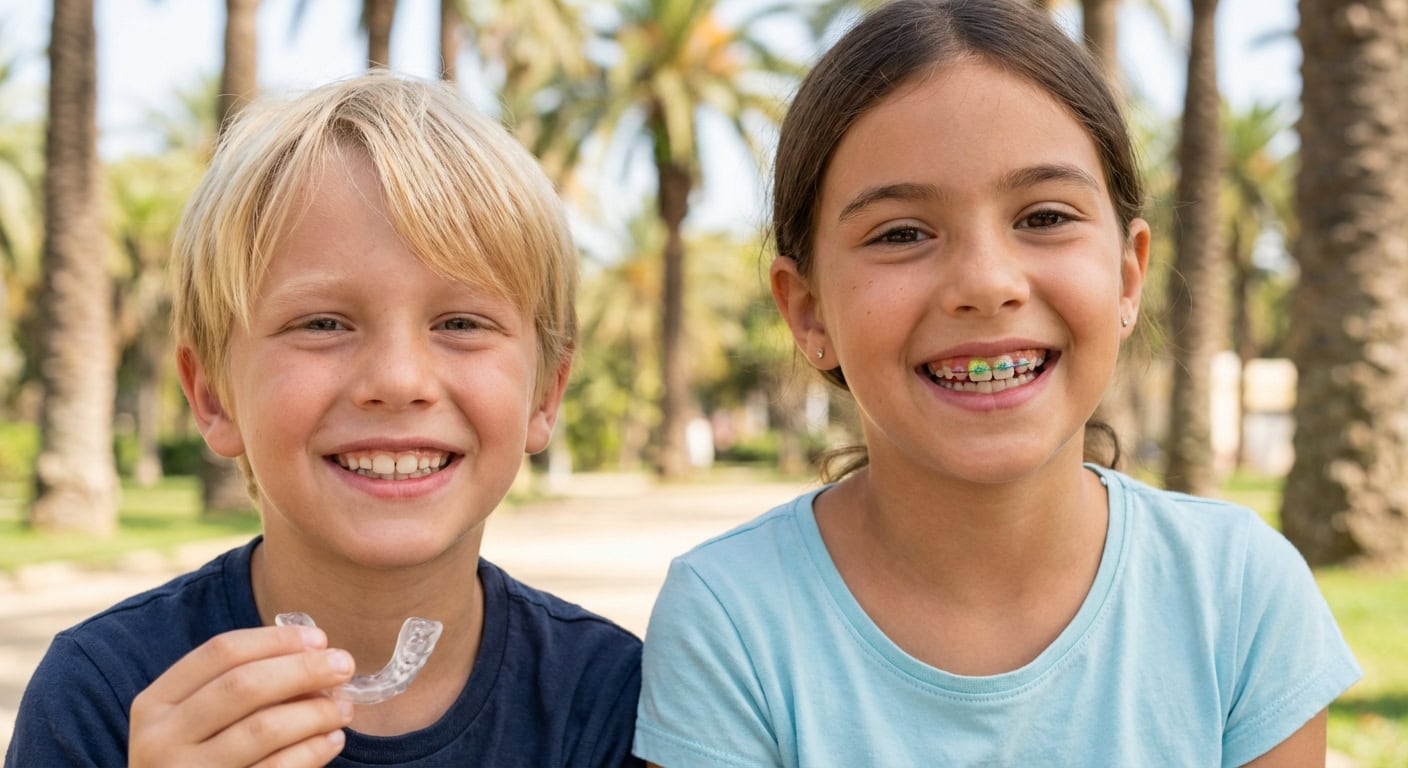
Phase 1 Orthodontics in Miramar: Why Age 7 Really Matters
Your seven-year-old comes home from school, and you notice something off about their smile.
Maybe their top front teeth are coming in crooked.
Maybe their jaw looks a little asymmetrical.
Your gut tells you something needs attention, but you're not sure if it's panic or parenting instinct.
Is it too early for braces?
Will they need orthodontic treatment twice?
Should you even worry right now?
Here's what most parents don't realize: catching certain dental issues early isn't just smart parenting—it actually changes the game for your kid's smile, confidence, and how their face develops over the next decade.
The American Association of Orthodontists recommends every child get evaluated by age 7, and there's solid science backing that up.
Let me break down why Phase 1 orthodontics matters so much, what actually happens at that first appointment, and how to know if your kid needs early treatment.
What Is Phase 1 Orthodontics, Really?
Phase 1 isn't full braces.
It's not permanent fixtures on teeth.
Think of it like this: Phase 1 is preventive orthodontic care while your child's jaw is still growing and baby teeth are making way for permanent ones.
It's gentle guidance during a narrow window when your kid's development actually works for you, not against you.
The real goal is simple.
Create the best possible environment so adult teeth come in straight and the jaw develops the way it's supposed to.
When Phase 1 works right, you get:
- Fewer or zero extractions down the road
- Shorter braces time later, sometimes by months
- Prevention of bite problems that mess with speech, chewing, or breathing
- A confidence boost during your kid's most formative years
The difference is working *with* your child's natural growth instead of fighting against it later when everything's already hardened.
Why Age 7? The Biology You Should Know
At age 7, two critical things happen at the same time.
First permanent molars start erupting.
These teeth are anchors.
Where they land determines how every other permanent tooth will fit.
If they come in misaligned, everything after them gets knocked off course.
Your child's jaw is still incredibly responsive to guidance.
Between ages 7 and 10, the growth plates in your kid's jaw are soft and moldable.
Gentle orthodontic devices can actually direct jaw growth in the right direction.
Fast forward to age 12 or 13 and those growth plates harden.
Once they do, you're managing problems instead of preventing them.
You've lost your advantage.
This isn't fear selling.
It's just how bodies work.
An early evaluation at age 7 gives you information.
And information beats guessing every single time.
Red Flags That Your Kid Might Need Early Orthodontic Treatment
Not every kid needs Phase 1.
Some children's teeth and jaws develop perfectly on their own.
But watch for these signs that an early evaluation makes sense:
Crowding or overlapping baby teeth.
If baby teeth are growing in crooked or on top of each other, permanent teeth won't have enough space.
Crossbite.
Your child's upper teeth bite *inside* their lower teeth instead of outside.
This affects how the jaw grows and causes uneven wear on teeth.
Open bite.
When your kid bites down, their front teeth don't touch each other.
This causes speech problems and makes chewing less efficient.
Underbite.
Lower teeth stick out past upper teeth.
Early guidance now can prevent needing surgery later.
Mouth breathing instead of nose breathing.
This is the sign most parents miss, but it changes how your kid's face and jaws develop.
Thumb sucking past age 4.
Prolonged thumb sucking pushes teeth forward and creates open bites.
Here's the real talk though: even if your child doesn't show obvious warning signs, an evaluation at 7 is still worth it.
Our board-certified orthodontists can spot things developing *before* they become actual problems.
What Actually Happens at Your Child's First Orthodontic Evaluation
Most parents walk in expecting a full workup with X-rays, scans, and a treatment plan handed to them.
Sometimes that's needed.
But a real pediatric-focused evaluation works differently:
Step 1: We actually talk to your kid and you.
No jargon.
Just real questions about how they eat, how they breathe, whether anything hurts.
This matters way more than people think.
Step 2: Visual examination without pressure.
A board-certified orthodontist looks at bite, jaw alignment, and tooth position.
We only order imaging if it actually helps us decide something.
Step 3: Honest recommendations.
You get one of three answers:
Either we monitor growth for the next 6 to 12 months and check back in, Phase 1 treatment would genuinely help, or everything's tracking beautifully and keep seeing your pediatric dentist.
Notice what's missing?
Pressure to buy something your kid doesn't need.
We only suggest treatment when your child actually gets something from it.
If waiting makes more sense, we say that too.
Does Your Kid Actually Need Phase 1 Treatment?
The honest answer is: not every child does.
But the only way to know for sure is getting a proper evaluation from an orthodontist who specializes in kids, not a general dentist and definitely not someone running an Invisalign factory focused on volume over outcomes.
At SMILE-FX, our orthodontists care about what's actually best for your child's growth, not what's fastest or easiest to treat.
We get trusted by pediatric dentists all over South Florida because we treat kids like kids, not tiny adults.
Why Families in Miramar Choose SMILE-FX for Phase 1
If you're in Miramar, Pembroke Pines, Weston, Cooper City, Davie, Hollywood, or Fort Lauderdale, you've got choices.
But families who understand early orthodontics end up at our Miramar practice for one clear reason: we actually care about prevention, not just slapping treatment on kids and moving to the next patient.
Here's what makes us different:
- Only board-certified specialists. Every evaluation and treatment plan comes from an actual orthodontist, not someone with a dental license trying to do orthodontics on the side.
- Advanced diagnostics that don't overdo radiation. We use cutting-edge technology to see exactly what's happening with your child's growth without unnecessary X-rays.
- Comfort comes first. Kids in our Miramar office aren't nervous. We have pediatric treatment suites, gaming areas, noise-canceling headphones, weighted blankets, and staff trained to work with anxious kids.
- We work with your child's growth, not against it. This approach means shorter total treatment time and better long-term outcomes.
- Local pediatric dentists send us their kids. We're the most referred orthodontist for children in South Florida because we deliver on promises.
The drive to Miramar from anywhere in Broward is absolutely worth it when you're talking about your child's smile and confidence for the next 70 years of their life.
What Phase 1 Treatment Actually Costs
Phase 1 treatment runs between $2,500 and $5,000 depending on how complex the case is and how long treatment lasts.
That's significantly less than comprehensive braces.
But here's what matters more than the price:
Early treatment actually saves money over time.
You reduce extractions, shorten Phase 2 braces treatment, or prevent surgery down the road.
It's an investment, not an expense.
We work with flexible payment plans because we know good care shouldn't depend on how much money you have sitting around right now.
Common Questions Parents Ask About Phase 1
Will my kid need braces again?
Probably yes, but Phase 2 is way shorter and less complicated.
The benefit is that Phase 2 becomes faster, easier, and way more predictable.
What if we wait and do it later?
You can, but you lose the growth advantage completely.
After age 12 or 13, jaw growth plates harden and you're stuck managing a problem instead of preventing one.
Early treatment almost always works better.
How long does Phase 1 last?
Usually 12 to 24 months depending on what we're fixing.
We check progress every 6 to 8 weeks and adjust the plan as needed.
Will other kids make fun of my child?
Most Phase 1 appliances are way more subtle than full braces.
Honestly, kids today don't stress about braces the way you might remember.
The confidence boost from fixing a bite problem early beats any self-consciousness.
Is early orthodontic treatment safe?
Yes, absolutely.
When a board-certified orthodontist delivers Phase 1, it's gentle and backed by evidence.
We're not forcing anything; we're guiding natural growth.
Ready to Get Answers About Your Child's Smile?
The smartest move you can make right now is booking a professional evaluation.
No pressure.
No sales pitch.
Just clarity about what your child actually needs.
Book your FREE 3D scan and VIP smile consultation at SMILE-FX today.
We'll examine your child, answer every question you have, and show you exactly what their orthodontic future looks like.
The best time to address orthodontic issues isn't when they're obvious and problematic.
It's when your child's growth can work *for* you instead of against you.
Your child's smile at 25 starts with a decision you make at 7.
Make it the right one.
Phase 2 Orthodontics After Phase 1: What Parents Need to Know About Comprehensive Treatment
So Phase 1 wrapped up.
Your kid's jaw responded well to early treatment.
Their permanent teeth are coming in straighter.
Everything looks good, right?
Not quite.
Phase 1 was the foundation.
Phase 2 is where the real smile magic happens.
Here's what most parents get wrong: they think Phase 1 means their kid won't need braces or clear aligners later.
That's not how it works.
Phase 1 sets the stage so Phase 2 can be faster, easier, and way more effective.
Think of it like building a house.
Phase 1 is preparing the land and pouring the foundation.
Phase 2 is actually building the structure that lasts.
Let me walk you through what happens next, when Phase 2 actually starts, and why skipping it would be like leaving the job half done.
The Real Difference Between Phase 1 and Phase 2 Orthodontic Treatment
Phase 1 worked with your kid's growth to guide jaw development and create space for permanent teeth.
That was the goal, and it worked.
Phase 2 is different.
Phase 2 deals with all the permanent teeth now that they're mostly in place.
It's about making sure every single tooth sits exactly where it needs to for a perfect bite and a smile that looks incredible.
In Phase 2, your orthodontist uses either traditional metal braces, ceramic braces, or clear aligners like Invisalign to fine-tune everything Phase 1 started.
The good news is this: because Phase 1 did its job right, Phase 2 is typically 18 to 24 months instead of the 24 to 36 months kids need who skip early treatment.
You're saving your kid months of orthodontic appointments.
That's real.
When Does Phase 2 Actually Start?
Most Phase 2 treatment begins around age 11 or 12, once all the permanent teeth have come in or are about to.
Your orthodontist watches the eruption pattern carefully.
You don't want to start Phase 2 too early because you're still waiting on some key teeth.
Start too late and you miss the window where bones are still somewhat responsive to movement.
The timing is strategic, not random.
At SMILE-FX, we work with board-certified orthodontists who know exactly when Phase 2 makes sense for your kid's specific development pattern.
We don't rush it.
We don't delay it either.
We get it right.
What Treatment Options Look Like in Phase 2
Here's where choice matters.
Phase 2 isn't one-size-fits-all.
Your teen can choose between several approaches depending on their lifestyle, confidence level, and what works for them.
Traditional Metal Braces
The gold standard for complex bites and severe misalignment.
Metal brackets, wires, and bands do the heavy lifting.
They're also the most visible option, but modern metal braces look way sleeker than they did 10 years ago.
Many teens don't actually care as much as parents think they will.
Ceramic Braces
These work exactly like metal braces but the brackets blend closer to your tooth color.
Less noticeable, same reliability, slightly more delicate to handle.
Great for teens who want less visibility without sacrificing effectiveness.
Clear Aligners and Invisalign
For mild to moderate cases that Phase 1 set up perfectly, clear aligners are a game changer.
Your teen wears custom-made trays that are nearly invisible.
They can remove them to eat and clean teeth.
They look like nothing's happening, but teeth are still moving into position.
The catch: clear aligners work best when your kid is disciplined about wearing them 22 hours a day and keeping up with the swaps.
Teens who can handle that responsibility get the confidence and convenience combo.
To learn more about which option fits your kid best, check out our Invisalign solutions and traditional braces options.
How Phase 2 Actually Works on a Month-to-Month Basis
Phase 2 is a longer commitment than Phase 1, but the routine is pretty straightforward.
Month 1: Getting Started
Your orthodontist bonds or fits the appliance.
For braces, brackets go on each tooth.
Wires connect them.
For aligners, your teen gets their first tray set and instructions on wear time and care.
There's some discomfort the first week as teeth start adjusting.
That's normal.
Months 2 to 18
Regular visits every 6 to 8 weeks if they're in braces for adjustments and wire changes.
If they're in aligners, they swap to a new tray every 1 to 2 weeks at home and check in every 8 to 10 weeks to make sure everything's tracking right.
Your orthodontist watches progress on our cutting-edge technology to catch any issues early.
Final Months
Teeth are moving into final positions.
Appointments focus on fine-tuning the bite.
Your kid starts thinking about life after braces or aligners.
Once Phase 2 is done, retention comes next, which is a whole different conversation.
The Cost Reality of Phase 2 Treatment
Phase 2 comprehensive treatment typically runs between $3,500 and $7,000.
That varies based on what you choose, how complex the case is, and how long it takes.
Here's the thing though: because Phase 1 did the groundwork, your overall cost is actually lower than kids who skip early treatment and need everything corrected in one shot.
You're spending more than Phase 1 alone, but you're saving compared to the alternative.
Clear aligners and Invisalign typically run on the higher end of that range.
Metal braces are usually in the middle.
We work with payment plans that make this manageable, not a financial gut punch.
What About Retention? The Part Parents Forget
Here's what kills me: parents invest all this time and money in Phase 1 and Phase 2, then their kid stops wearing retainers after braces come off.
Teeth want to move back to where they started.
A retainer is basically a permanently parked brake on that movement.
Your orthodontist will recommend wearing a retainer every night for the rest of your kid's life, or at minimum several years solid before tapering down.
It's not optional if you want that smile to stay perfect.
Most practices give you a couple retainers at the end of Phase 2.
Losing them or them wearing out happens, so budget for replacements.
Can Phase 2 Be Skipped If Phase 1 Goes Really Well?
Short answer: almost never.
Phase 1 corrects growth patterns and makes space.
It doesn't fully align the bite or position every permanent tooth.
You need Phase 2 to actually finish the job.
I've heard parents ask if their kid can skip it if Phase 1 results look great.
Sure, you could skip it.
Your kid would have a better foundation than starting from scratch, but their bite wouldn't be perfect.
Teeth wouldn't be ideally positioned.
They'd eventually deal with the same cosmetic and functional issues down the road.
Why do Phase 1 at all if you're going to leave it incomplete?
The whole point is giving your kid a genuinely straight smile and a healthy bite that lasts their whole life.
Phase 2 finishes that promise.
FAQ: The Phase 2 Questions Parents Actually Ask
Do braces hurt?
There's pressure and soreness for a few days after braces go on or wires get tightened.
That's not pain exactly.
It's more like tooth soreness from movement.
Soft foods and over-the-counter pain relief help for the first week.
By the second week, most kids don't feel it anymore.
How often does my teen need appointments during Phase 2?
Every 6 to 8 weeks for traditional braces.
Every 8 to 10 weeks for clear aligners.
That's roughly 8 to 10 appointments total over 18 to 24 months.
Not crazy.
Can my teen play sports with braces?
Absolutely.
A mouthguard is required to protect teeth and brackets, but that's standard for any contact sport anyway.
A lot of athletes actually prefer braces because there's no risk of accidentally swallowing an aligner.
Will Phase 2 stain or damage teeth?
No.
Braces don't damage teeth if your teen keeps them clean.
Poor oral hygiene during Phase 2 can lead to decalcification, which is like white spots where the bracket sits.
That's preventable with brushing and flossing.
Clear aligners don't stain teeth at all as long as your teen removes them before eating or drinking anything but water.
What if my teen loses or damages an aligner?
Call the office.
They can usually order a replacement fast or have your teen jump back to the previous tray temporarily.
It's not ideal, but it happens and it's fixable.
How SMILE-FX Handles Phase 2 Treatment Differently
Look, Phase 2 is more intense than Phase 1.
Your teen's going to be spending real time in the orthodontist's chair.
They need to feel comfortable, heard, and not like they're just another number getting processed.
At SMILE-FX, our approach to Phase 2 is built around making your teen feel like they're getting premium care, because they are.
We use the latest diagnostic and treatment technology to map out exactly what needs to happen and why.
Your teen sees the plan before we start.
They understand the goal.
They know why appointments matter.
That partnership between orthodontist, teen, and parent makes the whole experience faster and way less stressful.
Our patient reviews from families who've gone through Phase 1 and Phase 2 tell the real story.
Parents consistently say their kids were excited about appointments, not dreading them.
That matters.
We also handle how you pay for it.
Phase 2 is an investment.
Our payment plans break it into manageable chunks so cost doesn't force you to choose between your kid's smile and paying rent.
It's not free, but it's realistic.
What Happens After Phase 2 Ends
Braces or aligners come off.
Your kid sees their teeth for the first time fully straight.
That moment is incredible.
Then reality hits: retainers.
Your orthodontist typically gives you a fixed retainer that bonds behind the front teeth and removable retainers to wear at night.
The fixed one stays put for years, potentially forever.
The removable ones are your insurance against relapse.
Most people wear them nightly for at least the first year after braces come off, then taper to a few nights a week.
Consistency matters more than everyone realizes.
I know it sounds like a hassle, but we're talking about keeping a multi-year investment locked in place.
That's worth 30 seconds before bed.
Real Talk: Is Phase 2 Right Now the Best Time?
If your kid just finished Phase 1, timing makes sense.
If they're around 11 to 13 years old and all permanent teeth are coming in, Phase 2 is the natural next step.
Waiting another year or two won't kill anything, but you're just delaying the inevitable.
Some parents think their teen is too self-conscious about braces to start Phase 2.
Here's my take: self-consciousness goes away fast when your kid sees their smile transforming and gets compliments from friends.
The short-term awkwardness of braces beats 70 years of wishing their teeth were straight.
If your teen is hesitant, clear aligners might be the answer.
They're subtle enough that most people won't even notice your teen's in treatment.
That removes the self-consciousness barrier entirely.
Getting Started With Phase 2 at SMILE-FX
If Phase 1 is done and you're ready to lock in that perfect smile, the next step is a Phase 2 consultation.
Your orthodontist reviews where teeth are now, what still needs to happen, and which treatment option fits your teen's life best.
Then you make a plan together.
No surprises.
No pressure.
Just clear expectations and a timeline your family can actually commit to.
Book your FREE 3D scan and VIP smile consultation today.
We'll map out Phase 2 options for your teen and show you exactly what their smile will look like once treatment is done.
Whether your kid needs braces, clear aligners, or Invisalign, we've got the expertise and the approach to make it work for their lifestyle.
Phase 1 got the foundation right.
Phase 2 completes the masterpiece.
Your teen deserves a smile that matches their confidence, and we're here to make that happen with comprehensive orthodontic treatment that actually works.
What Really Happens Between Phase 1 and Phase 2: The Growth Years Nobody Talks About
Your kid finished Phase 1 about six months ago.
Things look better.
Their jaw's developing well.
Baby teeth are falling out and permanent teeth are coming in mostly straight.
So now you're sitting there wondering: what exactly happens between Phase 1 ending and Phase 2 starting?
Is there a waiting period where nothing happens?
Are you wasting money by not jumping straight into braces?
Should you be doing something right now to keep the momentum going?
This gap between phases is where most parents get confused, and honestly, where a lot of orthodontists don't explain things as clearly as they should.
Let me break down what's actually happening during those in-between years and why this time matters just as much as the treatment itself.
The Critical Growth Window Between Phases
Here's what most people don't realize: your kid's orthodontic development doesn't stop when Phase 1 ends.
It actually keeps moving.
Between Phase 1 and Phase 2, your child is going through massive growth.
Permanent molars are still erupting.
The jawbone is still developing.
Baby teeth are exfoliating and making room for their replacements.
This isn't boring time.
This is active development that directly impacts whether Phase 2 goes smoothly or hits complications.
Think of it like this: Phase 1 set the trajectory.
The growth window is where that trajectory either stays true or starts drifting off course.
A board certified orthodontist south florida at SMILE-FX watches this window carefully because small problems caught now prevent huge problems later.
Why You Can't Just Ignore It and Hope for the Best
I've heard parents say they'll just wait until all the permanent teeth come in and skip the checkups in between.
That's how you end up surprised.
Without monitoring, a few things can go sideways:
A permanent tooth can erupt in the wrong spot and need extraction later.
The jawbone can shift in a direction that undoes some of Phase 1's work.
Habits like mouth breathing or tongue thrust can create new bite problems.
These aren't catastrophes, but they're fixable problems that become unfixable if you're not watching.
The best orthodontist for kids south florida stays engaged during this growth window.
That's not selling you extra appointments.
That's actually managing your kid's development.
Monitoring Appointments: Why They're Not Wasted Visits
After Phase 1 ends, your orthodontist typically schedules you back for check-ins every 6 to 12 months.
These aren't treatment visits.
There's nothing getting tightened or adjusted.
But they matter.
During a monitoring appointment, your orthodontist is checking:
Are permanent teeth erupting in the right sequence and position?
Is the bite staying where Phase 1 left it or has something shifted?
Are any habits forming that could derail progress?
Is the growth pattern tracking the way we predicted?
That information gets recorded and tracked over time.
By the time Phase 2 starts, your orthodontist already knows exactly what they're walking into.
No surprises.
No guessing.
They've literally been watching your kid's mouth develop for years.
That changes everything about how Phase 2 gets executed.
Common Growth Changes That Happen Between Phases
Every kid develops differently, but certain patterns show up consistently.
Permanent canines sometimes erupt off to the side and need guidance back into line.
The bite can shift slightly as the lower jaw catches up to the upper jaw growth.
A crossbite from Phase 1 might have been fixed, but the kid's growth could create a new bite issue if nobody's watching.
Spacing changes as bigger permanent teeth squeeze in where smaller baby teeth were.
Some kids develop habits that work against their orthodontic progress, like tongue thrust or continued mouth breathing.
These aren't failures of Phase 1.
They're just part of how human bodies grow, and they're completely manageable with the right approach.
At SMILE-FX with our cutting-edge technology, we catch these shifts early because we're tracking them digitally.
We're not guessing based on memory.
We're comparing actual data from appointment to appointment.
What You Should Be Doing at Home During This Growth Window
Your job as a parent doesn't stop when Phase 1 ends.
If anything, you need to be more attentive because the work is less visible.
Keep up with dental hygiene like it's non-negotiable.
Cavities between phases mean extractions, which means disrupted growth patterns.
Watch for mouth breathing and remind your kid to breathe through their nose.
Seriously, this one habit matters more than people think.
Check in about tongue positioning.
If your kid's pushing their tongue forward when they swallow or at rest, that's working against orthodontic progress.
Notice if old habits like nail biting or pen chewing are back.
Those create pressure on teeth that undoes alignment work.
Make sure your kid shows up to their monitoring appointments.
I know it feels pointless, but you're literally building the dataset that makes Phase 2 predictable and effective.
The Financial Reality of Monitoring Appointments
Most offices charge a small monitoring fee for these appointments, usually between fifty and a hundred fifty dollars.
It's not free, but it's way cheaper than dealing with complications that pop up during Phase 2.
Think of it like oil changes for your car.
You pay a little now to avoid a total engine rebuild later.
Some offices bundle monitoring into the overall Phase 1 cost, so you might not pay anything extra depending on where you went.
At SMILE-FX in Miramar, we keep monitoring costs reasonable because we want families actually showing up, not skipping appointments to save money.
When Does Phase 2 Actually Start Getting Planned?
Around age 10 or 11, if all permanent teeth are mostly in place, your orthodontist starts talking about Phase 2 timing.
This isn't pressure to start tomorrow.
It's planning for what's coming.
You'll get a consultation where they explain which traditional braces vs invisalign option makes sense, what the timeline looks like, and what the investment is.
This is where you should be asking real questions.
You're not locked in at this point.
You're getting information so you can make a choice that fits your family.
Some families decide to wait another year.
Some jump in right away.
Both can be right depending on your kid's development and your situation.
Why Some Kids Skip Phase 2 (And Why That's Usually Not Smart)
I'll be straight with you: some parents finish Phase 1 and decide they're done.
Their kid's teeth look better than before, so why spend more money?
I get the logic, but it's missing the point.
Phase 1 creates the foundation.
Phase 2 builds the actual structure that lasts.
Without Phase 2, your kid ends up with decent teeth that aren't ideally positioned.
They might have a bite that's functional but not optimal.
They might be okay now but face orthodontic issues in their thirties when they can't afford treatment.
The whole reason to do Phase 1 is to set up Phase 2 for success.
Skipping Phase 2 is like building a foundation but never constructing the house.
Insurance and Payment Planning for Both Phases
Here's a question that matters: does insurance cover braces?
It depends on your plan, but many dental insurance plans cover orthodontics at fifty percent after a waiting period.
That coverage usually applies to both Phase 1 and Phase 2, with annual maximums around fifteen hundred to two thousand dollars.
Between phases, you're in this gap where Phase 1 is done but Phase 2 hasn't started.
This is actually a good time to think about your payment strategy for Phase 2.
How much will insurance cover?
What's your out-of-pocket maximum?
When does it reset for the next calendar year?
These questions matter because timing Phase 2 to start when your insurance resets can save you hundreds of dollars.
At SMILE-FX, we help you navigate this stuff because orthodontics doesn't have to be confusing financially.
We work with your insurance and offer payment plans that actually work for your budget.
Red Flags During the Growth Window That Mean Phase 2 Needs to Start Sooner
Sometimes between phases, something changes that moves up the timeline for Phase 2.
If a permanent tooth starts erupting severely off to the side, Phase 2 might need to start earlier to guide it into place.
If a crossbite or underbite is developing, waiting becomes risky.
If your kid develops a speech problem related to tooth positioning or bite, that signals needing full treatment sooner.
Basically, if something feels wrong at a monitoring appointment, your orthodontist will flag it.
That's why these appointments exist.
Setting Your Kid Up for Phase 2 Success Starts Now
If you're in that in-between phase right now, don't think of it as downtime.
Think of it as preparation for Phase 2.
Every cavity you prevent, every monitoring appointment you attend, every good habit your kid builds now makes Phase 2 faster and easier.
You're literally writing the script for how their comprehensive treatment will go.
Want to know exactly where your kid stands in their orthodontic development right now?
Book your FREE 3D scan and VIP smile consultation at SMILE-FX and we'll map out your entire orthodontic journey from where you are now through Phase 2 and beyond.
We're the top rated orthodontist near me for families who want to understand what's actually happening with their kid's teeth and jaw development.
No guessing, no surprises, just clear guidance through the growth years that matter most.