
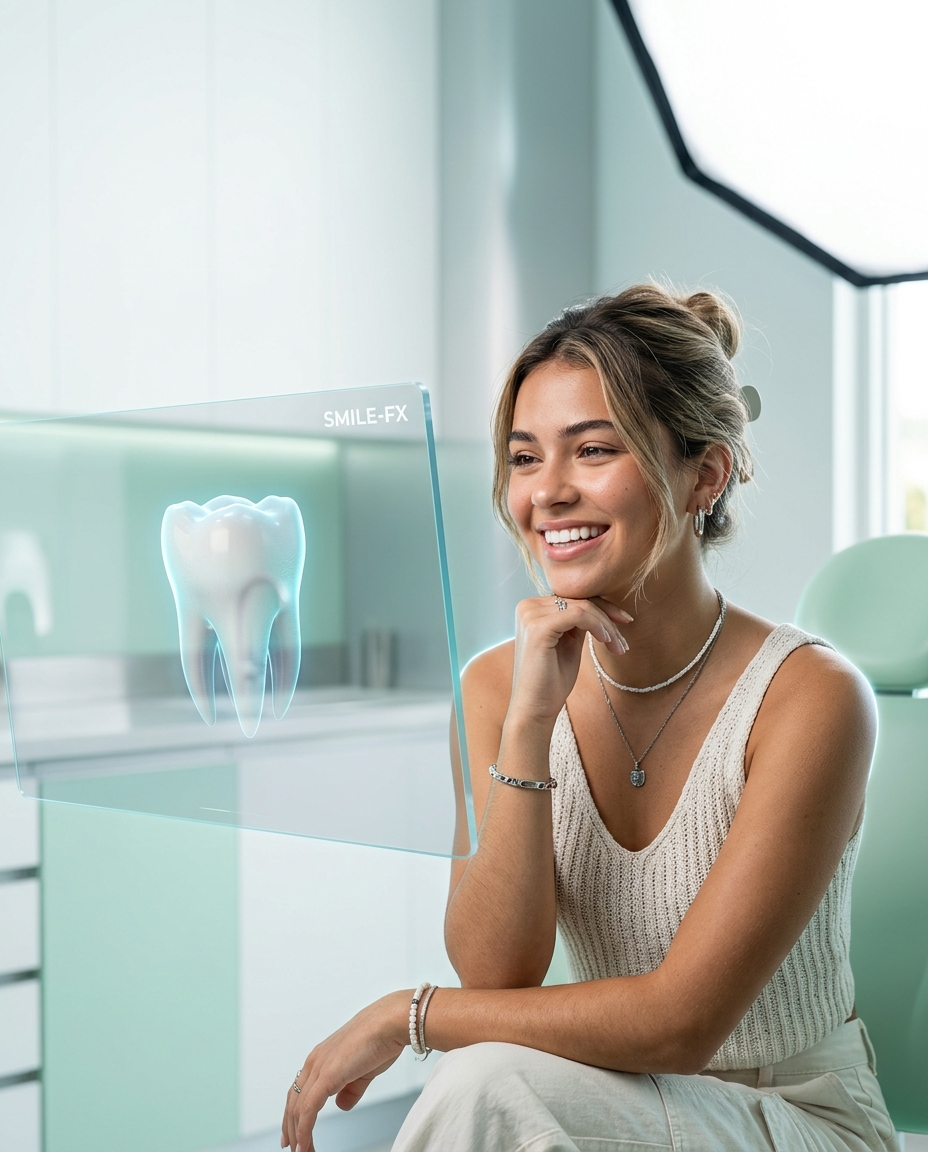

AI BRACES by SMILE‑FX: The Definitive Guide to Modern Orthodontics
Orthodontics has changed. Radically. If your mental image of getting braces still involves a mouth full of gooey, gag-inducing impression putty and endless years of unpredictable wire-tightening, it’s time to update your expectations. Today, the intersection of specialized medical expertise and advanced machine learning has given rise to an entirely new approach to tooth movement. We aren’t just gluing metal to teeth and hoping for the best anymore.
Enter the era of digital treatment planning. By harnessing the power of artificial intelligence, orthodontists can now map out the trajectory of every single tooth with a level of granularity that was practically science fiction a decade ago. It is within this technological renaissance that the SMILE‑FX® AI Braces™ System was born—a comprehensive, step-by-step approach designed to optimize efficiency, precision, and patient comfort.
But what does "AI" actually mean when it comes to your smile? Is a computer making the decisions? Does it guarantee a faster outcome? Let's clear the air. In this definitive guide, we are pulling back the curtain on how AI integrates with clinical orthodontics, why human oversight remains absolutely critical, and what you can expect when you walk through our doors.
Key Takeaways at a Glance
Before we dive into the deep end of biomechanics and digital workflows, here is a quick overview of what you need to know about this technology-driven approach.
| Concept | What It Means for You |
|---|---|
| Digital Precision | Eliminates messy traditional impressions in favor of highly accurate 3D optical digital scans (like Trios or iTero). |
| Predictive Planning | Software assists the orthodontist in visualizing tooth movement stages before treatment even begins, reducing guesswork. |
| Remote Monitoring | Smart tech allows your clinical team to track your progress between in-office visits, often catching minor issues early. |
| Human Oversight | AI is a tool, not a doctor. A board-certified specialist always customizes, overrides, and finalizes the digital treatment plan. |
Deconstructing the Buzzword: What “AI BRACES” Actually Means
Artificial intelligence is arguably the most overused marketing term of the decade. You’ll find it slapped on everything from toasters to email software. So, when we talk about AI Braces™ by SMILE‑FX®, it’s entirely fair to ask: what is the AI actually doing?
Here is the reality: tooth movement is a biological process. When continuous, light force is applied to a tooth, the bone surrounding the root breaks down and rebuilds, allowing the tooth to shift. For decades, orthodontists relied on manual measurements, X-rays, and their own extensive experience to estimate how teeth would respond to specific wires and brackets.
Machine learning doesn't change the biology, but it dramatically enhances the geometry. The software used in modern orthodontic planning has been trained on millions of successful cases. When your mouth is scanned, the algorithm assesses the current position of your teeth, your root angulations, and your jaw structure. It then suggests an optimal sequence of movements to achieve a healthy bite and aesthetic alignment.
Think of it like a highly advanced GPS for your teeth. A paper map can certainly get you across the country, just as traditional braces methods have successfully straightened millions of smiles. But a digital GPS analyzes real-time data, anticipates roadblocks, and suggests the most efficient route. That said, even the best GPS needs a competent driver. In orthodontics, that driver is your doctor.
The Anatomy of the SMILE‑FX® AI Braces™ System
Choosing an orthodontic provider is a significant decision, and understanding the workflow can help alleviate the anxiety that often accompanies medical procedures. The process we utilize is intentionally structured to maximize predictability. Let’s walk through the foundational pillars of our approach.
1. The Digital Foundation: 3D Optical Scans
Your treatment begins without a single drop of alginate putty. Instead, we utilize high-definition 3D optical digital scanners. These wand-like devices capture thousands of images per second, stitching them together to create a flawless, color-accurate topography of your teeth and gums. This digital model is infinitely more precise than a physical mold, capturing micro-details that are crucial for accurate planning.
2. Computational Treatment Mapping
Once your digital twin is created, the AI algorithms go to work. The software segments each individual tooth, separating the crown from the gumline in the virtual model. The system then proposes a customized bracket placement strategy. Because every tooth has a unique surface contour, placing a bracket even half a millimeter off-center can result in the tooth rotating incorrectly months down the line.
By simulating the final result on a computer screen, the software calculates the exact position where each bracket should sit to achieve the desired force vectors. This level of computational pre-planning aims to minimize the need for mid-treatment wire bends and repositioning, which can often extend treatment timelines.
3. The Specialist’s Critical Review
This is where the magic of technology meets the necessity of human experience. The AI provides a draft—a suggestion based on averages and historical data. However, algorithms cannot account for the subtle, individualized biological nuances of a living patient. Does the patient have a history of periodontal issues? Is there asymmetrical jaw growth? What are the patient's specific facial aesthetics?
A board-certified orthodontic specialist reviews the digital setup, adjusting tooth positions, altering torque values, and modifying the arch form to suit the patient's unique facial profile. The doctor dictates the treatment; the AI merely calculates the physics required to execute the doctor's vision.
4. Precision Implementation and In-House 3D Printing
Once the plan is finalized, we leverage in-house 3D printing technology to bring the digital setup into the physical world. Often, custom transfer trays are printed. These trays hold the brackets in the exact positions determined by the software, allowing the orthodontist to bond the braces to your teeth with remarkable speed and accuracy. This indirect bonding technique is generally much more comfortable for the patient, as it significantly reduces the amount of time you have to sit in the chair with your mouth open.
Comparing the Options: Digital Braces vs. Traditional Approaches vs. Clear Aligners
If you are exploring orthodontic treatment, you are likely weighing several options. How does a digitally planned braces system stack up against the alternatives?
The Traditional Braces Workflow
Traditional braces are fantastic, time-tested tools. However, the standard approach is often highly reactive. The brackets are placed manually by eye. As the teeth move, the orthodontist observes the changes at each visit, makes wire adjustments, and gradually steers the teeth into place. It’s an iterative process of assessment and reaction. While effective, it can sometimes result in "round-tripping"—where a tooth moves slightly in the wrong direction before being corrected, adding time to the overall process.
The Digital Braces Workflow
With our advanced methodology, the process is proactive. Because the end goal is digitally mapped from day one, the treatment is designed to move teeth directly toward their final destination with fewer detours. The brackets and wires are merely the vehicles; the digital plan is the engine driving the efficiency.
Clear Aligners (e.g., Invisalign®)
Clear aligners revolutionized the industry by introducing digital planning to the masses. They are discreet, removable, and excellent for many types of malocclusions. We utilize them frequently. However, aligners require strict patient compliance—typically 22 hours of wear per day. Furthermore, certain complex bite issues, severe rotations, or significant vertical movements can sometimes be managed more predictably with fixed appliances.
The beauty of our digitally enhanced braces is that they offer the computational precision previously associated primarily with clear aligners, but with the robust, continuous control of fixed brackets. It is, quite literally, the best of both worlds for patients who want digital accuracy but prefer a "set it and forget it" appliance that doesn't require constant removal for meals.
Timelines and Biology: How Long Will This Take?
One of the most frequent questions we hear during consultations is: "Will AI make my braces come off faster?"
It is crucial to approach this topic with transparency. We do not guarantee treatment speeds or promise overnight results. Beware of any medical provider who does. Tooth movement is governed by osteoclasts and osteoblasts—the cells that break down and rebuild jawbone. You cannot hack human biology, and attempting to move teeth too rapidly can result in root resorption (shortening of the tooth roots) or permanent damage to the supporting bone structure.
However, what a digital workflow *can* often do is reduce inefficiencies. By eliminating unnecessary or counterproductive tooth movements through precise pre-planning, the overall journey may be more streamlined. Patients who adhere strictly to their doctor's instructions regarding elastics (rubber bands), maintain impeccable oral hygiene, and show up to their appointments are the ones who typically experience the most favorable timelines. Depending on the complexity of your case—ranging from mild crowding to severe surgical bite corrections—treatment can last anywhere from a few months to over two years.
The Power of Remote Dental Monitoring
Another layer of our technological ecosystem involves how we track your progress between physical appointments. Historically, patients were scheduled for check-ups every 4 to 8 weeks. If a bracket broke or a tooth wasn't tracking properly in week two, the issue might go unnoticed until the next scheduled visit, potentially stalling progress.
Today, remote dental monitoring software changes that dynamic. Using an app on your smartphone, patients can periodically submit high-resolution scans of their teeth from the comfort of their own home. Machine learning algorithms analyze these images to detect subtle changes, monitor oral hygiene, and ensure the teeth are moving according to the digital plan.
If the system detects a loose bracket, inflamed gums, or an unexpected shift, it flags the file for your clinical team. The doctor can then message you directly with instructions or schedule an early intervention appointment. Conversely, if everything is tracking perfectly, we might be able to safely extend the time between your in-office visits, saving you from missing work or pulling your kids out of school unnecessarily. It’s personalized, data-driven convenience.
Cost, Value, and Making Treatment Accessible
There is a common misconception that advanced medical technology always comes with an astronomical price tag. When evaluating the cost of your orthodontic care, it is important to look at the holistic value being provided.
The total investment for treatment depends heavily on the severity of your orthodontic issues, the projected length of treatment, and the specific appliances utilized. Interestingly, the integration of digital planning software can sometimes offset its own costs by reducing the number of unexpected emergency visits and streamlining the overall clinical workflow.
We believe that financial barriers should not stand between you and a healthy, confident smile. Our office routinely works with a wide variety of dental insurance plans, which may cover a significant portion of orthodontic procedures. Additionally, we offer flexible, interest-free in-house financing options designed to fit comfortable monthly budgets. When you come in for an evaluation, our treatment coordinators will break down all costs transparently, with no hidden fees or surprise upcharges.
Safety, Oversight, and the Human Element (YMYL Guidelines)
When discussing healthcare, technology must always be viewed through the lens of patient safety. Your health is, and always will be, our primary concern.
Artificial intelligence is an incredibly powerful analytical tool, but it lacks clinical judgment, empathy, and common sense. A computer cannot feel the subtle mobility of a compromised tooth. It cannot assess the health of your temporomandibular joint (TMJ) by listening to your jaw click, nor can it understand the psychological impact that a particular aesthetic result might have on your self-esteem.
This is why the foundation of the SMILE‑FX® AI Braces™ approach is firmly rooted in the expertise of human clinicians. Our board-certified specialists undergo years of rigorous post-graduate training specifically focused on the biomechanics of the facial skeleton. The technology serves to augment their capabilities, not replace them. Every single treatment plan is meticulously scrutinized, altered, and ultimately approved by a doctor before any physical changes are initiated in your mouth.
If you experience pain that seems abnormal, notice swelling, or feel that something is simply "off" during your treatment, you are never relying on an algorithm for help. Our human team is always here to evaluate your concerns in person, providing the compassionate clinical care that technology simply cannot replicate.
Life with Braces: Hygiene and Maintenance
Even with the most sophisticated digital planning in the world, the day-to-day reality of wearing braces requires patient cooperation. The hardware attached to your teeth creates new nooks and crannies where plaque and food particles can hide. Excellent oral hygiene is non-negotiable.
Failing to brush and floss effectively can lead to decalcification—permanent white scars on the enamel—or gingivitis, which can cause the gums to swell over the brackets. We highly recommend using an electric toothbrush with a dedicated orthodontic brush head, as well as a water flosser to blast away debris from under the wires. Interdental brushes (those tiny, tree-shaped scrubbers) are fantastic for cleaning between the brackets.
Furthermore, dietary adjustments remain a reality. Despite the precision of placement, brackets are bonded using a specialized dental adhesive designed to be temporary (so we can safely remove them later). Hard, crunchy, or extremely sticky foods—think ice cubes, hard candies, caramel, and whole apples—can shear the brackets right off the teeth. A broken bracket halts progress on that specific tooth until it is repaired, so mindful eating is an essential part of the process.
The Finish Line: Retainers and Relapse Prevention
You’ve completed your treatment, the digital plan was executed flawlessly, and the braces have been safely removed. You look in the mirror and love your new smile. Are you done?
Not quite. The reality of orthodontics—regardless of whether it was planned by AI, traditional methods, or clear aligners—is that teeth have a memory. The periodontal ligaments that attach your teeth to the bone are somewhat elastic. If left unsupported after treatment, they will inevitably attempt to pull the teeth back toward their original, crooked positions. This phenomenon is known as orthodontic relapse.
Retention is a lifelong commitment. We typically provide custom-fabricated clear retainers (which look similar to clear aligners) or, in some cases, bonded permanent retainers placed behind the front teeth. Initially, you may be instructed to wear your removable retainers full-time, eventually transitioning to nighttime-only wear. Protecting your investment means wearing your retainers exactly as prescribed by your doctor. The digital precision that went into creating your smile deserves the long-term protection that only consistent retainer wear can provide.
Frequently Asked Questions
Navigating orthodontic options can feel overwhelming. Here are straightforward answers to some of the most common questions we hear regarding our advanced digital approach.
1. Does the software actually move my teeth faster than traditional methods?
Treatment speed is always dictated by your unique biological response and the complexity of your bite. While advanced digital planning can often streamline the process by reducing unnecessary tooth movements, we cannot guarantee faster outcomes for every patient.
2. Will the scanning process hurt or cause me to gag?
No, the 3D optical digital scan is completely painless and highly preferred by patients over traditional putty impressions. The wand simply glides over your teeth, capturing images without the mess or discomfort that triggers the gag reflex.
3. Am I too old to benefit from a digitally planned orthodontic treatment?
Absolutely not. Healthy teeth can be moved at any age. In fact, many adult patients appreciate the efficiency and predictability that digital planning and remote monitoring bring to their busy schedules.
4. What happens if a bracket breaks off during my treatment?
Breakages happen, usually due to eating hard or sticky foods. If a bracket comes loose, contact our office. Thanks to our digital records, we know exactly where that bracket belongs and can efficiently rebond it during a repair appointment.
5. Do I still need to see my regular dentist while I have braces?
Yes, this is critical. Orthodontic treatment does not replace your routine dental check-ups and cleanings. In fact, maintaining a schedule of professional cleanings every six months (or more frequently, if advised) is vital to keep your teeth and gums healthy while wearing appliances.
6. How do I know if I am a candidate for this specific approach versus clear aligners?
The only way to know for sure is through a comprehensive evaluation. Both systems have distinct advantages. Your doctor will review your 3D scans, photos, and X-rays to recommend the appliance that will most predictably achieve your clinical goals.
Ready to Discover Your Options?
Choosing to undergo orthodontic treatment is a wonderful investment in your overall health, function, and self-confidence. The integration of advanced digital mapping, remote monitoring capabilities, and expert clinical oversight is transforming the patient experience from start to finish.
If you are curious about how these technologies might apply to your specific smile goals, the first step is simple and requires zero commitment. By scheduling a comprehensive free consultation, you give our clinical team the opportunity to capture your 3D digital records, evaluate your bite, and discuss personalized options without any pressure.
Our team is dedicated to transparent communication, answering all of your questions, and ensuring you feel completely comfortable with your treatment plan before we ever begin.
Take the guesswork out of your orthodontic journey. Reach out to our team at SMILE-FX® today to reserve your evaluation, and let’s start mapping out the future of your smile together.
Disclaimer: The information provided in this article is intended for educational and informational purposes only and does not constitute professional medical or dental advice. Orthodontic treatment outcomes, timelines, and experiences vary significantly from patient to patient based on individual biological factors, adherence to care instructions, and clinical complexity. Artificial intelligence and digital planning are tools used to assist, not replace, the clinical judgment of a board-certified specialist. No specific results, speeds, or pain levels can be guaranteed. Always consult directly with your orthodontic team to receive a personalized diagnosis and treatment plan tailored to your specific needs.