
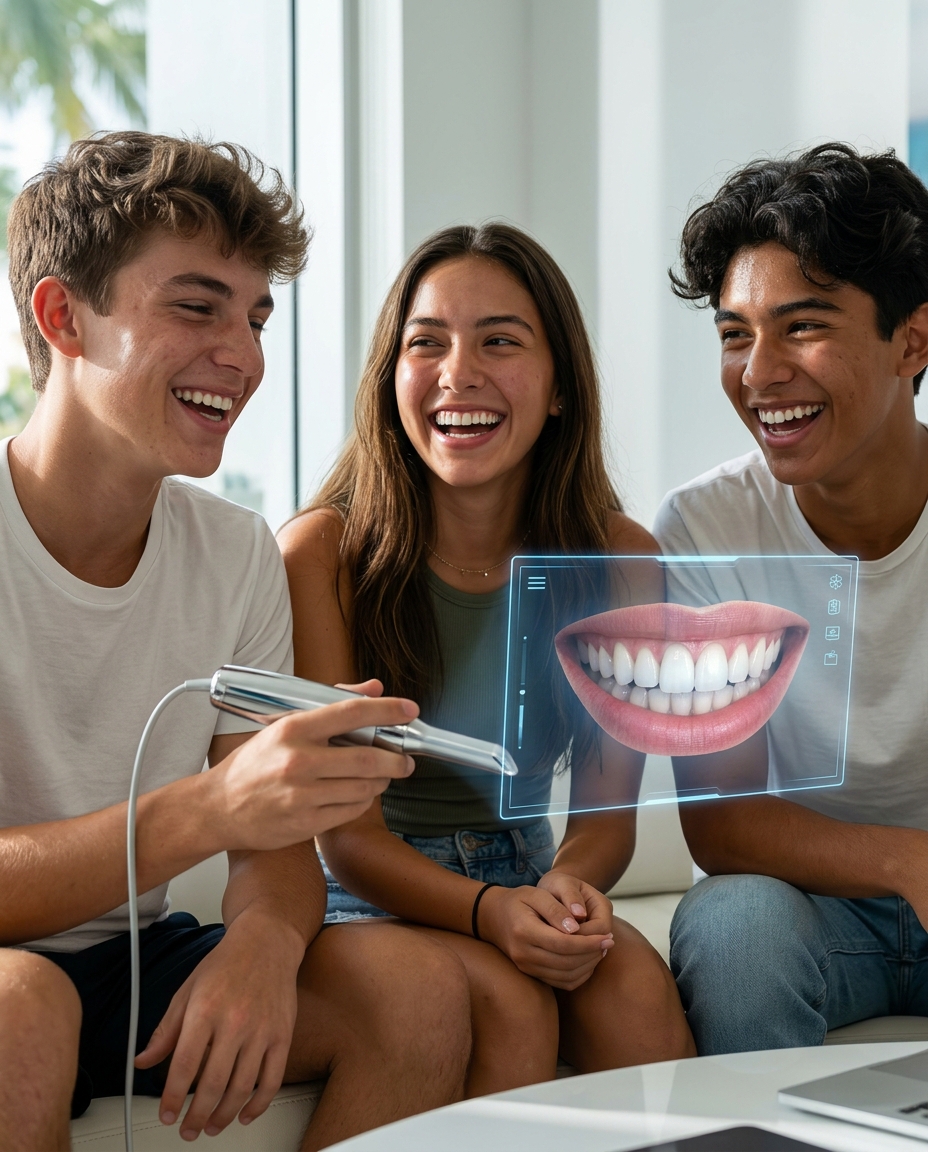

Discover AI Braces™ by SMILE‑FX®
Picture this. You’re sitting in an orthodontist’s chair, staring up at the ceiling, expecting the usual routine: a mouthful of alginate goop, a barrage of educated guesses about your timeline, and the vague promise of a straighter smile “someday.” For decades, that was just how things worked. Getting braces felt like a waiting game punctuated by painful monthly tightening sessions.
Let’s be real for a second—nobody actually enjoys that.
But what if the guesswork could be essentially eliminated from the equation? Enter the era of digital dentistry. We aren't just talking about basic computer-aided design here. We are talking about deep-learning algorithms, hyper-customized digital mapping, and a workflow so refined it transforms the entire patient experience. If you’ve been researching orthodontic options lately, you’ve probably heard the whispers (or the outright buzz) about artificial intelligence stepping into the dental clinic.
Welcome to the SMILE‑FX® AI Braces™ System. This isn't just an upgrade to traditional metal brackets; it is a fundamental reimagining of how we plan, monitor, and achieve your ideal smile.
Today, we are stripping away the hype. No wild promises. No impossible guarantees. Just a definitive, transparent look at what AI means in modern orthodontics, how it integrates with the expertise of a Board Certified Orthodontist, and why it might just be the exact solution you’ve been looking for.
What “AI BRACES” Actually Means in Today's Orthodontics
First things first. When we say "artificial intelligence," it’s easy to conjure up images of robots doing dental work. Rest assured, your treatment is entirely human-led.
In orthodontics, AI acts as the ultimate digital copilot. Imagine a system that has analyzed millions of successful clinical cases. It understands the minute biological realities of tooth movement—how a molar shifts compared to an incisor, how bone density factors into speed, and where exactly a bracket should sit for optimal torque.
When your doctor utilizes this technology, they aren't outsourcing your care to a computer. Instead, they are leveraging incredibly sophisticated software to build a "digital twin" of your mouth. This allows your orthodontist to simulate your entire treatment progression step-by-step before a single bracket is ever placed on your teeth. It’s predictive planning on a microscopic level.
Patients seeking AI Braces™ by SMILE‑FX® benefit from this synergy. You get the irreplaceable judgment, empathy, and clinical mastery of a board-certified specialist, married perfectly with the precision of machine learning. It’s the best of both worlds, really.
What Makes the System Distinct?
So, what separates a generic set of braces from a highly structured digital workflow? It comes down to the integration of technology at every single touchpoint.
At SMILE‑FX®, we don't just slap a tech label on old methodologies. We have built an ecosystem. From the moment you walk in, the process is noticeably different. We utilize advanced 3D optical digital scans (using industry-leading tools like Trios or iTero) to capture the topography of your bite in seconds. No gag-inducing putty required.
From there, the digital impression is fed into our specialized software. Here is where the magic happens. The software assists in designing custom bracket placements and calculating the exact wire tensions needed for your specific anatomy. We even utilize in-house 3D printing to create custom placement trays, ensuring that when the braces are bonded to your teeth, they land exactly where the digital plan dictated. Down to the fraction of a millimeter.
But the system doesn't stop once the braces are on. A core component of the SMILE‑FX® AI Braces™ experience involves remote dental monitoring. Using platforms like Grin, you can use your smartphone to send high-resolution scans of your progress directly to our clinical team from the comfort of your living room. We can spot a tracking issue or a bent wire before it ever slows down your progress.
Key Takeaways: Quick Facts About the Workflow
To keep things easy to digest, let’s break down the core components of what you can expect.
| Aspect of Care | What It Means for You |
|---|---|
| Initial Records | No messy impressions. We use 3D optical scanners to build a highly accurate digital model of your teeth in minutes. |
| Treatment Planning | AI software assists your orthodontist in calculating optimal bracket placement and anticipating tooth movements. |
| Placement Accuracy | Custom 3D-printed transfer trays allow for precise, simultaneous placement of brackets, reducing chair time. |
| Progress Monitoring | Remote dental monitoring tools enable the clinical team to review your progress weekly via your smartphone. |
| Office Visits | Because progress is tracked remotely, in-office adjustments are highly targeted and often less frequent. |
Step-by-Step: The Treatment Workflow
You’re probably wondering what the actual day-to-day looks like. Let’s walk through the timeline from your first cup of coffee in our waiting room to the day your retainers are delivered.
Step 1: The Consultation and Digital Twin
It starts with a conversation. We discuss your goals—whether you’re an adult looking to correct a slight relapse or a parent navigating treatment for a teen. Next, we capture your records. Using our optical scanners, we create what is essentially a "digital twin" of your mouth. You’ll actually get to see your teeth on the screen in high definition, which is undeniably cool.
Step 2: AI-Assisted Mapping
Behind the scenes, your orthodontist goes to work. The software analyzes your bite, flagging potential collisions or spacing issues. The doctor dictates the final aesthetic goal, and the system reverse-engineers the most efficient path to get there. It’s an intricate dance between human aesthetic judgment and algorithmic efficiency.
Step 3: The Bonding Appointment
When it’s time to put your braces on, things move smoothly. Thanks to indirect bonding—where brackets are pre-arranged in a custom 3D-printed tray—we aren't placing each bracket one-by-one while you hold your mouth open for an hour. The tray snaps in, the adhesive is cured, and the brackets are placed with extreme precision.
Step 4: Living with Your Braces (and Remote Check-ins)
This is where lifestyle meets technology. You go to work, you go to school, you live your life. But instead of wondering if your teeth are moving correctly, you'll use a specialized attachment on your smartphone to take a quick scan of your teeth every week or two. Our clinical dashboard alerts the doctor if something is off-track, or if your oral hygiene needs a little extra attention. It’s peace of mind, delivered digitally.
AI Braces vs. Traditional Braces vs. Clear Aligners
Decisions, decisions. The orthodontic world is crowded with options, and it’s easy to suffer from analysis paralysis.
Traditional Braces have a long, documented history of success. They can handle the most complex bite corrections, severe crowding, and stubborn rotations. However, the traditional analog workflow often relies on reactive adjustments. You show up, the doctor evaluates the movement since last month, and makes a manual bend in the wire to correct course.
Clear Aligners (like Invisalign®) revolutionized the patient experience by introducing digital planning and removable convenience. They are fantastic for esthetics and hygiene. However, some patients struggle with compliance. If you don't wear them 22 hours a day, the system breaks down. Furthermore, certain complex movements (like severe root torquing or deep bite correction) can sometimes be more challenging to achieve predictably with plastic alone.
The SMILE‑FX® AI Braces™ System sits right in the sweet spot. You get the mechanical superiority and 24/7 compliance of fixed brackets, but with the predictive digital planning and remote monitoring typically reserved for premium aligner therapies. It bridges the gap. You don't have to remember to put your teeth back in after lunch, but your doctor still has a mapped-out digital blueprint of your exact treatment path.
Cost, Timelines, and What Affects Treatment Complexity
Let’s talk numbers and calendars—the two things everyone wants to know right out of the gate.
How much does it cost? The truth is, the investment varies based on your individual clinical needs. A minor cosmetic alignment is naturally going to require fewer resources than a comprehensive bite reconstruction involving crossbites and severe crowding. However, many patients are pleasantly surprised to learn that AI-assisted workflows often run parallel in cost to traditional premium orthodontic options. By optimizing office visits and increasing clinical efficiency, the technology provides immense value. Most practices, including ours, offer flexible financing options to make it manageable.
As for the timeline? We have to be clear here: biology is the boss. No algorithm can force a tooth to move faster than your bone physiology allows. We do not guarantee overnight results. However, what AI-assisted planning *can* do is reduce inefficiencies. By placing brackets more accurately from day one and monitoring progress remotely, we often see a reduction in "detours" during treatment. Your timeline will depend on your specific biology, how well you follow instructions (like wearing your elastics!), and your body's natural response to continuous force.
Safety, Oversight, and What AI Does Not Do
In the healthcare space, safety is paramount. It’s critical to understand the boundaries of technology.
AI does not diagnose patients. It does not write prescriptions. It certainly does not operate autonomously. If you are considering any digital orthodontic treatment, you must ensure it is supervised by a licensed professional.
At SMILE‑FX®, our Board Certified Orthodontists review, modify, and approve every single digital setup. The software might suggest an efficient movement, but the doctor determines if that movement is biologically sound and aesthetically pleasing for your unique facial structure. The human element—understanding soft tissue support, lip profile, and airway considerations—remains the undisputed driver of your care.
Furthermore, remote monitoring doesn't completely replace the physical clinic. If a bracket breaks, or if a complex wire change is needed, you will absolutely still come in to see our smiling faces. The tech just ensures that when you *do* come in, the visit is necessary, planned, and highly productive.
Questions to Ask at Your Consultation
Advocating for yourself is the best thing you can do when starting a healthcare journey. If you’re scheduling a free consultation, come armed with the right questions. We love it when patients dig deep!
- "Based on my specific bite, what are the primary challenges you see?"
- "How will we monitor my progress between office visits?"
- "Will my treatment require extractions or interproximal reduction (IPR)?"
- "What are my responsibilities regarding hygiene and elastics to ensure we stay on track?"
- "Can you show me a digital simulation of what my final smile might look like?"
A reputable clinic will always take the time to answer these thoroughly, ensuring you feel confident and informed before a single scan is taken.
Frequently Asked Questions
We hear a lot of the same (very valid) concerns from our community. Here are six straightforward answers to help clarify things.
1. Does getting AI-assisted braces hurt more than regular braces?
No. The biological process of moving teeth is exactly the same, which means you may experience the typical mild soreness for a few days after adjustments. The digital planning actually aims to make force application as efficient as possible.
2. Are these braces invisible?
The AI aspect refers to the planning and monitoring software, not the physical materials. Depending on your clinical needs and preferences, the system can often be paired with clear ceramic brackets or traditional metal brackets.
3. Will my treatment be faster?
Treatment speed depends heavily on your individual biology and case complexity. While highly precise digital planning can help avoid unnecessary delays, we focus on safe, predictable, and healthy outcomes rather than promising unrealistic speeds.
4. What happens if my teeth aren't tracking according to the digital plan?
That is exactly why we use remote monitoring! If your teeth deviate from the digital twin's projection, our clinical team spots it quickly via your remote scans and may bring you in early to adjust the wire or bracket, keeping you on course.
5. Am I a candidate if I have severe crowding or an underbite?
Often, yes. Digital planning is an excellent tool for mapping out complex movements. However, a comprehensive in-person evaluation with our orthodontic team is required to determine the safest, most effective approach for severe malocclusions.
6. Do I still need to wear a retainer after treatment?
Absolutely. Teeth naturally want to shift back to their original positions as we age. A solid retention plan is crucial to maintaining the beautiful results you and your doctor worked so hard to achieve.
Taking the Next Step Towards Your New Smile
Orthodontics has fundamentally changed. It’s no longer just about straightening teeth; it’s about engineering a custom, stable, and harmonious bite utilizing the best tools modern science has to offer. By blending the profound expertise of a specialist with the predictive power of advanced software, we’ve created an environment where your care is transparent, efficient, and deeply personalized.
You don't have to navigate this decision alone, and you certainly don't have to settle for the analog waiting games of the past. If you are curious about how this technology might map out your specific smile transformation, our team is ready to pull back the curtain and show you exactly what is possible.
Ready to See Your Digital Twin?
Discover what the SMILE‑FX® experience can do for you without any pressure. We invite you to sit down with our clinical team, ask your toughest questions, and explore your custom options.
Disclaimer: The content provided in this article is for educational and informational purposes only and does not constitute medical or dental advice. Individual results, timelines, and comfort levels will vary based on biological factors, compliance, and case complexity. AI technology is used strictly as an assistive tool for treatment planning and monitoring by licensed professionals; it does not diagnose or treat independently. Please consult directly with your orthodontic team to determine the safest and most appropriate treatment plan for your specific needs.