
The Era of Guesswork in Orthodontics is Officially Over
Remember the days of goopy, gag-inducing dental impressions that tasted vaguely like bubblegum-flavored cement? Yeah, neither do we—or at least, we try our absolute hardest not to. If you’re exploring orthodontic treatment today, you’ve probably noticed that things have changed. Drastically.
You’re no longer limited to a one-size-fits-all approach. Enter the modern era, where sophisticated algorithms, vast data sets, and clinical expertise collide. If you've been curious about the AI Braces™ by SMILE-FX® workflow, you’re in exactly the right place. We are pulling back the curtain on what actually happens when artificial intelligence meets orthodontics.
What “AI” Actually Means for Your Teeth
Let’s clear the air before we go any further. When we say "artificial intelligence" in the context of your smile, we aren't talking about robots operating inside your mouth. Nobody is handing over the keys to a machine. Instead, think of AI as the ultimate, hyper-intelligent co-pilot for a Board Certified Orthodontist.
In traditional orthodontics—which, to be fair, has created millions of beautiful smiles—doctors often rely heavily on manual measurements, physical molds, and two-dimensional X-rays. It’s effective, sure. But it also leaves a bit of room for trial and error during the actual, physical moving of teeth. Wires are bent, brackets are adjusted, and you wait a month to see what happened.
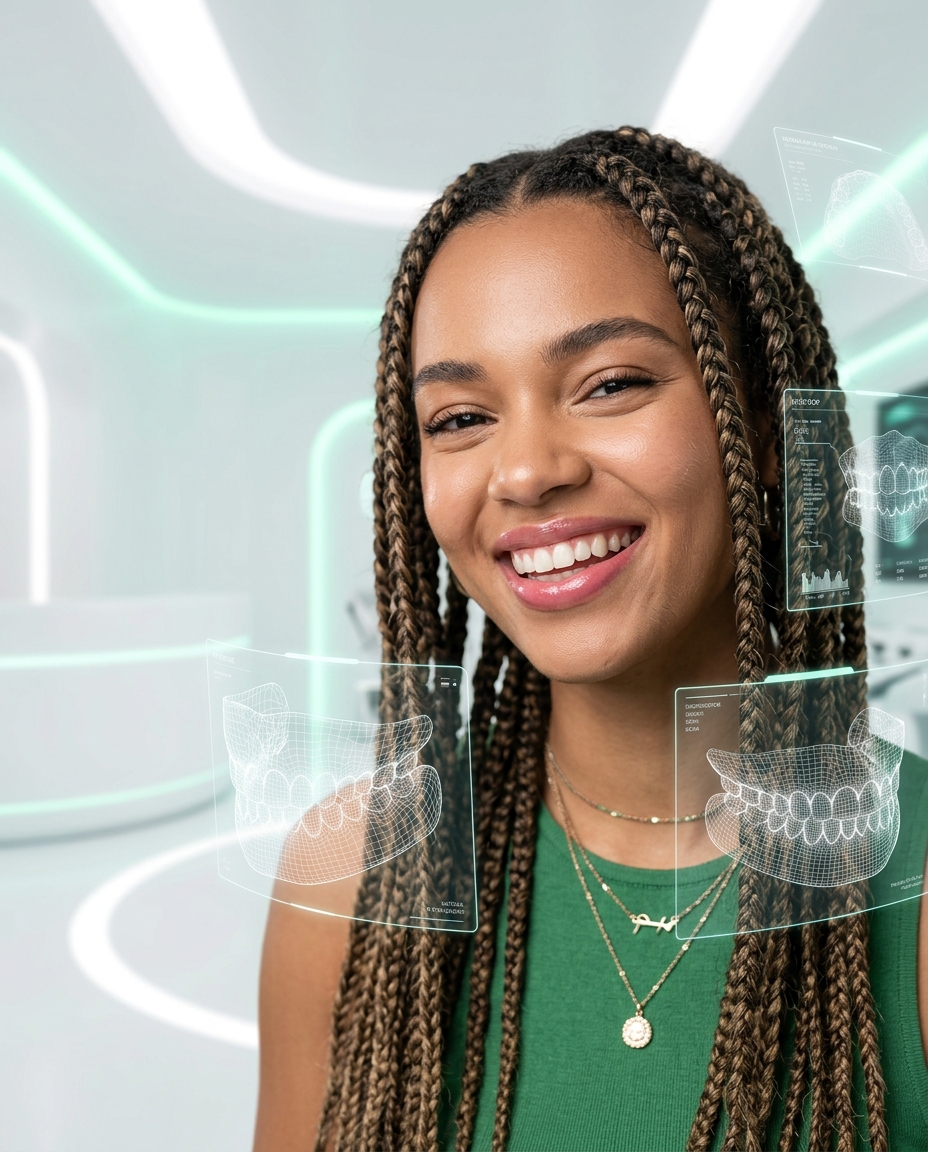
With the SMILE-FX® AI Braces™ System, we essentially build a digital twin of your mouth before a single bracket is placed. By leveraging cutting-edge technology like 3D optical digital scans (using top-tier scanners like Trios or iTero), the software analyzes millions of data points from previously treated cases. It helps map out the most efficient route for each individual tooth to reach its final destination.
What Makes AI Braces™ by SMILE-FX® a Defined System?
You might be wondering why we call it a "system." Well, because it’s not just one shiny new gadget. It’s a comprehensive, start-to-finish protocol that marries human expertise with digital precision.
Here is what happens when you choose the SMILE-FX® AI Braces™ System:
- No More Guessing: Your orthodontist uses the software to visualize the final result, working backward to determine exactly where each bracket should sit.
- Customized Hardware: Unlike standard brackets that come out of a generic box, the planning phase dictates the specific positioning required for your unique dental anatomy.
- Advanced Monitoring: Integrating tools like Grin Dental monitoring allows your clinical team to track your progress remotely between your physical visits. You simply use your smartphone to capture specialized scans at home.
But here’s the kicker. Even with all this computational horsepower, the treatment is entirely doctor-driven. The AI suggests; the orthodontist decides. If the algorithm proposes a movement that doesn't account for the unique density of your jawbone or a specific periodontal issue, your doctor overrides it. That’s the beauty of being the home of the SMILE-FX® AI Braces™—you get the absolute best of both worlds.
Step-by-Step: The Treatment Workflow
Alright, let’s walk through what this actually looks like for you, the patient. It’s natural to feel a little apprehensive about medical procedures, so understanding the roadmap can seriously dial down the anxiety.
Step 1: The Digital Blueprint
Your journey doesn't start with a mouthful of alginate paste. We use an optical scanner to take thousands of pictures per second, instantly stitching them together into a highly accurate 3D model of your teeth and gums. We pair this with digital X-rays to see what’s going on underneath the surface. The AI software then digests this data, analyzing the crown, the root, and the surrounding bone.
Step 2: The Virtual Simulation
This is where the magic happens—though, clinically speaking, it's just math and biology. Your orthodontist sits down with the software to design your smile. They program the exact movements needed to correct crowding, spacing, or bite issues. You can often even see a simulation of your projected results before you commit to anything. (Which is immensely satisfying, to be honest).
Step 3: Precision Bonding
Once the plan is locked in, the brackets are placed. Because the optimal positions were calculated digitally, the actual bonding process in the chair is streamlined. The hardware is applied with exact specifications, setting the stage for more predictable tooth movement.
Step 4: Remote and In-Office Monitoring
This might be the biggest lifestyle upgrade for our patients. Historically, you’d visit the orthodontist every 4 to 6 weeks for a "tightening." With our remote monitoring platforms, you take quick scans with your phone every week or two. The AI tracks your progress, flagging the doctor if a tooth isn't tracking correctly or if a bracket is loose. This means you only need to come into the office when a physical adjustment is truly necessary. Less time in the chair, more time living your life.
How Does It Stack Up Against Traditional Braces and Clear Aligners?
It’s a fair question. Why opt for this route over the traditional metal tracks you grew up seeing, or the clear aligners that are plastered all over social media?
Traditional Braces: As mentioned, these rely on standard bracket placement and manual adjustments based on the doctor's visual assessment at each visit. They work, but they often require more frequent in-person visits and can sometimes involve a longer treatment duration due to reactive, rather than proactive, adjustments.
Clear Aligners (Like Invisalign®): Aligners are fantastic. They are discreet, removable, and highly effective for many cases. However, they require strict patient compliance (wearing them 22 hours a day). If you are someone who easily misplaces things—or simply doesn't want the hassle of taking trays out for every snack and cup of coffee—aligners can become frustrating. Moreover, severe bite corrections sometimes necessitate the sustained, targeted force that only fixed appliances can provide.
AI BRACES™: Think of this as the sweet spot. You get the robust, continuous force of fixed brackets, meaning you don't have to worry about compliance (you literally can't take them off). But, you also get the digital pre-planning and remote monitoring typically associated with premium clear aligner therapies. It’s the ultimate hybrid of reliability and modern tech.
Let’s Talk About Cost, Timelines, and Biology
We know what you’re thinking: "This sounds expensive." You might be pleasantly surprised. Despite the heavy tech integration, treatments with AI Braces™ by SMILE-FX® are generally comparable in price to traditional braces or comprehensive clear aligner therapy.
Why? Because efficiency saves resources. Fewer emergency visits, fewer unnecessarily frequent check-ins, and a streamlined digital workflow mean we can offer cutting-edge care without exorbitant markups. Most patients utilize flexible payment plans, HSA/FSA funds, or orthodontic insurance benefits to make the process highly affordable.
Now, regarding timelines. We’d love to tell you exactly how many days, hours, and minutes your treatment will take. But we’d be lying. The truth is, biology is stubborn. Tooth movement involves a complex biological process where specialized cells (osteoclasts and osteoblasts) break down and rebuild bone structure. Your metabolism, bone density, and age all play a role.
Generally, treatment times range from 6 to 24 months. While the digital planning and targeted mechanics may help avoid unnecessary detours in your treatment path, no ethical orthodontist can guarantee a specific speed. Your body sets the pace.
Safety, Oversight, and Setting Realistic Expectations
When dealing with your health, skepticism is a highly valuable trait. Relying on algorithms to shift the bones in your face sounds intense. But let us be exceptionally clear: AI does not treat patients. Doctors treat patients.
The technology is an analytical tool. It cannot feel the tension in a wire, it cannot assess the health of your gum tissue in real-time, and it cannot talk to you about your aesthetic goals. The safety of your treatment is anchored entirely by the clinical judgment of your orthodontic team. If you’re ready to see how this translates to your specific needs, it might be time to schedule a free consultation so we can map out your options together.
It’s also crucial to maintain realistic expectations. Will your teeth be perfectly straight? That’s the goal. Will you experience zero discomfort? Absolutely not. Teeth are moving through bone. You will likely experience soreness for a few days after adjustments. That’s just biology doing its job.
Key Takeaways
| Feature / Consideration | Details in the SMILE-FX® Workflow |
|---|---|
| Treatment Planning | Utilizes 3D scans and algorithms to map out individual tooth movements before bonding. |
| Doctor Oversight | A Board Certified Orthodontist controls and approves all digital setups. AI is only an assistant. |
| Monitoring Progress | Often involves remote scanning from home via your smartphone, reducing unnecessary office visits. |
| Cost Comparison | Generally comparable to traditional braces and premium clear aligner therapies. |
| Patient Compliance | Unlike removable aligners, fixed brackets eliminate the worry of meeting a 22-hour daily wear time. |
Frequently Asked Questions
1. What exactly does the AI do during my orthodontic treatment?
The AI software processes your 3D digital scans to suggest the most efficient path for tooth movement. It calculates angles and distances that would be incredibly difficult to measure manually, helping your orthodontist design a highly personalized treatment plan.
2. Is the AI Braces workflow more painful than traditional braces?
Discomfort varies from person to person. However, because the treatment is digitally pre-planned, the forces applied to your teeth are often more targeted and steady. While you will still experience typical soreness after adjustments, many patients find the process quite manageable.
3. Will I finish my treatment faster?
While digital planning aims to maximize efficiency and avoid treatment detours, the speed at which your teeth move is ultimately dictated by your unique biology. We never guarantee faster results, but the streamlined workflow may help keep your timeline on track.
4. Can I still eat normally with these brackets?
Just like with any fixed orthodontic appliance, you will need to alter your diet slightly. Hard, crunchy, and excessively sticky foods can damage the hardware. Your clinical team will provide a comprehensive list of foods to avoid during your consultation.
5. How often will I need to visit the office?
This is one of the biggest benefits. Because we utilize remote dental monitoring through your smartphone, your orthodontist tracks your progress virtually. You typically only need to come into the office when a physical adjustment is clinically necessary, which often means fewer total visits.
6. Are AI BRACES™ suitable for complex bite issues?
Yes, they are highly versatile. Because they utilize fixed hardware, they can tackle complex malocclusions—such as severe overbites, underbites, and crossbites—that might be more challenging to resolve with removable clear aligners alone.
Your Next Steps
Navigating the sheer volume of information about orthodontic options can feel overwhelming. The internet is flooded with conflicting opinions, flashy marketing, and promises that sound a little too good to be true. That’s exactly why an in-person evaluation is irreplaceable.
At SMILE-FX®, we don't believe in high-pressure sales pitches. We believe in providing clear, clinical assessments based on the actual condition of your teeth and your personal goals. If you want to know how our digital workflows might apply to your specific situation, we invite you to sit down with our team.
- Evaluate your smile and get your questions answered: Schedule your Free Consult.
- Learn more about our practice and team: Visit the SMILE-FX® homepage.
Disclaimer: The information provided in this article is for educational and informational purposes only and does not constitute medical or orthodontic advice. Individual treatment outcomes, timelines, and experiences vary based on biological factors, case complexity, and patient compliance. The use of "AI" in orthodontics refers to advanced digital planning and predictive software, which always operates under the direct oversight and judgment of a licensed orthodontic specialist. No specific results, speeds, or pain levels can be guaranteed. Please consult directly with your orthodontic care team to determine the most appropriate treatment plan for your individual health needs.