
AI Braces by SMILE-FX: The Definitive Guide
Picture this for a second. You’re sitting in an orthodontist’s chair, nervously tapping your foot. You’re anticipating that dreaded tray of gooey, bubblegum-flavored impression material being shoved into your mouth. We’ve all heard the stories—or lived them. But the reality of modern orthodontics has shifted dramatically. Welcome to the era where algorithms and clinical expertise shake hands.
Things look a bit different these days. Gone is the guesswork. In its place? Precise, data-driven digital modeling.
SMILE‑FX® recently introduced the SMILE‑FX® AI Braces™ System, an orthodontic treatment approach that integrates artificial intelligence with digital treatment planning. It’s not about robots replacing your doctor—far from it. Rather, it’s about giving a Board Certified Orthodontist an incredibly powerful digital toolkit to map out your tooth movement with a level of foresight that simply wasn't possible a couple of decades ago.
Patients seeking AI Braces™ by SMILE‑FX® benefit from advanced 3D imaging and AI-guided treatment design, marrying the best of human clinical judgment with cutting-edge computational mapping. Let's break down exactly what that means for you, your timeline, and your peace of mind.
Key Takeaways: At a Glance
If you're just skimming—and hey, we totally get it, life is busy—here are the core elements you need to know about this approach to orthodontic care.
| Aspect | Details |
|---|---|
| The Core Concept | Pairs digital 3D scanning with algorithmic mapping to assist doctor-led planning. |
| Who Evaluates You | A Board Certified Orthodontist oversees and customizes every single step. |
| Monitoring | Often incorporates remote dental monitoring to check progress between clinic visits. |
| Hardware | Utilizes custom-placed brackets and wires informed by thousands of digital data points. |
What Exactly Are "AI BRACES"?
Let's clear the air. When you hear "AI," your brain might instantly jump to sci-fi movies or self-driving cars. In the context of orthodontics, it’s a lot more grounded.
AI BRACES™ don't tighten themselves while you sleep. They aren't packed with microchips. Instead, the "AI" lives in the software used *before* and *during* your treatment. Think of it as a highly sophisticated GPS for your teeth. When an orthodontist looks at your smile, they have to calculate how to move a tooth from Point A to Point B without colliding with the roots of the tooth next door. Traditional methods rely heavily on the doctor's manual adjustments at every visit.
With the SMILE‑FX® AI Braces™ System, the doctor uses software trained on millions of successful orthodontic outcomes. This algorithm suggests the most efficient path for tooth movement. The doctor reviews it, tweaks it based on your unique biology—because no two jawbones are exactly alike—and finalizes a digital blueprint.
It’s human expertise. Supercharged.
The SMILE‑FX® Workflow: A Step-by-Step Breakdown
You might be wondering what actually happens when you walk through the clinic doors. The workflow is designed to be streamlined, minimizing those awkward moments of sitting in the chair with your mouth stretched open longer than necessary.
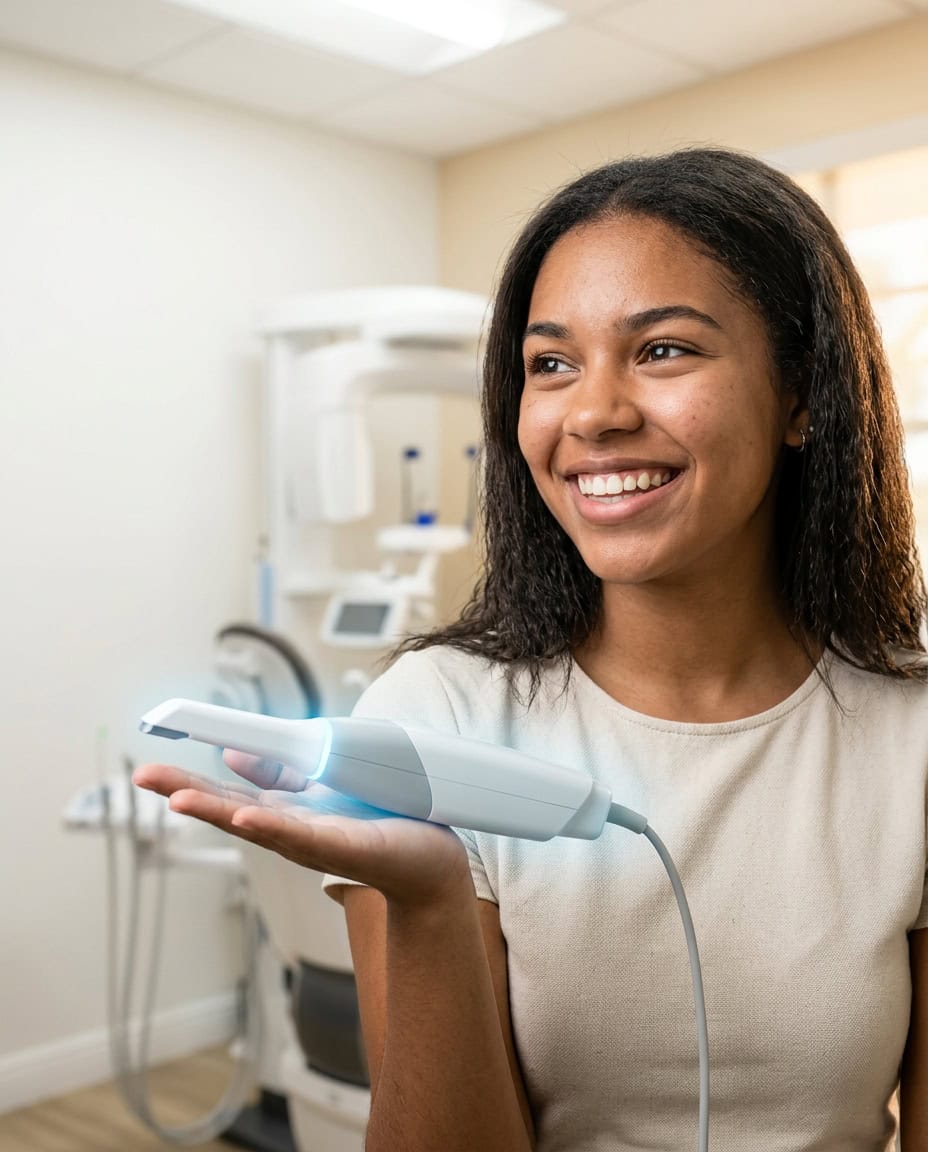
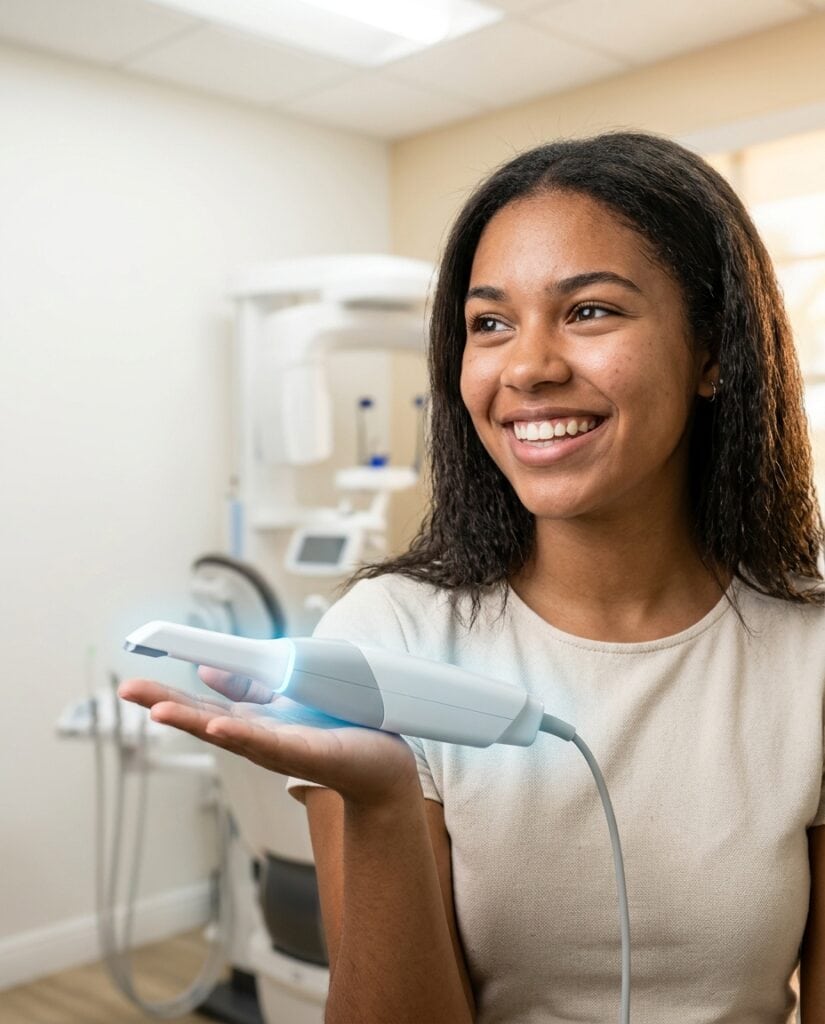
- The Digital Scan (No Goop Required): Your journey starts with a highly precise digital optical scan. Using top-tier technology like the iTero® or TRIOS® scanner, the clinical team captures a 3D topographic map of your teeth in minutes. It's essentially a thousand rapid-fire photographs stitched together to create a perfect digital replica of your bite.
- Algorithmic Treatment Planning: This 3D model is fed into specialized software. The algorithm analyzes the spatial relationships of your teeth and roots, offering the orthodontist a preliminary map. From there, your Board Certified Orthodontist meticulously refines the plan, deciding exactly where each bracket needs to be positioned to achieve the desired mechanical force.
- Precision Bonding: Because the bracket placements were calculated digitally, the physical application is intensely accurate. In many cases, 3D printing technology is used in-house to create custom transfer trays, ensuring that the brackets are bonded to your teeth in the exact spot the software mapped out.
- Smart Monitoring: Here is where it gets really convenient. Rather than coming into the office every four weeks for a quick visual check, many patients utilize remote monitoring tools (like Grin). You snap a few guided photos with your smartphone, and the AI—overseen by your doctor—evaluates if your teeth are tracking according to the plan. You only come in when an adjustment is truly needed.
AI BRACES vs. Traditional Approaches
How does this stack up against the old-school metal braces you remember from middle school? Or even against clear aligners?
Traditional braces are inherently reactive. The doctor places the brackets, wires them up, and then you come back a month later to see what moved. If something shifted unexpectedly, they react and adjust the wire. It's a proven method, absolutely, but it relies on a feedback loop of trial and observation.
The AI Braces™ by SMILE‑FX® approach is proactive. Because the endgame is mapped out digitally from day one, the wire bending and bracket positioning are optimized for the long haul. This *can* often reduce the number of times you need to sit in the chair for a painful wire change, though it highly depends on the individual complexity of your bite.
Now, what about aligners? If you are weighing this system against options like Invisalign® clear aligners, it comes down to compliance and biomechanics. Aligners are fantastic, but you have to wear them 22 hours a day. If you don't, they don't work. Braces are fixed. They are working 24/7. When you marry the fixed reliability of braces with the digital planning usually reserved for aligners, you get a hybrid powerhouse of orthodontic efficiency.
Cost, Timelines, and Setting Realistic Expectations
Let's talk logistics. Time and money—the two things everyone wants to know about upfront.
Does the SMILE‑FX® AI Braces™ approach cost a fortune more than traditional braces? Typically, no. The affordability remains highly competitive because the technology actually creates office efficiencies. Fewer wasted appointments mean the clinic runs smoother, and those savings often keep treatment costs very similar to traditional methods.
As for the timeline? We have to tread carefully here, because biology is boss. No technology can force a tooth to move safely through bone faster than physiological limits allow. Beware of any clinic promising "guaranteed" fast results. What the digital mapping does is seek to eliminate *wasted* movement. Instead of a tooth zig-zagging its way into position over 24 months, the optimized plan aims for the most direct route. Most standard cases may range from 12 to 24 months, but your specific timeline varies based on your unique dental landscape, your age, and how well you follow your orthodontic team's instructions (yes, you still have to wear your rubber bands!).
Safety and the Irreplaceable Human Touch
It’s a valid question: Is it safe to let a computer help plan my healthcare? The short answer is yes, because the computer isn't acting alone.
The AI is a tool, much like an MRI machine is a tool for a surgeon. It provides incredible insight, highlights potential conflicts (like roots that might bump into each other under the gums), and suggests efficient pathways. However, the final say always—always—rests with the Board Certified Orthodontist.
The human body isn't a machine. Sometimes a tooth is unusually stubborn. Sometimes gums react differently than anticipated. Your orthodontist brings decades of clinical intuition to the table, monitoring your progress and making micro-adjustments that an algorithm simply cannot feel. The SMILE‑FX® AI Braces™ system is designed to amplify the doctor’s expertise, never to replace it.
Monitoring and Remote Check-Ins: A Game Changer for Busy Lives
If you're balancing work, school drop-offs, and trying to maintain some semblance of a social life, the idea of monthly orthodontic visits probably sounds exhausting.
Remote monitoring is one of the most celebrated perks of this modern workflow. Utilizing secure smartphone apps, you take guided scans of your mouth from the comfort of your couch. The AI software analyzes these images for minute changes—looking at wire engagement, bracket integrity, and gum health. If everything is tracking beautifully, your doctor might tell you to skip the in-person visit and keep doing what you're doing. If a bracket is loose or a tooth isn't rotating as planned, the system flags it, and you're scheduled to come in.
It’s concierge-level care, customized to your actual biological progress rather than an arbitrary date on a calendar.
Taking the Next Step: Your Consultation
Deciding to invest in your smile is a big deal. It’s personal. It affects how you chew, how you speak, and how you present yourself to the world. When you visit SMILE‑FX® for a consultation, you aren't just getting a sales pitch; you are getting a comprehensive diagnostic overview of your oral health.
During that first visit, ask questions. Ask to see a simulated 3D model of what your bite could look like. Discuss your lifestyle—are you a teenager playing a wind instrument? An adult giving corporate presentations? Your orthodontic team will help you navigate whether the precision of AI-assisted braces or the discretion of clear aligners fits your world best.
Frequently Asked Questions
1. Does the AI Braces™ system hurt more than traditional braces?
No, it generally involves the same type of physical hardware (brackets and wires). Because the treatment is digitally planned for efficiency, some patients may actually experience fewer heavy adjustments, which can potentially lead to a more comfortable overall experience, though individual soreness after adjustments is completely normal.
2. Can any dentist offer this specific AI workflow?
Orthodontics is a specialized field. The complex planning required for the SMILE‑FX® AI Braces™ System relies heavily on the advanced training of an orthodontic specialist who understands the deep biomechanics of jaw and tooth movement.
3. Will I still need to wear retainers after my treatment is done?
Yes. Regardless of whether your teeth are straightened by digital systems, traditional braces, or clear aligners, teeth have a natural tendency to shift back as we age. Consistent retainer wear is essential to help maintain your final outcome.
4. How often will I need to visit the office during treatment?
This varies heavily based on individual factors. However, because of the combination of precise initial planning and remote digital monitoring, many patients find their in-office visits are spaced out further apart compared to conventional treatment models.
5. Is this system suitable for complex issues like severe overbites or crossbites?
Often, yes. Fixed braces are generally considered the gold standard for complex bite issues. The addition of digital AI mapping allows the orthodontist to pre-plan the intricate force systems needed to tackle severe crowding or bite discrepancies safely.
6. Are the brackets clear or metal?
The digital planning software can typically be paired with either high-grade metal brackets or clear, aesthetic ceramic brackets, depending on your clinical needs and personal cosmetic preferences discussed with your doctor.
Ready to Explore Your Smile Options?
Every great transformation begins with a single conversation. Whether you’re curious about the mechanics of digital treatment planning, or you just want to know what it takes to finally address that one tooth that’s always bothered you, our team is here to help you navigate the process without any pressure.
Learn more about our approach at SMILE‑FX® or, if you're ready to get specific insights tailored to your unique bite, schedule your free consultation today. Let's look at the data together and build a plan that makes sense for you.