

Beyond the Buzzword: What Artificial Intelligence Actually Means for Your Smile
You hear the acronym everywhere lately. It’s in your phone, your refrigerator, and probably your car. It’s exhausting, honestly. But when it comes to shifting the bones and ligaments in your face—which is exactly what orthodontics is—that two-letter buzzword suddenly carries a whole lot of weight. We aren't talking about a robot wiring your mouth. Not even close. Instead, we’re looking at a fundamental shift in how human clinical expertise is applied to biological problems.
For decades, getting braces was a bit of a localized guessing game. A highly educated guessing game, sure, but one reliant on two-dimensional X-rays, messy physical molds, and the naked eye. The orthodontist would glue a bracket onto the center of your tooth, thread a wire, and wait to see how your body responded. If a tooth stubbornly twisted the wrong way? They’d fix it at the next visit. It was reactionary.
Today, the landscape is shifting. Patients seeking AI Braces™ by SMILE‑FX® benefit from advanced 3D imaging and AI-guided treatment design, essentially flipping the script from reactionary adjustments to proactive planning. But what does that actually look like when you're sitting in the chair? Let’s peel back the curtain.
The Architecture of a Modern Orthodontic Plan
To understand the leap forward, you have to understand why teeth move in the first place. It’s not just mechanics; it’s biology. When light, constant pressure is applied to a tooth, cells called osteoclasts break down bone on one side, while osteoblasts rebuild it on the other. It’s a finicky, delicate orchestra. Push too hard, and the tooth stops moving. Push too lightly, and nothing happens.
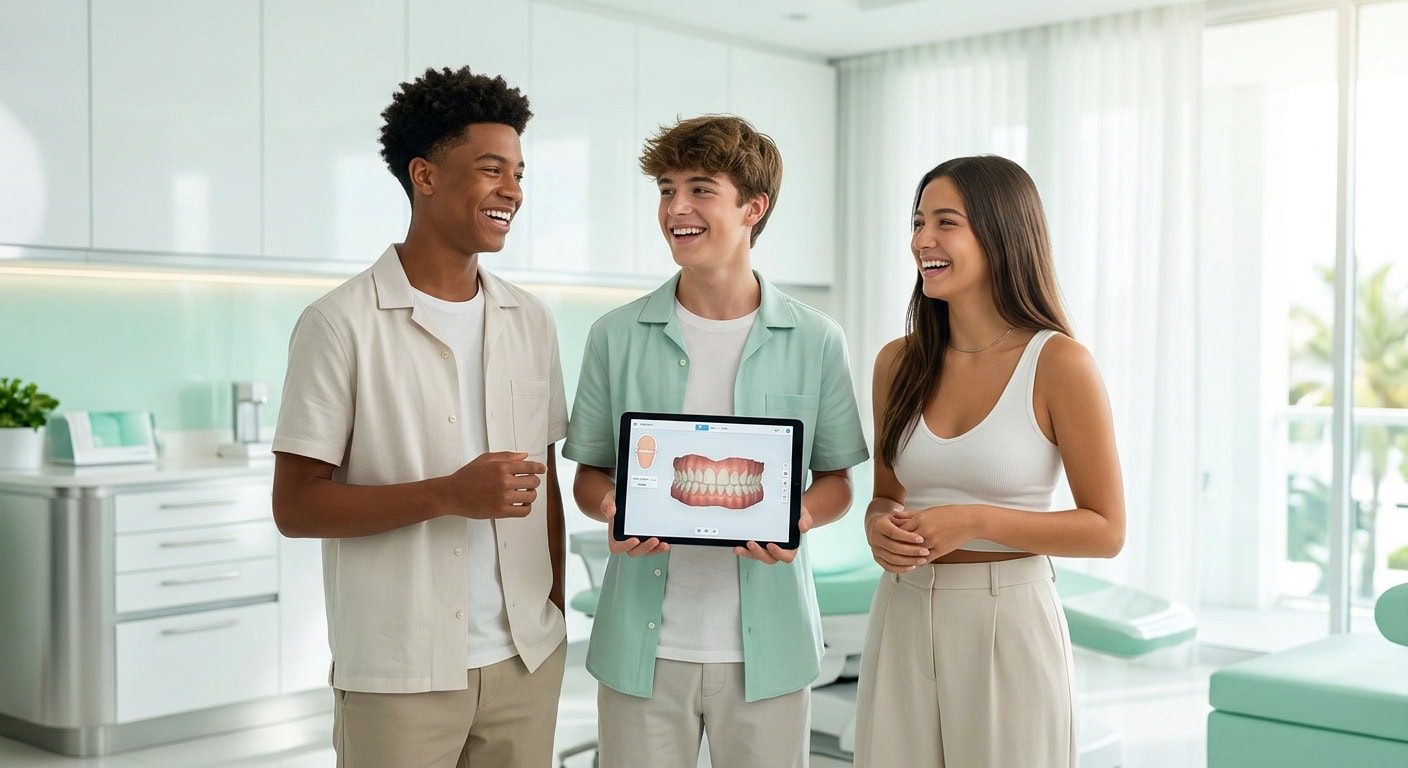
This is where the SMILE‑FX® AI Braces™ System enters the conversation. Rather than relying solely on visual estimation during your bonding appointment, the process starts in the digital realm. We capture 3D optical digital scans (using cutting-edge technology like Trios or iTero scanners). No goop. No gagging. Just thousands of microscopic pictures stitched together to create an exact digital replica of your mouth.
From there, artificial intelligence algorithms assist the Board Certified Orthodontist in mapping the roots and crowns of your teeth. The software runs millions of calculations to suggest the most efficient path from "Current Smile" to "Future Smile." The doctor then reviews, modifies, and approves this digital roadmap. It’s the ultimate marriage of human oversight and computational power.
Step-by-Step: The SMILE‑FX® AI Braces™ System Workflow
If you're considering this route, you probably want to know what Tuesday at 2:00 PM actually looks like when you walk into the clinic. The workflow is distinctly different from the braces experience your parents might have had.
1. The Deep-Dive Digital Mapping
Before a single bracket touches your enamel, your entire treatment is simulated. The AI helps segment each individual tooth on the screen, calculating the necessary torque, angulation, and rotation. (And let's be honest, seeing a time-lapse of your own teeth moving on a monitor is endlessly fascinating.)
2. Precision Bonding
Because the plan is finalized digitally, the physical brackets can be placed with incredible precision. Sometimes, this involves custom-printed trays that transfer the brackets to your teeth exactly where the software dictated. This reduces the human error of visual fatigue. A millimeter off center might not sound like much, but in orthodontics, a millimeter is a mile.
3. Smart Monitoring Between Visits
This is perhaps the biggest lifestyle upgrade. Historically, you'd come into the office every 4 to 6 weeks so the doctor could check your progress. Now, using remote dental monitoring platforms (like Grin), patients can use their smartphones to send high-resolution video scans directly to our clinical team. We can track your progress from your couch. If a wire is poking or a tooth is lagging behind, we know about it immediately—not three weeks later.
Key Takeaways: Digital vs. Traditional Workflows
To keep things exceptionally clear, here is a breakdown of how the integration of digital tools alters the traditional orthodontic experience.
| Feature Focus | Traditional Braces Approach | SMILE‑FX® AI Braces™ System |
|---|---|---|
| Initial Impressions | Physical putty molds (alginate or PVS). | 3D digital optical scans (iTero, Trios). |
| Treatment Planning | Visual estimation and manual bracket positioning. | Digital 3D simulation with computational predictive modeling. |
| Progress Tracking | In-office appointments only (typically every 4-6 weeks). | Remote smartphone scanning combined with strategic in-office visits. |
| Bracket Placement | Direct bonding, one bracket at a time, guided by eye. | Often uses digital guides for exact predetermined positioning. |
AI BRACES vs. Clear Aligners: The Nuanced Reality
It’s the most common question we hear during a consultation: "Should I get braces or Invisalign®?" And honestly, it’s a great question. For a long time, clear aligners held a monopoly on "digital" orthodontics. They were the tech-forward option, while braces were viewed as the old-school, analog necessity for complex cases.
Not anymore.
The SMILE‑FX® AI Braces™ system brings the exact same level of digital pre-planning and computational predictability to fixed brackets. Clear aligners are fantastic. They are discreet, removable, and highly effective for many bite issues. But they require intense patient compliance. If you leave them in a napkin at a restaurant (it happens more than you'd think) or simply forget to wear them for 22 hours a day, your teeth don't move. Period.
Fixed brackets, on the other hand, are working 24/7. When you combine the round-the-clock biomechanical efficiency of brackets with the digital brainpower of cutting-edge orthodontic technology, you get a highly potent treatment modality. You don't have to choose between advanced tech and fixed mechanics anymore; you get both. It’s often the ideal middle ground for teenagers with unpredictable schedules or adults who simply don't want the mental burden of remembering to insert their aligners after every cup of coffee.
Let’s Talk Timelines and The Biology Bottleneck
We need to have a very transparent conversation about speed. The internet is littered with marketing fluff promising "blazing fast" orthodontic results. Here is the unvarnished truth: no algorithm, no software, and no bracket can force your bone to remodel faster than your unique biology allows.
If you push teeth too fast, you risk root resorption (where the roots of the teeth actually shorten) or bone loss. It’s unsafe.
So, do AI-assisted workflows speed up treatment? Yes and no. They don't make the cellular process of bone remodeling faster. What they can do is make the journey dramatically more efficient. By minimizing the need for reactionary "detours" (like realizing a bracket was placed a millimeter off and having to backtrack for two months to correct the root angle), a digitally planned case often proceeds with fewer hiccups. Efficiency sometimes looks like speed to the patient, but in clinical terms, it's just a smoother, more direct route to the finish line.
Treatment lengths vary wildly based on individual factors—the severity of crowding, the complexity of bite correction (like an overbite or crossbite), and patient compliance with things like rubber bands. Most cases range anywhere from 9 to 24 months. Your orthodontic team can give you a personalized estimate, but remember: it’s an estimate, not a guarantee.
Cost, Transparency, and Value
There’s a persistent myth that anything with "AI" slapped on the label automatically costs twice as much. Paradoxically, that’s not typically the case here. SMILE‑FX® is the proud home of the SMILE‑FX® AI Braces™, and our philosophy is that advanced digital planning shouldn't be a luxury add-on; it should be the baseline standard of care.
The cost of braces is usually driven by the clinical complexity of your specific bite and the estimated time you'll be in treatment. Because digital workflows can streamline office visits and reduce the overall number of times you have to sit in our chair, the operational efficiencies often balance out the cost of the technology itself. You are paying for the Board Certified Orthodontist’s expertise, the sophisticated hardware, and the peace of mind that your treatment is being monitored systematically.
When you come in for a consultation, we strongly advise asking direct questions about your financial estimate. Does it include retainers? What about emergency visits for a broken bracket? Are remote monitoring tools like Grin included in the baseline fee? Transparency is everything.
The Psychological Shift: Adults and Teens
There's an emotional component to orthodontics that often gets buried under the clinical jargon. Getting braces is a vulnerable experience.
For adults, the primary hesitations are usually time and appearance. You're busy. You have Zoom meetings, business trips, and life to manage. The idea of taking an afternoon off work every few weeks for a wire tightening is daunting. By incorporating remote monitoring and highly predictable digital planning, the burden on your calendar shrinks. You only come to the clinic when a physical intervention is actually required.
For teens, the struggle is compliance and hygiene. Teenagers are notoriously tough on braces. Brackets break. Hygiene can slip. The beauty of remote smartphone scans is that we can gently monitor a teenager's brushing habits from afar. If we notice puffy, red gums starting to develop, we can intervene with a quick message before it turns into a larger issue. It takes some of the "nagging" off the parents' shoulders and puts the clinical team in the role of supportive coach.
Safety, Oversight, and What Software Cannot Do
We’ve sung the praises of artificial intelligence, but let’s draw a hard line: AI does not treat patients. Humans do.
An algorithm doesn't know that you grind your teeth when you're stressed. It doesn't know the exact density of your jawbone, and it doesn't understand the nuances of your facial profile. Software is a tool—a highly sophisticated calculator. It is entirely dependent on the Board Certified Orthodontist to input the correct variables, challenge the software's assumptions, and ultimately design a safe, functional bite.
If you rely purely on automation without expert clinical judgment, you run the risk of moving teeth right out of the bone. This is why direct-to-consumer, mail-order aligner companies have faced such severe backlash. Orthodontics requires ongoing, personalized evaluation. The technology exists to augment the doctor’s hands, not replace them.
Frequently Asked Questions
1. Does the SMILE‑FX® AI Braces™ System hurt more or less than traditional braces?
The biological process of moving teeth feels the same regardless of the technology used to plan it. You can typically expect mild soreness for a few days after an adjustment or when initially starting treatment. However, because digital planning aims for efficient, precise movements, you may experience fewer "surprises" or severe, unexpected adjustments along the way.
2. Can I choose clear brackets with this system?
Yes. The digital planning workflow can often be paired with ceramic (clear) brackets or traditional metal brackets. The intelligence is in the planning and positioning, not strictly in the material of the bracket itself. Your orthodontist will let you know if a specific material is better suited for your bite.
3. How often will I need to come into the office?
This varies by patient and treatment stage. By utilizing remote smartphone monitoring, many patients can stretch their in-office visits to every 8 to 12 weeks, coming in only when a specific physical change (like a wire swap or repositioning) is required by the digital plan.
4. Will this fix my overbite or underbite?
Digital planning is excellent for visualizing the correction of complex bite issues, including overbites, underbites, and crossbites. However, severe skeletal discrepancies may still require additional appliances (like elastics or expanders) in conjunction with your braces to achieve a healthy, stable result.
5. What happens if I break a bracket?
A broken bracket temporarily halts the movement of that specific tooth. If this happens, you should contact the office. Using the remote monitoring app, you can often send us a quick photo of the breakage, and our clinical team will determine if you need to come in immediately or if it can wait until your next scheduled visit.
6. Do I still need to wear a retainer afterward?
Absolutely. Teeth have an incredible "memory" and will naturally try to shift back to their original positions once the braces come off. Long-term retention is the only way to protect your investment. A retainer protocol will be prescribed as soon as your active treatment ends.
Your Next Steps
Orthodontics is a major decision—biologically, financially, and emotionally. The tools we use today are lightyears ahead of what was available a decade ago, but the goal remains exactly the same: a healthy, functional, and confident smile that lasts a lifetime.
You don't have to figure out the complexities of digital orthodontics on your own. If you’re curious about how advanced planning might impact your specific smile, the best way forward is an in-person evaluation. Our team will take the time to scan your teeth, walk you through the 3D models, and answer every question you have without the pressure or the hype.
Take control of your oral health by scheduling a free consultation today. Or, if you have more general questions about our processes, feel free to contact us directly.
Disclaimer: The information provided in this article is for educational purposes only and does not constitute personal medical or dental advice. Orthodontic treatment outcomes, timelines, and comfort levels vary significantly based on individual biology, case complexity, and patient compliance. The term "AI" refers to artificial intelligence-assisted software tools used by our clinical team for treatment planning and monitoring; AI does not replace the diagnosis, oversight, or hands-on treatment provided by a licensed Board Certified Orthodontist. We cannot guarantee specific results or speeds. Always consult directly with your orthodontic professional regarding your specific health needs and treatment options.