
Why Clear Aligners and Braces Matter for Your Smile Today
Let me be straight with you.
Your teeth are one of the first things people notice about you.
Whether you're 14 or 44, having a smile you're proud of changes everything.
But here's the thing most people get wrong: they think orthodontic treatment is just about vanity.
It's not.
It's about function, confidence, and setting yourself up for better oral health down the road.
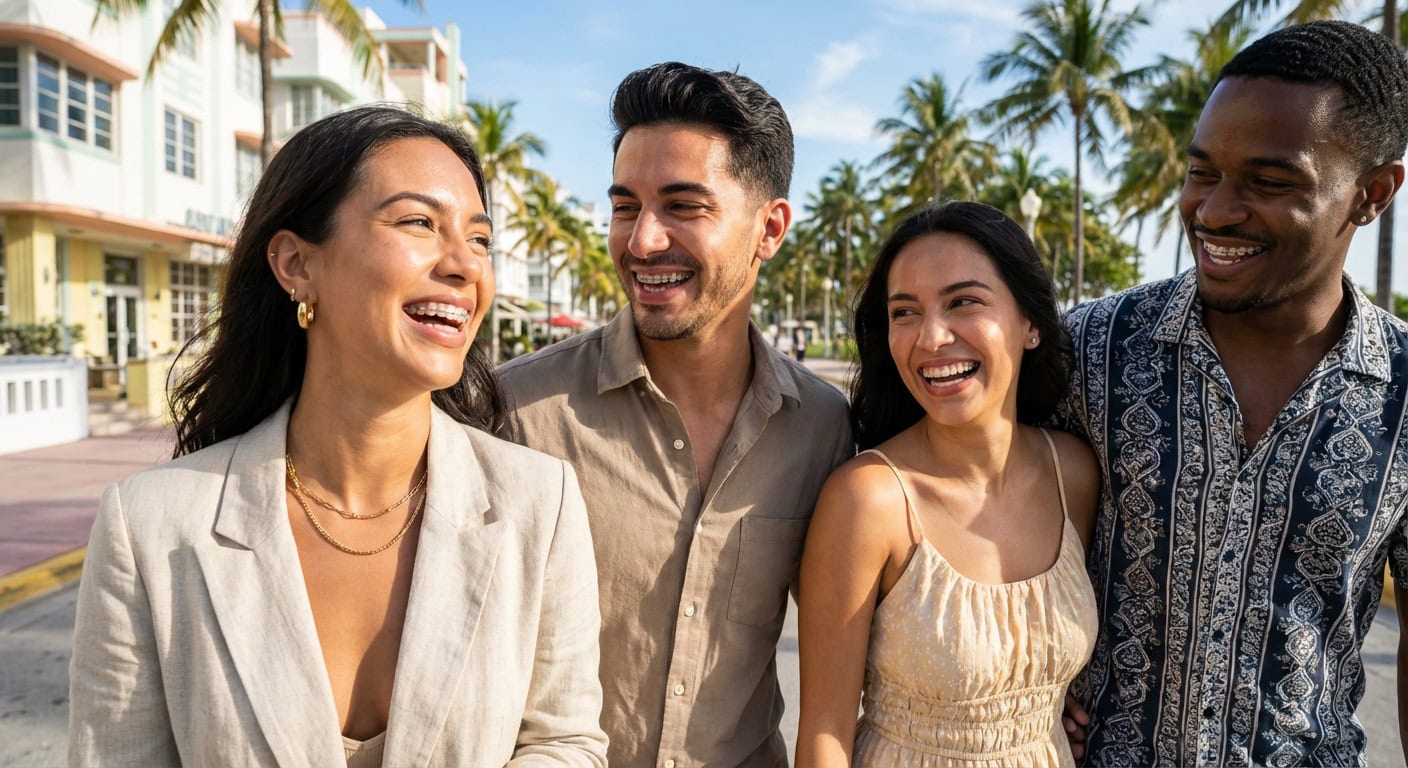
I talk to people every single day who've been hiding their smiles for years.
They avoid photos.
They cover their mouths when they laugh.
Some even skip job interviews because they're self-conscious.
That's the real cost of misaligned teeth.
It's not financial, it's emotional.
The good news?
Clear aligners and modern braces have completely changed the game.
You're not stuck with the metal-mouth look from the '90s anymore.
You've got options that actually fit your lifestyle.
And I'm not just talking about looks here, I'm talking about real orthodontic solutions that work.
The Truth About Orthodontic Treatment Options
When people think about straightening their teeth, they usually imagine two things: traditional braces or nothing at all.
But that's outdated thinking.
The orthodontic industry has evolved.
What's available now is way better.
You've got clear aligners that are virtually invisible.
You've got braces that come in different styles.
You've got options for kids, teens, and adults.
The real question isn't "Should I get my teeth straightened?"
The real question is "Which option makes sense for my situation?"
Here's what most people don't realize: the type of treatment you choose matters less than who's doing it.
A board-certified orthodontist specialist using the right technology can make a huge difference in your results, timeline, and overall experience.
That's why working with a qualified specialist matters so much.
Clear Aligners: Are They Really Better Than Braces?
Everyone wants to know the same thing about clear aligners: are they actually better?
Short answer: it depends on your specific case.
Clear aligners are great because they're removable.
You can take them out to eat, brush, and floss normally.
They're less noticeable than braces.
For some people, that's a total game-changer.
But they're not a miracle solution for every situation.
Some complex cases need the precise control that braces provide.
Some people lose them or don't wear them consistently enough to get results.
That's just reality.
What you really need to know:
Clear aligners work best when you're disciplined about wearing them.
They typically stay in your mouth for 20-22 hours a day.
You only take them out to eat and clean your teeth.
Skip a few days of wearing them, and your timeline extends.
Keep forgetting them in a restaurant, and you're wasting money.
For teens and kids, this can be challenging.
For adults who want a straightforward solution, Invisalign and similar clear aligners can be perfect.
The real question: what's your situation?
Do you need something that works for complex bite issues?
Are you looking for something discreet?
Do you want something that doesn't require constant discipline?
Your answers to these questions matter more than any marketing hype.
Traditional Braces Still Have a Strong Place
I know braces might sound old-school, but don't write them off.
Modern braces have come a long way.
They're smaller, more comfortable, and faster than they used to be.
For certain cases, they're actually the smartest choice.
Braces are excellent for:
Severe crowding and spacing issues.
Complex bite problems that need precise correction.
Patients who struggle with consistency and discipline.
Younger patients whose teeth are still developing.
Cases where speed is important.
Here's something people don't talk about enough: braces actually work faster for most people.
If you've got a complicated situation, you might be looking at 18-24 months with braces versus 24-36 months with aligners.
For some people, that time difference is worth the visibility trade-off.
The real benefit of braces: they do the work regardless of your discipline level.
You can't forget them in a restaurant.
You can't decide not to wear them on Wednesday because you're tired.
They're working 24/7.
What About Your Kids and Teens?
Parents always ask me the same question: when should my kid get braces or aligners?
Here's the thing: there's no magic age.
Some kids need early intervention.
Some kids should wait.
Some kids are perfect candidates for clear aligners.
Others need traditional braces.
The only way to know for sure is to get a professional evaluation.
And I don't mean a guess from your regular dentist.
I mean a real assessment from someone who specializes in this stuff.
For kids and teens, the advantages are pretty clear.
Early treatment can prevent bigger problems later.
Fixing bite issues when they're young means less work when they're adults.
And getting them excited about a better smile builds lifelong confidence.
Whether your teenager wants clear aligners because they're less visible, or braces because they want guaranteed results fast, both options can work.
What matters is finding someone who actually listens to what your family needs.
Adults: It's Never Too Late to Fix Your Smile
This is important because so many adults think they've missed the window.
You haven't.
Getting orthodontic treatment as an adult is completely normal now.
Maybe you never had the chance as a kid.
Maybe you had braces but didn't wear your retainer.
Maybe you just decided at 35 that you're done hiding your smile.
All of those are valid reasons.
For adults, clear aligners often win out because of lifestyle.
You've got work commitments, social events, and a life that doesn't revolve around showing up to appointments.
Invisible treatment fits better into that reality.
That said, if you've got a complex situation, don't choose aligners just because they sound nicer.
Choose the treatment that's actually going to work for your teeth.
The investment in your smile pays dividends.
Better oral health, fewer future dental issues, and the psychological benefit of actually being excited about your appearance.
Understanding Different Types of Cases
Every orthodontic case is different.
Some people have simple crowding.
Some have spacing issues.
Some have bite problems that affect how they chew and speak.
Some have a combination of everything.
Your specific case determines which treatment makes the most sense.
Mild crowding?
Clear aligners often work great.
Severe crowding plus a bad bite?
You might need braces for the best results.
Spacing plus potential jaw problems?
Your orthodontist needs to look deeper.
This is why that free consultation and 3D scan matters so much.
It's not marketing hype.
It's actually useful.
A good orthodontist will map out your exact situation, show you what's happening, and explain what your options actually are.
Technology Is Making a Real Difference
The way orthodontics works has genuinely improved because of technology.
3D scanning lets your orthodontist see exactly what's going on inside your mouth.
No more guessing.
No more surprises halfway through treatment.
Digital treatment planning means you can actually see what your teeth will look like before treatment even starts.
That's insanely cool and genuinely helpful.
Advanced materials in both aligners and braces mean faster, more comfortable treatment.
At places using cutting-edge technology, you're getting treatment planned and executed at a level that wasn't possible even five years ago.
This isn't about flashy marketing.
This is about real, measurable improvements in how treatment works and how fast you see results.
Finding the Right Orthodontist Actually Matters
Here's what I've learned talking to thousands of people about their orthodontic treatment: the outcome depends way more on the orthodontist than on whether you choose aligners or braces.
You could get braces from someone who's just going through the motions, or clear aligners from someone who's genuinely invested in getting you the best possible result.
Guess which one gets better results?
A good orthodontist:
Listens to what you actually want.
Is honest about what's possible and what's not.
Uses modern technology to plan your treatment properly.
Has actual expertise and credentials, not just a sign on a building.
Explains your options without pushing you toward the most expensive solution.
Stays involved throughout your treatment, making adjustments based on how your teeth are actually responding.
That's the difference between getting your teeth straightened and actually getting a great result.
SMILE-FX represents exactly that kind of practice.
They're a board-certified orthodontic specialist studio that actually invests in understanding each patient's situation.
Whether you're looking at clear aligners or braces, they've got the expertise and technology to give you real results.
Their approach isn't about pushing you into one solution.
It's about finding what actually makes sense for your teeth and your life.
They work with kids, teens, and adults.
All cases.
All ages.
The first step is getting a real evaluation instead of guessing about what your teeth need.
Ready to Actually Do Something About Your Smile?
Stop waiting.
Stop hiding your smile in photos.
Stop wondering what would happen if you actually fixed your teeth.
What you need is a real conversation with someone who knows what they're doing.
Book your FREE 3D scan and VIP smile consultation here.
You'll get to see exactly what's going on with your teeth.
You'll get honest feedback about your options.
No pressure.
No upsell.
Just real information so you can make a smart decision about whether treatment actually makes sense for you.
Whether you end up choosing clear aligners, braces, or something else entirely, at least you'll know what's actually possible instead of guessing based on what you've heard from friends.
That consultation is free for a reason: because a good orthodontist knows that once you see what's actually possible, the decision becomes obvious.
Clear aligners and braces have changed lives for thousands of people.
Your smile could be next.
Beyond Straight Teeth: The Real Cost of Waiting for Braces and Clear Aligners
Let me tell you what nobody talks about.
You already know misaligned teeth look different.
What you might not realize is how much they cost you while you're waiting to fix them.
I'm not just talking about money.
I'm talking about the actual price you pay every single day by putting off orthodontic treatment.
Your teeth affect how you chew.
They affect your jaw alignment.
They affect how your whole mouth functions.
And here's the thing that keeps people up at night: the longer you wait, the more complicated your case becomes.
A simple spacing issue at 25 can turn into a complex bite problem by 35.
A minor crowding situation in your teens can require more aggressive treatment as an adult.
Your teeth don't stay the same while you're deciding.
They keep moving in the wrong direction.
Why Timing Actually Matters for Orthodontic Treatment
People ask me all the time: what's the best age to start treatment?
The honest answer is simple.
The best time to start is when you realize you need it.
But there's a secondary answer that matters more.
The best time to start is before your case gets worse.
Think about it like this.
A small leak in your roof is annoying.
But you can fix it yourself with minimal damage.
Wait two years and that leak becomes structural damage that costs ten times more to repair.
Your teeth work the same way.
With clear aligners, minor cases move fast.
Six to twelve months for some people.
With traditional braces, complex cases that should have been caught earlier take much longer.
That's not a coincidence.
It's because the problems had time to compound.
What Actually Happens to Your Mouth When You Delay Treatment
Your teeth are always moving.
Even when you think they're stable, they're shifting.
Without proper alignment, they shift in ways that create more problems.
Here's what I see happen over and over:
Spacing gets worse because teeth drift toward gaps.
Crowding increases as teeth fight for space and move in three dimensions.
Your bite changes because your jaw is compensating for misalignment.
Wear patterns develop on certain teeth because they're taking all the pressure.
Your jawline can actually shift if your bite is significantly off.
By the time someone finally comes in at 40 saying they want to fix their teeth, their case is three times more complicated than it would have been at 25.
That means longer treatment time.
That means potentially higher costs.
That means your mouth has already dealt with years of unnecessary stress.
The Hidden Costs Nobody Warns You About
Everyone focuses on the upfront cost of braces or aligners.
That's not really where the money goes.
The real cost shows up in other places.
Future dental work gets more expensive because your bite is off.
You develop TMJ problems from compensating for misalignment.
You get cavities in weird places because crowded teeth are impossible to clean properly.
You need more aggressive gum treatments because bacteria hide in spaces between crooked teeth.
You might eventually need dental implants or extractions that could have been prevented.
I've seen people spend $15,000 on general dentistry to fix problems that $5,000 in orthodontic treatment would have prevented.
That's not a success story.
That's a failure to act when it mattered.
The Mental Health Side Nobody Admits
Here's what happens in the years you wait.
You get used to not smiling in photos.
You rehearse explanations for why you cover your mouth.
You stop raising your hand in meetings.
You avoid eye contact when talking to people.
You internalize this idea that your smile is something to be embarrassed about.
That's a decade of your life spent managing an image problem that could be solved.
And when you finally fix it, your muscle memory doesn't change overnight.
You still instinctively cover your mouth.
You still feel uncomfortable in social situations.
It takes months to actually believe your teeth are better now.
The cost of waiting isn't just dental.
It's psychological.
Understanding Treatment Costs vs. Future Problems
Let me break down actual numbers because this matters.
Clear aligner treatment for a straightforward case: $2,000 to $6,000.
Braces for a more complex case: $3,000 to $8,000.
Single dental implant you might need later because a tooth gave out: $4,000 to $6,000.
Root canal because a tooth got damaged from stress: $1,500 to $2,500.
Gum grafting if your gums recede from crowding: $2,000 to $4,000 per tooth.
Full mouth reconstruction: $20,000 to $50,000.
See where I'm going with this?
Invest in orthodontic treatment now or spend significantly more later fixing problems that never needed to exist.
That's not fear mongering.
That's just how mouths work.
How Modern Orthodontists Make Treatment Affordable
The biggest misconception is that you need to pay everything upfront.
Most orthodontic offices, including practices that understand patient needs, offer flexible payment plans that spread costs across your treatment.
That means you're not paying $6,000 all at once.
You're paying $200 to $300 per month while your teeth are actually being fixed.
Think about that.
You probably spend more than that on things you don't remember buying.
Insurance often covers part of it if you have orthodontic benefits.
Many plans cover 50% of treatment up to a certain limit.
That could cut your cost in half.
Discount plans exist if you don't have insurance.
Some practices offer cash discounts if you pay upfront.
The point is this: cost shouldn't be the reason you keep waiting.
Different Cases, Different Timelines, Different Outcomes
Not every mouth needs the same treatment length.
A simple spacing issue might be solved in four months.
A moderate crowding case might take twelve months.
A severe bite problem might need twenty four months.
The crazy thing is that many people don't know their timeline because they've never gotten evaluated.
They assume it'll take forever so they never start.
Understanding your specific case requires an actual assessment.
Not a guess.
Not something your general dentist casually mentions.
A real orthodontic evaluation that shows you exactly what's happening and how long it'll take to fix.
That's the only way to know if your case is a six month project or an eighteen month project.
Why Some People Get Results and Others Don't
I've seen two people with almost identical cases.
One finished treatment and kept perfect results for five years.
The other finished treatment and their teeth shifted back to almost where they started.
The difference wasn't the treatment.
It was what happened after.
Retention is ninety percent of getting results that actually stick.
You need a retainer after treatment.
That's just fact.
Some people need to wear it every night forever.
Some people can get away with a few nights per week after the first year.
But all of them need to wear something.
This is where a lot of people mess up.
They finish their braces or aligners and feel done.
Then six months later they're annoyed because their teeth are moving again.
That's not the treatment failing.
That's the person skipping the final step.
Real Talk About Invisalign vs. Traditional Braces for Different Situations
I know this overlaps with what we covered before, but there's a specific angle that matters here.
If you've waited years to get treatment, your case might be more complex than you realized.
At that point, Invisalign might not be the best choice despite being less visible.
Here's why: complex cases sometimes need the precision that only traditional braces can provide.
Invisalign works great for straight cases.
But if your bite is significantly off, or your teeth are severely crowded, braces might actually get you better results faster.
The frustration I see is people choosing based on appearance when they should choose based on what their mouth actually needs.
That's where working with someone who's actually qualified makes all the difference.
A board certified specialist won't try to force your case into Invisalign just because that's what you want.
They'll tell you what's actually going to work.
Kids Need Different Considerations Than Adults
If you have kids, this is critical.
Early evaluation changes everything.
Some kids benefit from phase one treatment that's started around age eight or nine.
This doesn't mean full braces.
It means addressing specific issues before permanent teeth come in.
Other kids should wait until they're twelve or thirteen when their mouth is more developed.
The only way to know is to get an actual assessment.
Not from your general dentist making assumptions.
From someone who specializes in this.
Here's the parent question I always hear: won't they just need more treatment later?
Sometimes.
But early phase one treatment, when appropriate, prevents bigger problems that would require much more extensive work.
It's like the difference between preventing a cavity and treating one that's already deep.
Prevention is always cheaper and easier.
Technology Makes Treatment Faster and More Accurate
Five years ago, orthodontists did a lot of guessing.
Now with advanced technology, that's mostly gone away.
3D scanning shows exactly what's happening and what needs to move.
Digital planning lets your orthodontist see the final result before treatment starts.
Advanced materials in braces and aligners work faster with less discomfort.
This isn't just marketing talk.
It's real technology that actually changes outcomes.
Which means if you're considering treatment now versus five years from now, you're getting better tools and faster results by starting now.
The Real Question You Should Be Asking
Stop asking yourself: can I afford to get braces or aligners?
Start asking yourself: can I afford not to?
Because waiting costs you in ways that go way beyond the price of treatment.
It costs you years of hiding your smile.
It costs you the mental energy of managing an image issue.
It costs you future dental problems that are preventable.
It costs you time because your case gets more complicated the longer you wait.
The math is simple.
Start now and you're done in a year or two.
Start ten years from now and you're dealing with significantly more complex problems.
What Happens at a Real Orthodontic Consultation
You're probably wondering what actually happens when you go in for an evaluation.
It's not complicated.
A real assessment includes a visual examination of your teeth and bite.
3D scanning that shows exactly what's going on.
Discussion of your goals and concerns.
Honest feedback about your options.
Timeline estimates for different treatment approaches.
Cost breakdown with payment plan options.
No pressure.
No commitment.
Just information so you can make an actual decision instead of guessing.
And here's the thing most people don't expect: it's free.
Many orthodontic offices offer free consultations because they know once you see what's actually possible, the decision becomes easy.
Why Your Specific Situation Matters More Than You Think
This is where generic advice breaks down.
Your case is unique.
Your age is unique.
Your goals are unique.
Your lifestyle is unique.
The best treatment for you might be completely different from the best treatment for someone with similar looking teeth.
One person with spacing needs Invisalign because of their job.
Another person with the same spacing needs braces because they won't wear aligners consistently.
One teenager is a perfect candidate for early intervention.
Another teenager at the same age should wait.
You can't know which category you fall into without getting evaluated by someone who actually knows what they're doing.
Making the Decision to Start Treatment
Here's what I tell people when they're on the fence.
You're not committing to anything by getting an evaluation.
You're just getting information.
Once you have actual information about your case, your timeline, and your cost, the decision becomes clear.
Some people will realize treatment is worth it and they should start immediately.
Some people will realize their case is more expensive than they thought but the long term value is there.
Some people will realize their situation is simpler than they feared.
But all of them will stop guessing.
And that's where real decisions happen.
Getting Started With Clear Aligners or Braces Today
If you're ready to stop waiting, here's what to do.
Book your FREE 3D scan and VIP smile consultation at SMILE-FX Orthodontic and Clear Aligner Studio.
This isn't a sales pitch dressed up as a consultation.
It's an actual assessment of your mouth and your options.
You'll see exactly what's happening with your teeth using 3D imaging.
You'll get honest feedback about what treatment you actually need.
You'll understand your timeline and your cost.
You'll know if clear aligners, braces, or something else makes sense for your situation.
SMILE-FX works with kids, teens, adults, and complex cases.
Whatever your age and whatever your smile situation, they've got the expertise and technology to get you results.
The consultation is free because good orthodontists know that information leads to action.
Once you see what's actually possible, the cost of doing nothing becomes obvious.
Stop waiting for the perfect time.
Stop guessing about your options.
Stop letting your smile situation get more complicated every year.
Book that consultation and start the process of getting the smile and the oral health you actually deserve with clear aligners, braces, or Invisalign treatment.
What Separates the Best Orthodontist Near Me From Average Treatment
You're sitting in the waiting room of some orthodontist office.
Everyone looks bored.
The receptionist seems like she's done this a thousand times.
You're wondering if this is really where you want to spend the next two years getting your teeth fixed.
That feeling matters.
A lot more than you think.
The difference between getting standard treatment and getting great results comes down to one thing: the person running the show actually cares about your specific situation.
Not every best orthodontist South Florida practices work the same way.
Some offices treat you like a number.
Some offices treat you like a person.
That difference changes everything about your experience and your outcome.
Why Your Orthodontist Choice Matters More Than the Treatment Type
Here's something most people get wrong when searching for a top rated orthodontist near me.
They focus on whether to choose Invisalign or braces.
That's the wrong place to start.
You should focus on finding someone qualified to handle your case properly.
The treatment type is secondary.
A mediocre orthodontist with Invisalign gets mediocre results.
A skilled board certified orthodontist South Florida with braces gets exceptional results.
The skill matters more than the tool.
This is where board certified specialists actually make a difference.
They've gone beyond basic licensing.
They've spent years getting additional training and certification in orthodontics specifically.
That's not fluff.
That's real expertise.
Questions People Ask About Finding the Right Orthodontist
How do I find the best orthodontist for complex cases in my area?
Start by checking credentials.
Board certification matters.
Years of experience matter.
Patient reviews matter.
What makes a 5-star rated orthodontist Florida different from someone with average ratings?
Usually it's the little things.
They explain your options clearly.
They don't push you toward expensive treatment you don't need.
They actually listen instead of just talking at you.
Does it cost more to see a specialist?
Sometimes.
But you often pay less overall because they get your case right the first time instead of making corrections later.
Can I get good results with a general dentist doing orthodontics?
Teeth get straighter, sure.
But you're missing the depth of knowledge that comes from doing this exclusively.
The Red Flags That Tell You to Look Elsewhere
Some orthodontist offices show up on your search for orthodontist near me but you should probably skip them.
Red flag one: they push one treatment option for everyone.
Every case gets Invisalign or every case gets braces.
That's not how it works.
Red flag two: they don't explain your case to you.
They just tell you what they're going to do.
A good orthodontist shows you what's happening with imaging and walks through the plan step by step.
Red flag three: they're vague about cost and timeline.
Real offices give you clear numbers.
Bad offices give you estimates that change later.
Red flag four: the office feels rushed.
You get ten minutes with the orthodontist and the rest with an assistant.
You want someone who actually spends time with you.
Red flag five: they have no way to handle complications.
Good offices have systems for when something unexpected comes up.
Bad offices just tell you to come back in three months.
What Board Certification Actually Means
Not all orthodontists are created equal.
A board certified orthodontist has done more than just complete dental school plus a couple years of orthodontic training.
They've passed rigorous exams.
They've submitted cases for review.
They stay current with continuing education requirements.
That certification is voluntary.
Which means some orthodontists don't bother getting it.
That's fine if they're still doing great work.
But if you're comparing two offices and one is board certified and one isn't, that's useful information.
A board certified specialist in South Florida has proven they know what they're doing across a wide range of cases.
Technology and Equipment Matter More Than You'd Think
When you're looking at braces near me or clear aligners cost Miami, you might not consider the equipment in the office.
You should.
Modern cutting edge technology like 3D scanning changes what's possible.
Some offices still use old fashioned impressions and x-rays.
Other offices use digital scanning that's faster and more accurate.
SureSmile and other advanced systems let your orthodontist plan your treatment digitally before anything even happens to your teeth.
You see what the end result looks like before day one.
That level of planning prevents surprises and gets you better results faster.
When you're searching for a top tech driven orthodontist Miramar or anywhere in South Florida, you want someone using modern tools.
Patient Reviews Tell You Things Marketing Won't
Search results for best orthodontist Miami will show you ads from offices that paid for them.
Patient reviews show you what actually happened to real people.
Look for patterns in reviews, not just the average star rating.
Do people mention the orthodontist took time to explain things?
Do they say the staff was rude or helpful?
Do they mention that treatment took longer than expected?
Did they get the results they wanted?
You're looking for patient reviews that mention specific things like communication, results, and follow up care.
Generic five-star reviews don't tell you much.
Real reviews from actual patients show you what it's like to go through treatment at that office.
Pediatric vs. Adult Orthodontist Specialists
If you're searching for a best pediatric orthodontist South Florida, understand that this is a specific skill.
Kids need different approaches than adults.
Their teeth are still developing.
Their jaw is still growing.
They have shorter attention spans in the chair.
A good pediatric orthodontist knows how to make kids comfortable while still getting results.
They understand growth patterns.
They know when to intervene early and when to wait.
For adults searching adult orthodontics Aventura, you want someone who understands that adult treatment is different too.
Teeth move slower.
Bone is more rigid.
But the end goal is the same: a functioning bite and a smile you like.
Insurance Coverage and Affordability Factors
One of the biggest questions people ask: does insurance cover braces?
The answer is sometimes.
Most dental insurance plans either don't cover orthodontics or cover a percentage up to a certain limit.
Some plans cover $1,500 total.
Some cover $2,000.
Some cover 50% of treatment cost.
That's why offices offering $0 down braces financing South Florida matter.
You're not making one big payment.
You're paying monthly while treatment happens.
If you're looking for affordable braces South Florida or affordable braces West Palm Beach, the key word isn't the price.
It's the payment options.
Many offices will work with you on financing.
Some offer discounts for cash payment.
Some have in-house payment plans that don't require credit.
The cost of treatment varies widely.
Invisalign cost South Florida might be $4,000 to $7,000.
Clear aligners cost Miami could be similar or slightly less.
Affordable braces Miramar might run $3,000 to $6,000.
But those numbers mean nothing if you can't actually pay for treatment.
That's why payment options matter more than the sticker price.
What to Expect During Your Orthodontic Consultation
When you call for a consultation, here's what actually happens.
First part is visual exam.
They look at your teeth, your bite, your jaw alignment.
They take notes on what they see.
Second part is imaging.
3D scan or x-rays show what's happening inside your mouth.
This is where technology makes a difference.
3D is faster and more detailed than traditional methods.
Third part is discussion.
They explain what they found.
They talk about your options.
They answer your questions.
Fourth part is cost and timeline.
They give you real numbers for what treatment costs and how long it takes.
They explain payment options.
The whole thing should take 45 minutes to an hour.
Not 15 minutes.
If an office is rushing you through, that's a signal.
Comparing Traditional Braces vs Invisalign for Your Situation
Everyone asks the same question: traditional braces vs Invisalign, which is better?
It depends on your case.
If you have severe crowding, braces usually work faster and better.
If you have mild spacing, Invisalign or clear aligners often work well.
If you're a teenager who won't wear aligners consistently, braces are better.
If you're an adult with a professional job, aligners might feel less awkward.
A good orthodontist tells you which option makes sense for your teeth.
Not which one costs more or which one they prefer.
The Invisible Difference in Service Quality
Here's what separates a great top rated orthodontist Fort Lauderdale from a mediocre one.
It's the stuff you don't see in ads.
How easy is it to reschedule an appointment if you have to?
What happens if you have pain or an emergency?
Do they answer your questions or do they make you feel dumb for asking?
Do they follow up after appointments or do they forget about you until your next visit?
These things matter more than you think because orthodontic treatment takes months or years.
You're going to interact with this office many times.
You want somewhere that makes you feel like a priority, not an inconvenience.
Finding Your Perfect Match With the Right Provider
When you search for orthodontist near me or best orthodontist for kids South Florida, you're looking for someone specific.
You want expertise.
You want communication.
You want results.
You want a #1 orthodontist Miami to Palm Beach that actually deserves that ranking because they do exceptional work, not because they spent money on ads.
SMILE-FX Orthodontic and Clear Aligner Studio is that kind of practice.
They're different because they actually listen to what you need.
They have cutting edge technology for accurate planning.
They work with kids, teens, adults, and complex cases.
They're a full service orthodontic studio handling braces, clear aligners, Invisalign, and everything else.
The first step is booking a real evaluation instead of guessing about what you need.
Book your FREE 3D scan and VIP smile consultation here.
You'll see exactly what's happening with your teeth using advanced imaging.
You'll get honest feedback about your options.
You'll understand your timeline and cost.
No pressure.
Just real information so you can make a smart choice about the best orthodontist for your situation in South Florida.