
Definitive Guide to AI Braces™ by SMILE-FX®
There was a time—not that long ago, honestly—when walking into an orthodontic clinic meant mentally preparing yourself for that dreaded, gag-inducing impression putty. You'd sit there, breathing through your nose, wondering if the orthodontist’s mental map of your teeth was entirely accurate. It felt like a bit of a guessing game. Not exactly a shot in the dark, because orthodontists are highly trained specialists, but definitely a process that relied heavily on manual adjustments and "wait and see" mechanics.
Things have changed. Drastically.
Today, the landscape of straightening teeth looks more like a high-tech engineering lab than a traditional dental office. And sitting right at the intersection of board-certified clinical expertise and next-generation software is the SMILE-FX® AI Braces™ System. It’s a completely reimagined workflow. But what does "AI" actually mean when it comes to brackets and wires? Is it just a buzzword, or does it legitimately change the time you spend in the chair?
Let's unpack it. Because if you're considering orthodontic treatment for yourself or your teenager, you need to know exactly what’s happening behind the screen.
What We Actually Mean By "AI" in Orthodontics
First off—let's clear the air. Artificial intelligence isn’t physically placing wires in your mouth. A robot isn't hovering over your dental chair. We haven't reached sci-fi levels of automation, and frankly, you wouldn't want that anyway.
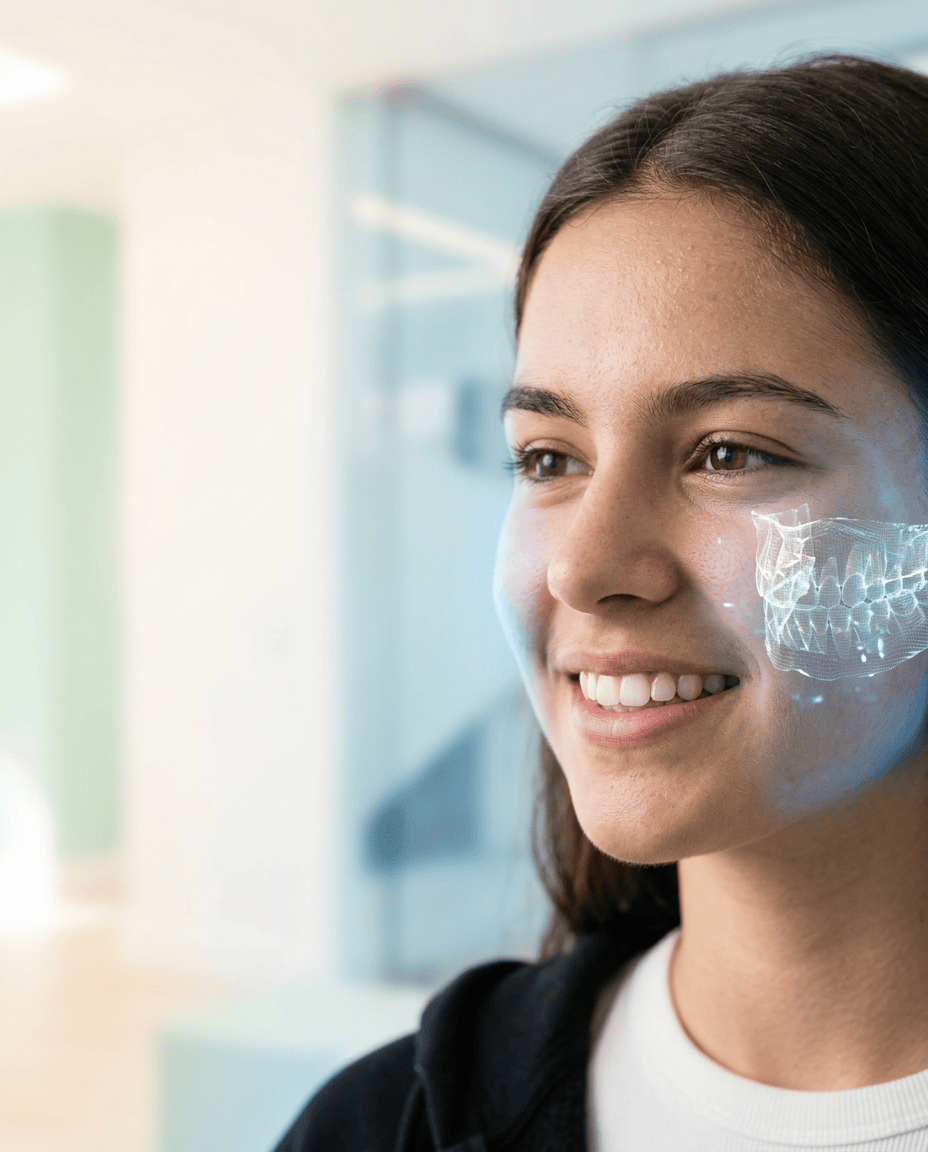
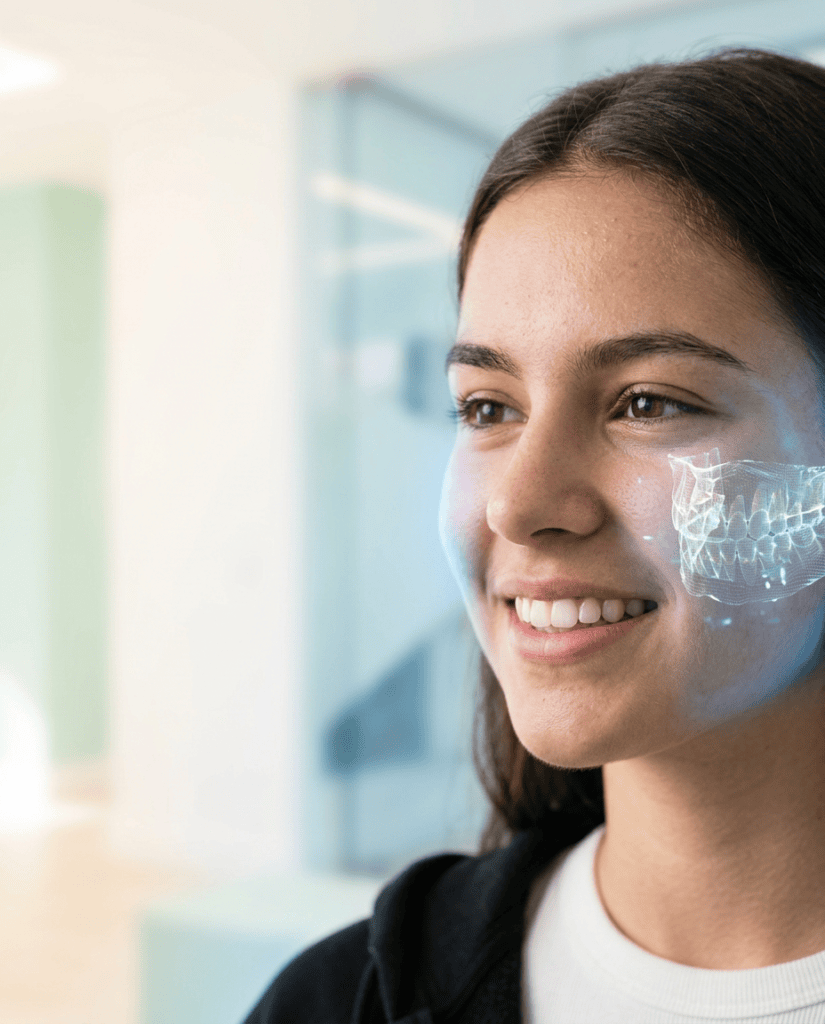
What AI does incredibly well is process massive amounts of anatomical data in seconds. When you sit down for AI Braces™ by SMILE-FX®, the process starts with a highly detailed, 3D optical digital scan (using tech like an iTero or Trios scanner). This scan captures the exact micro-contours of every single tooth.
From there, the predictive software takes the wheel. It analyzes your unique bite and root structures, running through thousands of potential tooth-movement scenarios. Instead of a doctor just eyeballing where a bracket should go, the AI algorithms help calculate the absolute optimal placement for each piece of hardware to achieve the desired rotation and torque.
Patients seeking SMILE-FX® AI Braces™ benefit from advanced 3D imaging and AI-guided treatment design. The human expertise? That comes from the Board Certified Orthodontist who reviews, modifies, and ultimately approves the AI-generated treatment plan. It is the absolute best of both worlds: the precision of algorithmic data married to the nuanced, customized care of a specialized human doctor.
Key Takeaways: The Shift to Smart Orthodontics
If you're skimming—which, hey, we all do—here is the bottom line on how this system operates.
| Aspect | Traditional Approach | SMILE-FX® AI Braces™ System |
|---|---|---|
| Planning | Often reliant on 2D X-rays and manual bracket placement. | Utilizes 3D scans and predictive algorithms for sub-millimeter mapping. |
| Oversight | In-person visits every 4-6 weeks to check manual progress. | Remote dental monitoring integration may reduce unnecessary visits. |
| Precision | Standardized brackets placed by eye. | Digitally planned bracket positioning customized to individual tooth anatomy. |
| Comfort | Can involve more wire-bending adjustments mid-treatment. | Proactive planning often results in smoother, more direct tooth movement. |
Step-by-Step: Inside the Workflow
So, what does this actually look like when you sit in the chair? Let’s walk through the exact sequence.
1. The Digital Blueprint
Gone are the days of messy impressions. Your first visit involves a rapid, comfortable 3D optical scan. This creates a highly accurate digital twin of your mouth. It’s wild to see on the screen—you can actually view your bite from angles you’ve never seen before.
2. Algorithmic Treatment Design
This is where the magic happens. The software calculates the most efficient path for every single tooth to reach its final position. It maps out the roots, the jawbone constraints, and the sequence of movements. The orthodontist takes this initial AI-generated map and tweaks it, applying their clinical judgment to ensure the plan is biologically sound and aesthetically pleasing.
3. Indirect Bonding (The Precision Placement)
In traditional orthodontics, brackets are glued on one by one while you hold your mouth open for what feels like an eternity. With AI-guided workflows, we often use something called "indirect bonding." Based on the digital plan, a 3D-printed custom tray is created. This tray holds all your brackets in the exact, perfectly calculated positions. The orthodontist places the tray in your mouth, cures the adhesive, and boom—all brackets are placed simultaneously. It’s faster, way more comfortable, and removes human error from the bonding angle.
4. Smart Monitoring
Depending on your customized plan, your treatment might integrate remote dental monitoring systems (like Grin). You snap a few guided photos with your smartphone at home, and the AI software—plus your clinical team—reviews your progress remotely. This means you might only need to come into the office when a physical adjustment is genuinely required, rather than showing up just for someone to say, "Looks good, see you in a month!"
AI Braces vs. Clear Aligners: The Reality Check
I hear this question all the time: "If I want high-tech, shouldn't I just get clear aligners?"
Not necessarily. While products like Invisalign® revolutionized aesthetics, clear plastic trays have their limitations. They push on teeth, whereas braces can pull, rotate, and extrude with much greater leverage. For complex bite issues, severe crowding, or significant vertical discrepancies, brackets and wires often remain the superior mechanical choice.
The beauty of the SMILE-FX® AI Braces™ System is that it brings the digital precision typically associated with aligners into the world of traditional braces. You get the heavy-lifting power of wire-and-bracket mechanics, but with the algorithmic pre-planning of a digital system. It’s the ultimate hybrid.
Cost, Timelines, and What You Can Expect
Look, I'll level with you. Everyone wants to know exactly how fast their teeth will move and how much it will cost down to the penny. If you've been googling this, you've probably seen a lot of wild claims.
Here is the truth: biology doesn't care about marketing.
Your treatment timeline is highly dependent on individual factors—bone density, the severity of your malocclusion, and how well you follow your orthodontic team's instructions (yes, wearing those rubber bands actually matters). That being said, because AI-assisted planning aims to eliminate inefficient tooth movements, many patients find that their treatment progresses smoothly, often minimizing those frustrating "plateau" phases where it feels like nothing is changing.
As for affordability? You might expect this level of tech to come with a massive premium. But because the digital workflow creates clinical efficiencies (meaning less wasted time for both you and the doctor), the cost is often very comparable to traditional braces. Plus, by scheduling a free consultation, you can get a transparent, customized breakdown of financing options, insurance coverage, and flexible payment plans.
YMYL Safety: Where the Algorithm Stops and the Doctor Begins
When dealing with your health, "automated" shouldn't mean "unsupervised." Moving teeth is a serious medical procedure. It impacts your jaw joints, your airway, your gum health, and your facial profile.
The AI is a tool—a highly sophisticated GPS. But the Board Certified Orthodontist is the driver. The software might suggest a specific path, but the human doctor understands the clinical nuances that a computer simply cannot grasp. Can the patient’s gum tissue handle this movement? Will this wider arch fit their specific facial structure?
This is why you don't want a purely automated solution. The combination of data-driven insights and seasoned clinical oversight is what keeps your treatment safe, predictable, and tailored to your biology.
Frequently Asked Questions
1. Does the AI Braces system hurt more than traditional braces?
Typically, no. In fact, because the tooth movements are calculated so precisely, you may experience smoother transitions between wire sizes. Some initial soreness is normal whenever teeth begin to shift, but the custom placement often reduces unnecessary friction.
2. Am I a candidate if I have a severe overbite?
Yes. One of the main benefits of this system is its ability to handle complex cases. Because the braces offer superior mechanical control compared to aligners, they are often an excellent choice for significant bite corrections. Your orthodontic team will confirm this during your evaluation.
3. How often will I need to visit the clinic?
This varies based on your specific treatment plan and whether remote monitoring is integrated. However, many patients enjoy extended intervals between in-office visits—sometimes 8 to 12 weeks—because the digital planning reduces the need for constant manual wire adjustments.
4. Are the brackets metal or clear?
The digital workflow can be applied to different types of hardware. While traditional metal brackets are common, many patients opt for aesthetic, clear ceramic brackets that blend in with the natural tooth color. You can discuss your aesthetic preferences at your consultation.
5. What happens if I break a bracket?
Emergencies happen! If a bracket pops off, you'll need to contact the office. The advantage of a fully digital plan is that the clinic already has your exact tooth map on file, making the replacement process incredibly straightforward and accurate.
6. Will I still need a retainer after AI Braces?
Absolutely. Teeth have a memory, and no matter how advanced the technology used to move them, they will try to shift back over time. Wearing your retainer as directed is the only way to protect your new smile long-term.
Ready to See If It’s Right For You?
Deciding on orthodontic treatment is a big deal, and you shouldn't have to navigate the options alone. The home of the AI Braces™ is ready to help you understand your unique smile geometry.
We invite you to come in, get a high-tech 3D scan, and actually look at the possibilities. No pressure, no hype. Just clear, individualized data and a conversation with our specialists.
- 👉 Take the first step: Book Your Free Consultation Here
- 👉 Learn more about our practice: Visit the SMILE-FX® Home Page
Disclaimer: The information provided in this article is intended for educational and informational purposes only and does not constitute medical advice. Orthodontic outcomes, treatment times, and specific results vary greatly depending on individual biological factors, patient compliance, and the complexity of the case. No specific results can be guaranteed. Always consult with a qualified, board-certified orthodontist or your orthodontic team to discuss the risks, benefits, and options suitable for your personal dental health needs.