

Is Invisalign Worth It? Costs, Results, and What to Expect
If you're considering clear aligners to improve your smile, you're probably wondering whether Invisalign is actually worth the investment. It's a fair question. Between metal braces and mail-order aligners, figuring out the right choice for your teeth, your lifestyle, and your budget takes some real thought.
Here's the truth: for many patients across South Florida, Invisalign delivers real results without disrupting daily life. But it's not the right fit for everyone. This guide breaks down everything you need to know, from how the treatment works to what it actually costs, so you can make a confident decision about your smile.
What Is Invisalign and Why Is It So Popular?
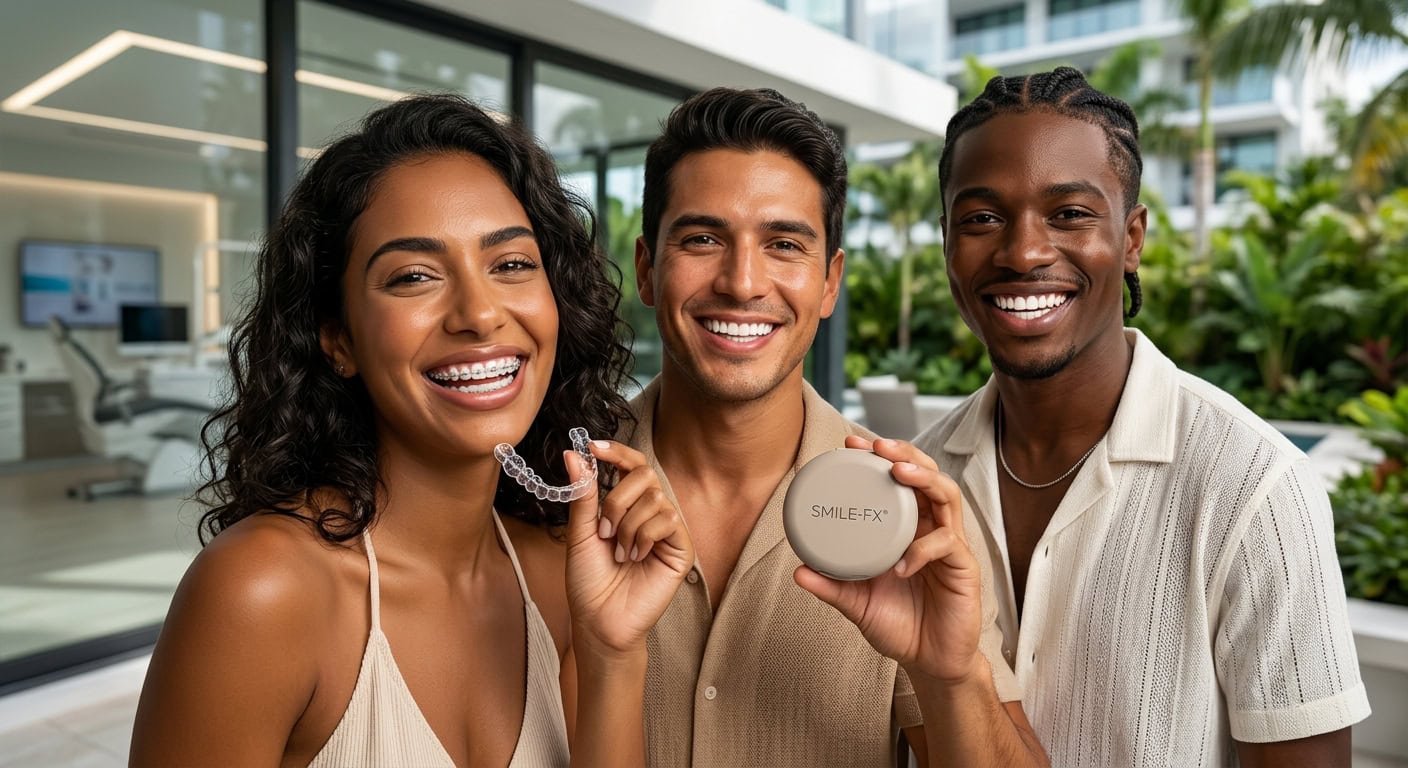
Invisalign is a clear aligner system that uses custom-molded, BPA-free plastic trays to gradually shift your teeth into proper alignment without the look of metal braces. The system has been FDA-cleared for orthodontic treatment since 1998 and has been used to treat over 17 million patients worldwide, according to Align Technology, the company behind the brand. Patient satisfaction rates for Invisalign consistently rank above 90% in clinical surveys. Each set of aligners is designed using 3D imaging and advanced digital planning to map out precise smile results from start to finish. Practices like SMILE-FX® in Broward County use this technology alongside proprietary VIP Tech to deliver a premium treatment experience.
Why Do So Many People Love Clear Aligners?
An active lifestyle puts a premium on appearance and confidence. That's a big reason clear aligners have become so popular across all age groups and professions.
For working professionals, the discreet nature of Invisalign means you can work toward a better smile without colleagues or clients noticing. For teens heading to school or social events, it means skipping the "metal mouth" stigma that still follows metal braces. And for anyone who values flexibility, clear aligners fit right into a busy schedule. Across South Florida, demand for clear aligners has grown steadily as more patients discover the convenience and comfort they offer.
How Does Invisalign Compare to Generic Clear Aligners?
Not all clear aligners are created equal. While Invisalign is the most recognized brand, other options exist, including 3D-printed custom aligners and direct-to-consumer mail-order kits.
The key differences come down to:
- Provider oversight: Invisalign treatment is supervised by a board-certified specialist who monitors your progress and makes adjustments as needed
- Treatment planning: Invisalign uses proprietary ClinCheck software that allows you to preview your final results before treatment begins
- Material quality: Invisalign's SmartTrack material is designed specifically for tooth movement and comfort
- Handling of difficult cases: Board-certified orthodontists can use Invisalign to treat more challenging cases that mail-order aligners simply can't handle
What Are the Differences Between Teen and Adult Invisalign?
Both teenagers and adults can benefit from Invisalign, though the treatment approach differs slightly.
Invisalign Teen includes compliance indicators, small blue dots on the aligners that fade with wear. This helps parents and orthodontists confirm that teens are wearing their trays the recommended amount of time. Teen aligners also come with extra replacement trays in case one gets lost.
Adult Invisalign focuses on efficiency and discretion. Many adults appreciate the ability to remove aligners for important meetings or events. Custom treatments for adults often incorporate accelerated options to reduce overall treatment time.
How Invisalign Works: From First Consultation to Final Results
Understanding the Invisalign process helps set realistic expectations. Here's what your clear aligner experience looks like from start to finish.
What Happens During Your Initial Visit?
Your Invisalign treatment begins with a thorough evaluation. During this visit, you'll receive:
- A full oral examination to assess your teeth, bite, and jaw alignment
- 3D digital scans of your teeth using intraoral scanning (no messy putty impressions!)
- Digital X-rays or 3D CBCT imaging to evaluate bone structure and tooth roots
- A discussion of your smile goals and any concerns you have
This initial free consult typically includes advanced 3D scanning, giving you a clear picture of your treatment options without any financial commitment upfront. Your board-certified specialist walks you through every detail so nothing feels rushed or unclear.
How Does Your Orthodontist Create a Custom Treatment Plan?
Once your scans are complete, your board-certified orthodontist uses specialized software to create a precise treatment plan. With Invisalign's ClinCheck and VIP Tech, you can actually see a digital preview of how your teeth will move at each stage and what your final smile will look like.
This isn't guesswork. Your specialist maps out every rotation and adjustment before a single aligner is manufactured. You'll know exactly what to expect and approximately how long treatment will take. That level of precision is what sets a great clear aligner experience apart from an average one.
What Should You Expect When You Receive Your Aligners?
After you give the green light on your treatment plan, your custom aligners are manufactured and shipped to your orthodontist's studio. You'll receive your first set of trays along with detailed instructions on how to wear and care for them.
Most patients change to a new set of aligners every one to two weeks, depending on their custom treatment. Each new tray makes small adjustments to continue moving your teeth toward their final positions.
Your provider will also place small tooth-colored attachments on certain teeth if needed. These small composite bumps help the aligners grip your teeth for more precise movements. They're barely noticeable and are removed at the end of treatment.
How Is Your Progress Monitored Throughout Treatment?
One of the biggest advantages of modern Invisalign treatment is flexible monitoring options. You'll still have periodic in-studio visits to check your progress, and many practices now offer remote monitoring through smartphone apps.
With DentalMonitoring and VIP Tech, you can scan your teeth at home using your phone's camera. Your orthodontist reviews the images and can confirm you're on track without requiring you to come into the studio. This saves time for busy professionals and students alike.
In-studio visits typically occur every six to ten weeks, far less frequently than the monthly adjustments required with metal braces. That's a real win for anyone with a packed calendar.
What Happens During the Refinement and Retainer Phase?
As you near the end of your aligner series, your specialist will evaluate your results. In some cases, you may need refinement aligners to perfect specific tooth positions. This is completely normal and is included in most Invisalign custom treatments.
Once your teeth reach their final positions, you'll transition to retainers. Wearing retainers as directed is essential for maintaining your new smile long-term. Most patients wear retainers full-time initially, then transition to nighttime-only wear. Don't skip this step. Your future self will thank you.
How Long Does Invisalign Treatment Take?
Invisalign treatment typically takes 6 to 24 months depending on case complexity. Here's a general breakdown:
- Mild cases (minor crowding/spacing): 6-9 months
- Moderate cases (significant alignment needs): 12-15 months
- Demanding cases (bite corrections, severe crowding): 18-24 months
Your specialist will give you a more accurate timeline during your free consult based on your individual needs. Every mouth is different, and a realistic timeline matters more than an optimistic guess.
Is Invisalign Worth It? Key Benefits Over Metal Braces
Clear aligners have changed orthodontic treatment for millions of patients. Here's why so many people choose Invisalign.
Why Does the Nearly Invisible Appearance Matter So Much?
Let's start with the obvious: Invisalign aligners are clear. When you're wearing them, most people won't notice unless they're looking closely. This makes a real difference for professionals who want to maintain a polished appearance during meetings, teens who feel self-conscious during an already challenging time, and anyone who simply prefers a more discreet treatment option.
You can smile confidently throughout your treatment, not just after it's complete. That kind of red carpet confidence during the process? It changes the whole experience.
How Does Invisalign Give You Complete Dietary Freedom?
With metal braces, you'll receive a long list of foods to avoid. Popcorn, caramel, corn on the cob, chewy bread, hard candies... the restrictions can feel endless.
Invisalign eliminates this entirely. Remove your aligners, eat whatever you want, brush your teeth, and pop them back in. Simple. No stress at restaurants, no awkward moments at parties, no saying no to your favorite snack.
Can You Really Maintain Better Oral Hygiene With Invisalign?
Keeping your teeth clean with metal braces requires special brushes, floss threaders, and extra time at the sink. Food gets trapped around brackets and wires, increasing the risk of cavities and gum concerns during treatment.
With Invisalign? Remove your aligners and brush and floss normally. That's it. No special tools, no complicated routines.
How Do Fewer Studio Visits and Greater Comfort Change the Experience?
Time is valuable. Metal braces typically require monthly adjustment visits that can last 30 minutes or more. Invisalign patients generally visit their orthodontist every six to ten weeks, and many check-ins can be done remotely through VIP Tech. For busy professionals, parents juggling schedules, or students with packed calendars, this flexibility is a real advantage.
Picture this: you're a working parent with two kids in activities. The last thing you need is another monthly appointment eating into your schedule. Remote monitoring means fewer trips to the studio and more time for the things that matter.
And comfort? While any orthodontic treatment involves some pressure as teeth move, many patients find Invisalign more comfortable than braces. No metal brackets irritating your cheeks and lips. No wires poking your gums. The smooth plastic aligners fit snugly against your teeth. You may feel pressure when you switch to a new set of trays, but this typically subsides within a day or two.
Invisalign vs. Braces: Which Treatment Is Right for You?
Choosing between Invisalign and metal braces isn't always straightforward. Both options can deliver excellent results, but they work differently and suit different needs. Here's an honest comparison to help you decide.
How Do Invisalign and Braces Compare Side by Side?
| Factor | Invisalign | Metal Braces |
|---|---|---|
| Appearance | Nearly invisible clear trays | Visible metal or ceramic brackets |
| Removability | Removable for eating and cleaning | Fixed to teeth throughout treatment |
| Comfort | Smooth plastic, minimal irritation | Brackets and wires can cause sores |
| Treatment Time | 6-18 months typical | 18-24 months typical |
| Studio Visits | Every 6-10 weeks | Every 4-6 weeks |
| Dietary Restrictions | None | Many foods to avoid |
| Oral Hygiene | Normal brushing and flossing | Special tools required |
| Compliance Required | Must wear 20-22 hours daily | Always working (no compliance needed) |
| Demanding Cases | Effective for mild to moderate | Can handle severe cases |
| Cost Range | $3,000-$8,000 | $3,000-$7,000 |
When Are Metal Braces the Better Choice?
Despite Invisalign's many advantages, metal braces remain the superior option for certain situations:
- Severe crowding or rotation: Teeth that need significant movement may respond better to the constant force of braces
- Difficult bite corrections: Some skeletal concerns require the precise control that brackets and wires provide
- Young children: Kids who aren't ready for the responsibility of removable aligners may do better with fixed braces
- Compliance concerns: If you know you'll struggle to wear aligners 20-22 hours daily, braces work without requiring your cooperation
Modern braces have also improved significantly. Self-ligating brackets reduce friction and can speed treatment. Ceramic brackets blend with your teeth for a more subtle look. Lingual braces attach to the back of your teeth, making them invisible from the front.
When Is Invisalign the Clear Winner?
For many patients, Invisalign offers distinct advantages:
- Mild to moderate alignment needs: Crowding, spacing, and many bite concerns respond excellently to clear aligners
- Adult professionals: The discreet appearance and flexible scheduling fit demanding careers
- Active lifestyles: Athletes, musicians, and performers appreciate the removability
- Motivated teens: Responsible teens often prefer the aesthetic benefits
- Patients with good oral hygiene habits: If you're committed to caring for your aligners and teeth, you'll see great results
Can Invisalign Handle Difficult Cases?
Years ago, clear aligners were limited to simple cases. That's no longer true. Today's Invisalign system, combined with experienced board-certified specialists in Broward County and across South Florida, can successfully treat significant overbites and underbites, crossbites, open bites, moderate to severe crowding, and gaps and spacing concerns.
The key is working with a qualified provider who has extensive experience with demanding cases. Not every provider has the same level of expertise with Invisalign, which is why choosing your orthodontist carefully matters so much. The aligner is only as good as the person planning your treatment. A board-certified specialist can evaluate your specific situation and recommend the most effective approach.
How Much Does Invisalign Cost? Real Pricing Factors
Invisalign treatment in Broward County typically costs between $3,000 and $8,000, with most cases falling in the $4,000 to $6,000 range. The final price depends on how much your teeth need to move, how long treatment takes, and the expertise of your provider. Here's what you can realistically expect to pay and what factors influence the final number.
What Factors Influence Your Price?
The wide range exists because no two cases are identical. A straightforward spacing case requiring six months of treatment costs significantly less than a bite correction requiring 18 months of aligners. Here are the main factors:
Case Complexity
The more your teeth need to move, the more aligners you'll need, and the higher the cost. Simple cases requiring fewer trays cost less than demanding cases requiring extensive treatment.
Treatment Length
Longer treatments mean more aligners, more studio visits, and higher overall costs. Accelerated treatment options may add to the initial price but reduce total treatment time.
Provider Experience and Technology
Board-certified orthodontists who invest in advanced tools like 3D scanning, digital treatment planning, and remote monitoring often charge more. That said, this investment frequently leads to better results and a more comfortable experience.
Studio Overhead in Your Area
Practices in different parts of South Florida have varying overhead costs, which can affect pricing. A modern studio in a premium area may charge more than one in a less expensive neighborhood.
What's Included in the Quote
Some practices include retainers, refinement aligners, and follow-up care in their quoted price. Others charge separately for these services. Always ask what's included before comparing prices.
Does Insurance Cover Invisalign?
Good news: most dental and orthodontic insurance plans that cover braces also cover Invisalign. Coverage typically ranges from $1,000 to $3,000, depending on your specific plan.
To maximize your benefits:
- Contact your insurance provider to verify orthodontic coverage
- Ask about lifetime maximums for orthodontic treatment
- Check whether your plan has age restrictions
- Find out if your orthodontist is in-network
Many orthodontic practices have insurance coordinators who can help you understand your benefits and file claims on your behalf. Be sure to ask about this when you call.
What Payment Plans and Financing Options Are Available?
If the upfront cost feels daunting, you're not alone. Most orthodontic practices offer flexible payment options to make treatment accessible:
- In-house payment plans: Many practices offer interest-free monthly payments spread over the length of treatment
- Third-party financing: Companies like CareCredit and LendingClub offer healthcare financing with various term lengths
- HSA/FSA funds: Health Savings Accounts and Flexible Spending Accounts can be used for Invisalign treatment
- Family discounts: Some practices offer reduced rates when multiple family members undergo treatment
Why Isn't the Cheapest Option Always the Best?
When comparing prices, remember that you're not just buying plastic trays. You're investing in expert diagnosis and treatment planning, ongoing monitoring and adjustments, troubleshooting if something doesn't go as planned, and the final smile you'll live with for decades.
A less experienced provider charging rock-bottom prices may not deliver the results you're hoping for. Corrections and retreatment cost more in the long run than doing it right the first time. Getting this decision right saves you time, money, and frustration down the road.
Look for a board-certified specialist with extensive Invisalign experience. Ask about their technology, their approach to demanding cases, and what happens if you need refinements. The answers will tell you whether you're getting true value.
Are You a Good Candidate for Invisalign? Eligibility and Expectations
Not everyone is an ideal candidate for Invisalign. Here's how to figure out whether clear aligners are right for your situation.
What Conditions Does Invisalign Treat Best?
Invisalign works exceptionally well for patients with:
- Mild to moderate crowding: Teeth that overlap or are slightly crooked
- Spacing concerns: Gaps between teeth that you'd like to close
- Overbite: Upper front teeth that extend too far over the lower teeth
- Underbite: Lower teeth that sit in front of the upper teeth
- Crossbite: Some upper teeth sitting inside the lower teeth when biting
- Open bite: Front teeth that don't touch when back teeth are together
If your alignment needs fall into these groups, there's a strong chance Invisalign can help you achieve the smile you want.
Does Age Matter for Invisalign Candidacy?
Teens: Invisalign Teen is designed specifically for adolescent patients. Teens do need to be mature enough to handle the responsibility of wearing aligners consistently and caring for them properly. The compliance indicators help, but parental involvement is still important.
Adults: There's no upper age limit for Invisalign. Adults of any age can benefit from clear aligners as long as their teeth and gums are healthy. Many adults actually find Invisalign more appealing than braces because of the discreet appearance. Whether you're 25 or 65, it's never too late.
How Important Is Compliance for Invisalign Success?
Here's the honest truth: Invisalign only works if you wear it. The aligners need to be on your teeth 20-22 hours per day to move your teeth effectively. That leaves just two to four hours daily for eating, drinking anything besides water, and oral hygiene.
Ask yourself:
- Can you commit to wearing aligners almost constantly for months?
- Will you remember to put them back in after meals?
- Can you avoid the temptation to leave them out for extended periods?
If compliance feels like a potential challenge, metal braces might be a better fit since they work around the clock without requiring your cooperation. Be honest with yourself here. There's no shame in choosing the option that actually works for your habits.
What Cases Might Require a Different Approach?
Some orthodontic needs are better addressed with other treatments:
- Severe skeletal discrepancies: Jaw misalignment that requires surgical intervention
- Significant tooth rotations: Teeth rotated more than 20 degrees may need braces for better control
- Very short clinical crowns: Small teeth may not give aligners enough surface area to grip
- Certain dental restorations: Some types of bridgework or dental implants may complicate treatment
How Can You Know for Sure If You're a Candidate?
While this information helps you understand general candidacy, the only way to confirm whether Invisalign is right for you is through a professional evaluation. A board-certified specialist can examine your teeth, take diagnostic images, and assess factors that aren't visible to the naked eye.
During a free consult, you'll learn whether Invisalign can address your specific concerns, how long treatment would likely take, what results you can realistically expect, and whether any preliminary treatment is needed first.
This evaluation is the first step toward making an informed decision about your smile. No commitment required, just answers.
Frequently Asked Questions About Invisalign
Does Invisalign Hurt?
Most patients experience only mild pressure for one to three days when switching to a new set of aligners. This discomfort is generally less intense than metal braces adjustments. Over-the-counter pain relievers can help if needed. No wires to poke your cheeks, no brackets to irritate your lips. The smooth plastic trays are far gentler on the soft tissue inside your mouth.
How Long Does Invisalign Take Compared to Braces?
Invisalign often finishes faster than metal braces. Simple cases may wrap up in as little as six months, while more demanding cases can take 18 months or longer. Metal braces typically require 18-24 months for most patients.
The best treatment option depends on your specific needs, not just speed. A faster timeline means nothing if the results aren't what you wanted. Your orthodontist can give you a realistic estimate during your initial free consult.
Can You Eat and Drink Normally With Invisalign?
Yes. Remove your aligners before eating or drinking anything other than water, and you're free to enjoy whatever you want. No restrictions. Just brush your teeth before putting your aligners back in.
Hot beverages and anything with sugar or acid should be avoided while wearing aligners, as they can warp the plastic or lead to cavities. Water is your best friend during treatment.
Is Invisalign Covered by Insurance?
Most orthodontic insurance plans cover Invisalign the same way they cover metal braces. Coverage amounts typically range from $1,000 to $3,000, though this varies by plan. Contact your insurance provider to verify your specific coverage. Many orthodontic practices also have staff who can help you understand and maximize your benefits, so be sure to ask about this during your first call.
What Happens If You Don't Wear Your Aligners Enough?
Skipping wear time is the fastest way to derail your clear aligner treatment. Failing to wear your aligners 20-22 hours daily can mean teeth don't move as planned, treatment time extends significantly, aligners stop fitting properly, and you may need additional trays, which increases cost.
Consistency is non-negotiable for successful Invisalign treatment. If you're concerned about compliance, discuss this honestly with your orthodontist before starting.
How Do You Find a Qualified Invisalign Provider?
Look for these qualifications when choosing a provider:
- Board certification in orthodontics: This indicates advanced training beyond dental school
- Significant Invisalign experience: Ask how many cases they've completed
- Advanced technology: 3D scanning, digital treatment planning, and remote monitoring options
- Positive patient reviews: Look for feedback from real patients about their experiences
- Transparent pricing: A reputable practice will clearly explain costs and what's included
SMILE-FX® in South Florida offers free consults with advanced 3D scanning to help you explore your options. Their board-certified specialists combine expertise with VIP Tech to deliver treatment plans designed for your specific case.