
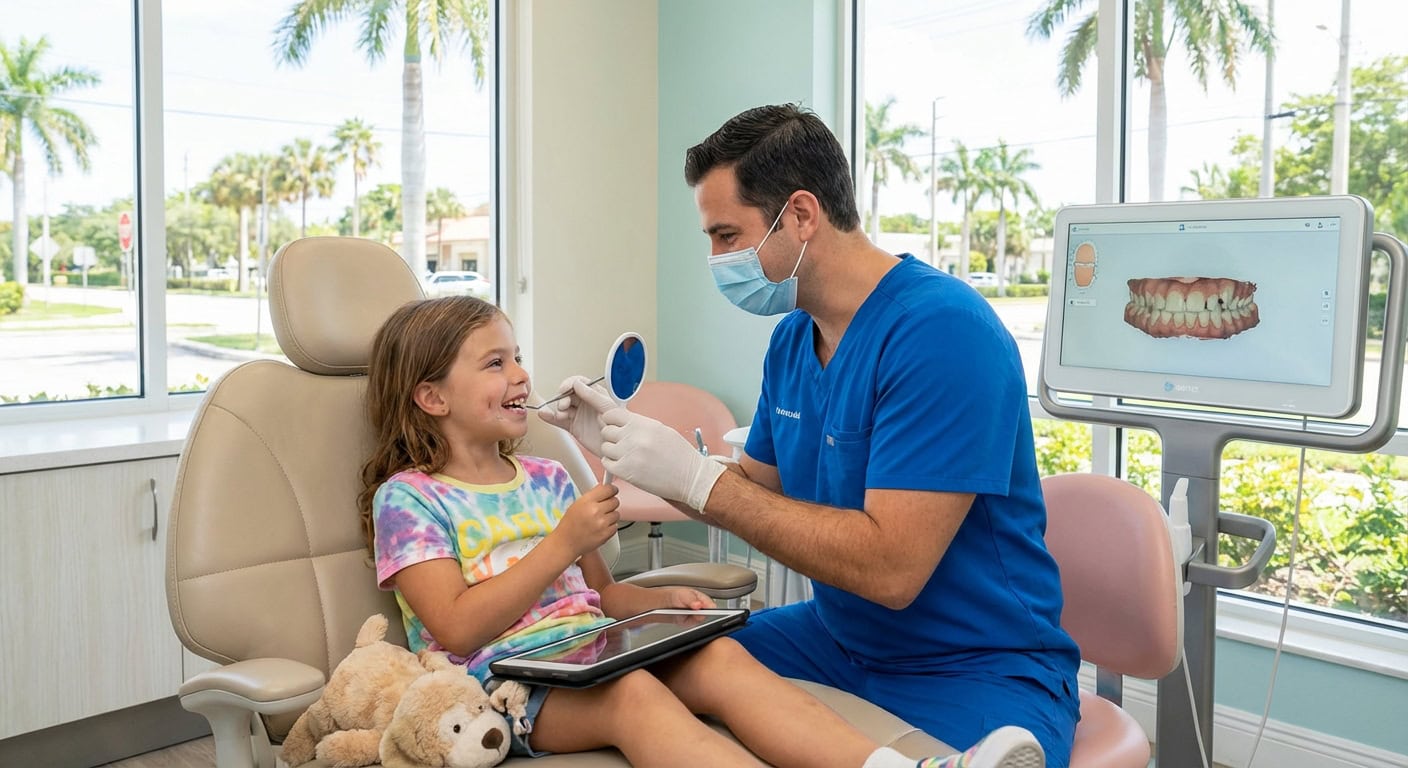
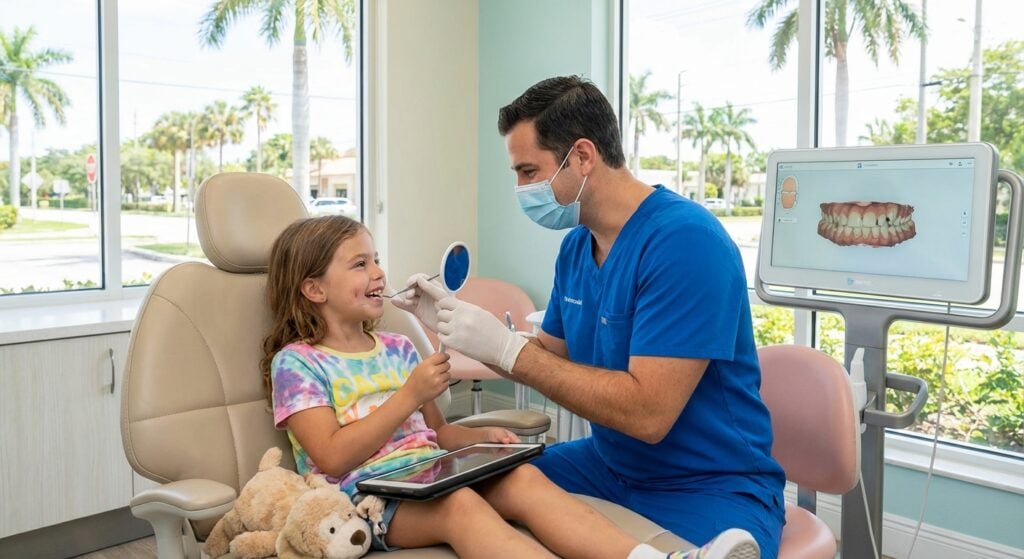
Early Orthodontics for Kids Ages 6 to 10
Your kid is seven years old and you just got told they might need braces soon. Your stomach drops. You start thinking about costs, about your child sitting in an orthodontist's chair, about whether this is really necessary or if someone's just trying to sell you something you don't need. I get it. That feeling is real and it's valid.
The truth is, most kids don't need full braces at age seven. But some kids do benefit from something called Phase 1 orthodontics, and the difference between knowing when to act and when to wait could save you thousands of dollars and your kid a lot of headache down the road.
So let's talk about what's actually happening in your child's mouth right now, what the signs are that something needs attention, and most importantly, who you can trust to give you straight answers instead of upselling you.
What Is Phase 1 Orthodontics for Kids
Phase 1 orthodontics, also called interceptive treatment, happens while your child still has a mix of baby teeth and permanent teeth coming in.
The goal is not to give your kid a Hollywood smile in second grade.
The goal is to do three things:
- Make room for adult teeth to come in straight and natural
- Guide the jaw while it's still growing so it develops the right way
- Keep teeth safe from getting chipped or damaged
- Avoid the need for tooth extractions or jaw surgery later on
That's it. It's preventative work, not cosmetic work.
The American Association of Orthodontists says every kid should see an orthodontist by age seven. Not because they all need braces. But because that's when a specialist can actually see what's going on and predict what will happen as your kid grows.
Why Age Seven Is the Magic Number
At age seven, something important is happening in your kid's mouth.
The front permanent teeth are usually coming in. The first molars are there too. This is the moment when crowding, bite problems, and jaw alignment issues become visible and measurable.
The jaw is still growing and easier to guide gently. After age 12 or 13, when most growth is done, fixing these problems becomes harder and more expensive.
Bad habits also show up by this age. If your kid is still sucking their thumb, breathing through their mouth instead of their nose, or pushing their tongue forward when they swallow, these are already reshaping the jaw and changing how teeth are coming in.
Here's what matters: at seven, you're not committing to anything yet. You're getting information. You're getting a baseline. You're deciding whether to monitor things or act.
What Parents Actually See and Worry About
You don't need a dental degree to notice something is off. If you're seeing any of these things, that's a sign to get a professional opinion:
- Teeth are crowded or overlapping. There's just not enough room and teeth are twisted or jumping in weird spots.
- Your kid bites weird. The upper teeth bite inside the lower teeth instead of outside. This can make the jaw shift and cause uneven wear.
- Front teeth don't touch when biting down. There's a gap. Usually tied to thumb sucking, pacifier use, or tongue habits.
- Your kid breathes through their mouth. They snore, they can't breathe through their nose well, and their mouth is usually open.
- Front teeth stick out way too far. They're at risk of getting hit and chipped.
- Baby teeth are falling out at weird times. Too early or hanging on too long while adult teeth are coming in.
- The face looks lopsided. The jaw shifts to one side when biting, or something just looks off balance.
- Thumb or finger sucking past age five or six. This habit literally reshapes the upper jaw.
Seeing one of these things doesn't mean panic. It means get real information before a small issue becomes a big problem that costs more money and takes longer to fix.
What Actually Happens at Your First Appointment
Your kid's first orthodontic visit should not feel like going to the doctor. It should feel like someone is actually listening and trying to understand your situation, not selling you something.
Here's how it works at a place like SMILE-FX, an Orthodontic & Clear Aligner Studio:
You walk in and the place doesn't feel like a sterile dental office. There's a game area. There's a VR station. There's snacks. Your kid immediately feels like this is not going to be terrible.
We talk to you first. Before we touch your kid's teeth, we actually talk to you. What are you worried about? What habits have you noticed? What do you want to happen? No jargon. No pressure.
Then comes the actual exam. A board-certified orthodontist checks how the teeth fit together, how your kid breathes, how the jaw is growing.
If we need X-rays or 3D imaging, we explain what we're doing. We use low-dose settings that are made for kids. We tell your child exactly what to expect.
Then the good part: we show you what we see. You get to look at the screen with your kid. We use real talk: "These teeth need more room" instead of "severe malocclusion."
You leave with one of three answers:
- No treatment needed right now. Let's monitor for a year.
- We'll probably need to do something later, but nothing urgent now.
- Phase 1 treatment would really help your kid's growth and future.
The whole thing takes about 45 to 60 minutes. You get to ask every question. You get to understand what's actually going on.
When Phase 1 Actually Makes Sense
Not every kid needs Phase 1. And that's actually why families across Miramar, Pembroke Pines, Weston, and the rest of Broward trust places that are honest about when to wait.
Phase 1 usually helps when:
- The upper jaw is too narrow and causing a crossbite
- There's serious crowding and no space for teeth
- Teeth don't close right and it's affecting how your kid talks or chews
- Front teeth stick out so far they're at real risk of getting knocked out
- The upper and lower jaws are mismatched and not keeping up with each other
- Habits or breathing problems are actively reshaping the jaw right now
Phase 1 usually doesn't help when:
- There's mild crowding but the jaw is developing fine
- There's spacing that will probably close on its own as more teeth come in
- It's a cosmetic thing and not affecting how your kid functions
You'll know you're working with someone who cares about your kid's health and not just getting you to pay for treatment when they tell you: "Let's hold off. We'll check again in a year."
How Phase 1 Treatment Actually Works
If your kid does need Phase 1, the good news is it's designed to be short, targeted, and kid-friendly.
Common options include:
- Expanders that gently widen a narrow upper jaw
- Partial braces on a few front teeth to fix alignment and reduce injury risk
- Space maintainers that hold room after baby teeth come out early
- Growth-guiding appliances that help the jaw develop balanced
Your child is never just put in a chair and left to deal with it.
Most good orthodontists use cutting-edge technology and comfort tools: VR, TV, weighted blankets, noise-cancelling headphones, private treatment suites for kids who need quieter spaces.
They explain things in language your kid gets. They make sure your kid feels in control, not ambushed.
What Does Phase 1 Actually Cost and How Long Does It Take
Most families ask this right away and I respect that.
Phase 1 treatment usually costs less than full braces because it's shorter and more targeted. Many kids finish Phase 1 in 12 to 24 months. Some finish faster.
Your kid comes in every six to ten weeks for check-ups and adjustments. Appointments are usually quick once the initial setup is done.
The real money question: does Phase 1 mean you'll pay for two rounds of braces total?
Not necessarily. Done right, Phase 1 solves the big growth and spacing problems early. Phase 2 is much lighter. Some kids need only minor tweaks. Some skip Phase 2 entirely.
Compare that to waiting and dealing with a full two-year treatment later because you didn't address the problems early. That's where the real expense adds up.
Any good orthodontist will break down costs before you commit to anything. No surprises. No hidden bundles.
Questions Parents Actually Ask About Phase 1
Will this hurt my kid?
There's some mild pressure after adjustments. Maybe soreness for a day or two. Not constant pain. Modern braces and expanders use light, steady force, not aggressive force. Combined with comfort tools, your kid should be fine.
What if we get rushed into treatment and I feel pressured?
You can pause. You can get a second opinion. A good orthodontist will explain what's urgent, what's optional, and what can safely wait. If someone's pushing you hard without explaining why, that's a red flag.
Will my kid be self-conscious about wearing braces this young?
Most kids this age don't care as much as you think. Lots of second and third graders have partial braces or expanders. It's becoming more normal. The real question is whether fixing the problem now is worth a few months of "that's what my orthodontist has me wearing."
How do I know if the orthodontist is actually good?
Make sure they're board-certified. That means they passed extra training and exams beyond regular dental school. Ask if pediatric dentists in your area refer to them. Read real patient reviews. Talk to them. Do they listen or do they just sell?
Why Families in Broward County Choose the Right Partner
When you're picking someone to guide your kid's growth, the person matters more than the specific tool they use.
You want someone who:
- Is board-certified and specialized in orthodontics, not a general dentist doing braces on the side
- Has pediatric dentists in your area actually referring their own patients to them
- Uses modern technology that's also kid-appropriate
- Designed their office to reduce anxiety for kids and parents
- Works around your schedule, not the other way around
- Gives you clear, honest plans with realistic expectations
SMILE-FX, an Orthodontic & Clear Aligner Studio, checks every one of these boxes. We're minutes from Miramar, Pembroke Pines, Cooper City, Davie, Weston, Hollywood, and the rest of Broward. If you can get to Miramar Regional Park or Miramar High, you can get to us.
Most families are within a 10 to 25 minute drive. And they tell us it's worth it because the expertise and experience you get means fewer surprises and a smoother plan for your kid's growth.
Ready to stop guessing and get real answers?Book a FREE 3D scan and VIP smile consultation here. You'll walk out knowing with real confidence whether your child needs treatment now, later, or not at all.
What Happens After Phase 1: The Reality of Phase 2 Orthodontics and Long-Term Results for Kids
So Phase 1 is done. Your kid spent a year or two with an expander or partial braces, and now you're wondering what comes next. Most parents think Phase 2 means another round of full braces for another two years. That's where the real panic sets in.
The truth is way different. Phase 2 isn't a restart. It's a finishing step that's usually lighter, faster, and way less involved than what you'd have dealt with if you'd skipped Phase 1 altogether.
Let me walk you through what actually happens, what it costs, and why the work you did early on saves you money and time down the road.
Understanding Phase 2 Orthodontic Treatment After Phase 1
Phase 2 happens after your kid's permanent teeth have mostly come in. Usually that's around age 11 or 12, but it depends on your kid's growth.
Think of Phase 1 as setting the foundation. Phase 2 is building the house on that foundation.
Because you fixed the jaw space issues early, the bite problems early, and guided growth early, Phase 2 is focused on fine-tuning. Getting the bite perfect. Making sure teeth are in the exact right spots. Fixing any last-minute things that shifted as your kid grew.
It's way less aggressive than full comprehensive braces would be on a kid who never had Phase 1.
How Long Does Phase 2 Really Take
Most kids spend 18 to 24 months in Phase 2. Some finish in 12 months. Some take up to 30 months if there's a lot of fine detail work.
The key difference from Phase 1: you probably won't need as many adjustments. You'll come in every eight to ten weeks instead of every six weeks. The appointments are shorter. There's less pressure needed because the groundwork is already done.
A lot of parents are shocked when their orthodontist says Phase 2 is going to take less time than Phase 1. That's because Phase 1 did the heavy lifting. Phase 2 is precision work.
What Type of Braces Are Used in Phase 2
In Phase 2, most kids get what's called comprehensive braces. That means braces on all the teeth, top and bottom.
You have real options here. Metal braces are still the most common. They're reliable, durable, and the most affordable.
Ceramic braces blend in better with your teeth. They look less obvious. The downside is they're pricier and they're not indestructible like metal braces are.
A lot of kids in Phase 2 actually choose clear aligners instead of traditional braces. This is where Invisalign comes in. If your kid had Phase 1 work done right, their teeth and jaw are already in way better shape. Clear aligners can actually finish the job from there.
The benefit: your kid can remove them to eat and brush. No food traps. Easier to keep teeth clean. And they're basically invisible.
The catch: your kid has to be responsible. Aligners only work if they're worn 20 to 22 hours a day. If your kid loses them or doesn't wear them, treatment gets derailed.
Real Talk About Phase 2 Costs
This is the question every parent wants answered.
Phase 2 treatment costs less than it would have without Phase 1. That's the real money savings.
If your kid had both phases with the same orthodontist, many offices bundle the cost. You pay a total fee for both phases combined, not two separate full treatments.
Phase 2 alone usually runs between $3,000 and $7,000 depending on complexity and what type of appliance you choose. Metal braces are on the lower end. Clear aligners are usually higher.
If you'd skipped Phase 1 and gone straight to comprehensive braces for a kid with serious crowding or jaw problems, you're looking at $5,000 to $8,000 just for that. Plus it would take longer and be more uncomfortable.
So Phase 1 plus Phase 2 together often costs less total than Phase 1 skipped entirely.
What You Should Know About Retainers After Phase 2
This is the part a lot of parents aren't ready for. After Phase 2 is done, your kid doesn't just get their braces off and move on with life.
Teeth want to move back to where they came from. It's not laziness on your kid's part. It's physics. The pressure is gone, so the teeth drift.
Retainers stop that from happening. There are a few types.
Fixed retainers are bonded to the back of your kid's teeth. Permanent. Your kid doesn't have to remember to wear them. They just stay there.
Removable retainers are worn at night, usually forever. Some are clear plastic trays that look like Invisalign. Some are wire and acrylic.
Most offices recommend a combination: fixed retainers on the front teeth that are most likely to shift, plus removable ones for nighttime wear.
Here's the real part: if your kid doesn't wear their retainers, the teeth move back. All that time and money gets undone. So this is a conversation you have with your kid before Phase 2 even starts.
Red Flags That Your Orthodontist Isn't Being Straight With You
Before you commit to Phase 2, make sure you're working with someone honest.
A good orthodontist will show you what Phase 1 accomplished. You should literally see the difference in mouth scans or photos. They'll explain what Phase 2 still needs to do.
They won't pressure you into starting Phase 2 right away if your kid's jaw isn't ready yet. Sometimes there's a rest period between phases. That's normal.
They won't charge you a surprise fee for Phase 2 if you already talked about the total cost upfront.
They won't talk down to your kid or treat them like they don't understand what's happening. Your kid should feel involved, not dragged along.
SMILE-FX practices are centered on being different in exactly this way. Everything is explained. You see your kid's progress. You know what's coming and what it costs.
How Clear Aligners and Invisalign Work in Phase 2
If your kid decides to go with clear aligners in Phase 2, here's what actually happens.
Your orthodontist takes digital scans of your kid's teeth. Not molds anymore. Just a quick 3D scan that's way more comfortable.
Those scans go into software that shows exactly how the teeth will move. Your kid can literally see the end result before treatment even starts.
Aligners are custom made to fit your kid's teeth. They're changed every one to two weeks, and each set moves teeth a tiny bit closer to the final position.
The huge advantage: your kid can see their teeth move without brackets or wires. No food restrictions. Eating popcorn, gummy bears, whatever. They just take the aligners out.
The catch I already mentioned: wear time matters. Twenty to twenty-two hours a day minimum. Losing them is a problem. Not wearing them means treatment stalls.
For a kid who's responsible and motivated, clear aligners in Phase 2 are usually the better choice. For a kid who forgets things or loses stuff, metal braces are safer.
What About the Spacing Between Phase 1 and Phase 2
Not every kid jumps straight from Phase 1 to Phase 2.
Sometimes there's a rest period. Your orthodontist monitors the remaining baby teeth coming out. They watch the jaw continue to grow. They see if anything shifted.
This waiting period can be three months to a year. It's not extra cost. It's smart timing.
You still come in for checkups. You're still part of the plan. But nothing is actively being done to the teeth right now. You're watching growth happen and deciding when the time is right for Phase 2.
This is where an honest orthodontist proves their worth. They won't start Phase 2 just to start it. They wait until your kid's teeth and jaw are actually ready.
Questions About What Happens Between Phase 1 and Phase 2
Will my kid's teeth move back if there's a gap between phases?
Not if the job was done right. Phase 1 creates stable changes. There might be some tiny shift, but nothing major. That's why retainers are kept during the waiting period.
Do I pay for Phase 2 upfront or do I wait until it starts?
This depends on your orthodontist's pricing model. Some practices bundle both phases from the beginning and you know the total cost upfront. Others charge per phase. Ask before Phase 1 even starts so there are no surprises.
What if my kid refuses to cooperate in Phase 2?
This is real and it happens. Your kid's 12 or 13 now and way more opinionated. If they don't want braces, forcing them rarely works out. A good orthodontist will talk to your kid directly about what Phase 2 involves and why it matters. Sometimes letting them choose the appliance (braces versus aligners) makes them more invested.
Can my kid do sports and activities in Phase 2?
Absolutely. Braces don't stop athletes. Clear aligners definitely don't. The only thing is if your kid plays contact sports, they should wear a mouthguard. An orthodontist can make a custom one that fits over braces.
How Phase 1 and Phase 2 Work Together to Create Real Results
Here's what most parents don't realize: Phase 1 and Phase 2 together create a result that's way better than just jumping straight to comprehensive braces.
Phase 1 fixed the foundation. The jaw has room. The bite is close to right. Baby teeth are out of the way.
Phase 2 fine-tunes everything. Gets the bite perfect. Aligns teeth at the right angles. Creates a bite that will last forever because the jaw is developed right.
The result is straight teeth that don't relapse, a bite that functions well, and a smile that your kid will actually keep for life.
Compare that to a kid who never had Phase 1. They get comprehensive braces at 12 or 13. Teeth get straight. But if the jaw space was inadequate, if the growth wasn't guided, the bite might not be as stable long-term.
This is why early orthodontics for kids ages 6 to 10 actually matters. It sets up Phase 2 to be the real solution, not a patch job.
Getting Started With a Practice That Does Both Phases Right
When you're choosing an orthodontist for your kid, you're really choosing someone for both phases.
Make sure they have board-certified specialists on staff. That means real training beyond dental school. That means they see complicated cases all the time.
Make sure they use modern technology. Digital scans, 3D imaging, software that lets you see treatment before it happens.
Make sure they explain pricing upfront. You should know before Phase 1 starts what the total cost for both phases looks like.
Make sure they treat your kid like a person, not a tooth project. This matters way more than you think for a kid who has to wear braces for three to four years total.
SMILE-FX handles both Phase 1 and Phase 2 as one cohesive plan. You see the same specialist for both. No transitions between offices. No starting over with someone new. Continuity matters.
Most families across Broward County are within 10 to 25 minutes of SMILE-FX. Convenience matters when you're doing appointments every six to ten weeks for years.
The Real Long-Term Results You Can Expect
After both phases are done and retainers are in place, your kid should have straight teeth, a functional bite, and a smile that lasts.
The teeth should stay straight because the foundation was built right in Phase 1.
The bite should function well because the jaw was guided to grow balanced.
The results should last decades because everything was done at the right time, in the right order, by someone who knew what they were doing.
That's the real payoff. Not just straight teeth for a few months. Results that last your kid's entire life.
Want to know if your kid needs Phase 1, Phase 2, or both?Book a FREE 3D scan and VIP smile consultation here. You'll get a clear plan, real answers, and know exactly what the path forward looks like for your child's orthodontic treatment and long-term smile health.
Understanding Your Treatment Options: Traditional Braces vs Clear Aligners for South Florida Families
You're sitting at the kitchen table with your kid and the orthodontist just told you that treatment is needed. Now you've got to pick between traditional braces and clear aligners. Your spouse is asking which one saves money. Your kid is asking which one is less obvious. And you're wondering if insurance covers any of it.
This decision matters because it shapes the next few years of your kid's life and your wallet. But here's what I've learned talking to hundreds of families across South Florida: most people don't understand the real differences between these options. They just know one costs more and one looks better.
Let's break down what you actually get with each choice so you can stop guessing.
Traditional Braces: What You're Actually Getting
Metal braces have been around forever for a reason. They work.
The brackets attach to each tooth. The wire runs through them. Every few weeks you come in and we tighten that wire to move teeth gradually into place.
Metal braces are the most powerful tool we have for moving teeth. They can handle complex cases that clear aligners sometimes can't.
Here's what matters: metal braces are tough. Your kid can't lose them. They don't require your kid to remember to wear them. They're just there doing the job.
For a kid who forgets things or doesn't follow instructions, metal braces are insurance that treatment actually happens.
The cost? Metal braces typically run $3,500 to $6,000 for full treatment depending on complexity. That's usually the lowest price point when you're comparing your options for affordable braces in South Florida or affordable braces in Miramar.
The downside everyone mentions: they're visible. Your kid's got metal in their mouth. Food gets stuck. Brushing takes longer.
But here's what I see: most kids adjust way faster than parents expect. By month two they're not even thinking about it.
Clear Aligners and Invisalign: The Modern Option
Clear aligners are basically invisible braces that your kid can take out.
You get custom-made plastic trays that snap over the teeth. Every one to two weeks there's a new set. Each set is slightly different, moving teeth a tiny bit closer to the final position.
Invisalign is the brand everyone knows, but there are other quality clear aligners out there too. The clear aligner technology has gotten really good.
The appeal is obvious: nobody can see them. Your kid eats whatever they want because the aligners come out. No food restrictions. Brushing is normal. It feels less like wearing braces and more like a personal secret between your kid and their orthodontist.
The price? Invisalign cost in South Florida runs $4,500 to $8,000 depending on how long treatment takes and how complex the case is.
The catch that matters: your kid has to wear them 20 to 22 hours a day. That means only eating, brushing, and flossing with them out. Everything else, the aligners stay in.
Sounds simple. But a kid who forgets or doesn't care will fail at this. The aligners sit in a drawer. Treatment stalls. You've paid for something that's not working.
Does Insurance Cover Braces or Aligners?
This is the question that changes everything for most families.
The answer: sometimes, but not usually for the whole cost.
Most dental insurance plans cover orthodontics at 50 percent after your deductible. Some cover 25 percent. Some don't cover it at all.
Your lifetime max is usually $1,500 to $2,000. That sounds like a lot until you realize full treatment costs $5,000 to $8,000. Insurance covers the first couple years and then you're on your own.
The real thing to know: metal braces are almost always covered at the same rate as clear aligners. Insurance doesn't usually care which option you pick.
So if you've got good orthodontic coverage, your insurance pays the same whether it's braces or Invisalign. That changes the math.
Finding Affordable Braces and Financing Options
Not every family has insurance or the insurance doesn't help much.
Good orthodontists understand this. That's why financing exists.
Many practices offer $0 down braces financing in South Florida where you put nothing down and make monthly payments over the course of treatment. No interest if you pay on time.
Some places offer discounts if you pay in full upfront. Could be 5 to 10 percent off depending on the practice.
The key is asking upfront what your options are. Don't wait until you're signing paperwork to find out about payment plans.
Look for a best orthodontist for kids in South Florida who's transparent about cost and willing to work with your budget. The practice you choose should explain pricing clearly without making you feel pushed into something you can't afford.
Metal Braces Versus Clear Aligners: Which One Actually Works Better
This isn't a trick question. The answer depends on the case.
Metal braces win when you've got severe crowding, big bite issues, or cases that need powerful force applied consistently.
They also win when your kid is young, irresponsible, or not motivated to follow instructions.
Clear aligners win when the case is mild to moderate and your kid is responsible enough to wear them.
They also win if your kid is a competitive athlete or cares a lot about how they look during treatment.
The wrong choice ruins the treatment. Put a careless kid in aligners and they lose them or don't wear them. Treatment fails. You've wasted time and money.
Put a responsible kid who cares about looking normal in metal braces when aligners would work and they're miserable for years.
This is where a real orthodontist's opinion matters. A board-certified orthodontist in South Florida has seen enough cases to know which option gives you the best results for your kid's specific situation.
What Parents Ask About Choosing Between Braces and Aligners
Can my kid switch from braces to aligners halfway through?
Sometimes. If the teeth have moved enough that aligners can work from that point, your orthodontist might be able to make the switch. But it's not guaranteed and you're not saving money doing it this way.
Do aligners work faster than braces?
No. Both take roughly the same amount of time. About 18 to 24 months for comprehensive treatment. The difference is comfort and visibility, not speed.
What happens if my kid loses an aligner?
You call your orthodontist. They remake it or you skip to the next one in the series. Either way it costs money and might delay treatment a bit. Metal braces, you can't lose them.
Do braces hurt more than aligners?
Braces have some soreness after adjustments. Aligners have constant light pressure. Neither is painful, but they're different sensations. Most kids get used to it fast.
What Teenagers Actually Say About Their Braces or Aligners
I ask every kid who comes in what their concerns are before they start treatment.
The kids with braces worry about looking dorky. Three months later most of them don't care. Their friends have them too. The novelty wears off.
The kids with aligners love the invisibility at first. Then they realize how much effort it takes to remember to wear them 20-plus hours a day. Some kids thrive with that responsibility. Others don't.
What they all agree on: the results are worth it. Straight teeth matter to them more than they expected.
The Role of Technology in Modern Braces Treatment
Both metal braces and clear aligners are better than they were five years ago.
Cutting-edge orthodontic technology means digital scans instead of goopy molds. 3D imaging so you can see where teeth are going before treatment starts. Software that plans every movement down to exact angles.
This matters because it makes treatment faster and more precise.
If you're comparing orthodontists, ask about their technology. An office using digital everything versus one that still uses old-school molds is doing faster, better work.
Choosing a Practice That Offers Both Options Well
Here's what separates a real orthodontist from someone just offering braces: they're equally good at both options.
Some places push clear aligners because they make more money. Others push braces because they're simpler to manage.
A best orthodontist near me will tell you honestly which option suits your kid's specific case, not which one makes them more profit.
Look for a practice where the orthodontist is board-certified. That means real specialized training.
Look at patient reviews from families who actually did treatment there. Real people sharing real experiences.
SMILE-FX offers both traditional braces and clear aligners including Invisalign and they're equally excellent at both. That means your kid gets what actually works for their case, not what's easiest to sell.
Families across South Florida from Aventura to West Palm Beach come to SMILE-FX because the orthodontist actually listens to what matters to your family and picks the right tool for the job.
Stop wondering which option is right for your kid and get professional guidance that actually considers your family's needs.
Book a FREE 3D scan and VIP smile consultation here. You'll see which treatment option makes sense for your kid and exactly what it costs. No pressure. No sales pitch. Just straight answers about braces, aligners, and what's best for your child's smile.