
```html
Best Age for Orthodontic Evaluation: What South Florida Parents Need to Know
Most parents assume orthodontic care is something for teenagers—typically around age 12 or 13 when the last permanent teeth arrive. But orthodontic specialists have long known that the optimal timing for an orthodontic evaluation falls between ages 7 and 10, a critical window that can prevent complex problems down the road. This early assessment, endorsed by the American Association of Orthodontists (AAO), isn't about rushing into braces. It's about capturing a biological opportunity that won't come again.
At SMILE-FX Orthodontic Studio in Miramar, Dr. Tracy Liang and her team specialize in identifying these growth windows early. Many South Florida families discover through a complimentary evaluation that interceptive treatment—sometimes called Phase 1 or early treatment—can guide jaw growth, create space for permanent teeth, and reduce or even eliminate the need for extractions or surgery later. This approach represents a shift from reactive orthodontics (waiting until problems develop) to proactive orthodontics (preventing problems from emerging).
Why Age 7–10 Is the Critical Window
Between ages 7 and 10, your child's jaw is still actively growing and the permanent teeth are beginning to erupt. This biological window allows orthodontists to:
- Guide jaw development to create adequate space for permanent teeth
- Correct bite problems like underbites, overbites, or crossbites while bone is more responsive
- Address harmful habits (thumb sucking, tongue thrust) that affect growth
- Expand the upper jaw if needed, reducing crowding without extractions
- Improve airway health and sleep quality by optimizing jaw and dental positioning
Dr. Liang uses advanced 3D CBCT imaging to assess not just tooth position but airway space and skeletal development. This comprehensive view—rare among general practitioners—reveals whether early intervention could prevent sleep-disordered breathing or other functional issues before they fully develop.
Early Evaluation Doesn't Mean Immediate Treatment
A critical misconception: early evaluation automatically leads to early treatment. Not true. Many children seen at age 7 or 8 are simply monitored with periodic check-ups. Dr. Liang performs a thorough assessment and may recommend a "watch and see" approach if growth is proceeding normally. However, if she identifies a developing problem—such as a severe underbite, significant crowding, or a crossbite—interceptive treatment can begin, typically lasting 12–24 months. This Phase 1 treatment is lighter, shorter, and often prevents the need for complex orthodontics or extraction later.
The real value: children who receive early evaluation and strategic intervention often complete their full orthodontic treatment (if needed) faster and with fewer complications than those who wait until age 12 or older.
Signs Your Child May Benefit from Early Evaluation
You don't need to wait until age 10 to schedule an evaluation. Contact SMILE-FX if your child shows any of these signs:
- Significant crowding, even in baby teeth
- Underbite (lower front teeth in front of upper front teeth)
- Severe overbite or open bite
- Crossbite (upper teeth bite inside lower teeth)
- Persistent thumb sucking or finger sucking after age 5
- Mouth breathing or sleep-related concerns
- Difficulty chewing or swallowing
- Speech impediments linked to tongue positioning
Many Broward County families don't realize these early signs warrant specialist evaluation. General dentists may miss growth patterns that orthodontists trained in interceptive care would catch immediately.
What to Expect During a Child's Orthodontic Evaluation at SMILE-FX
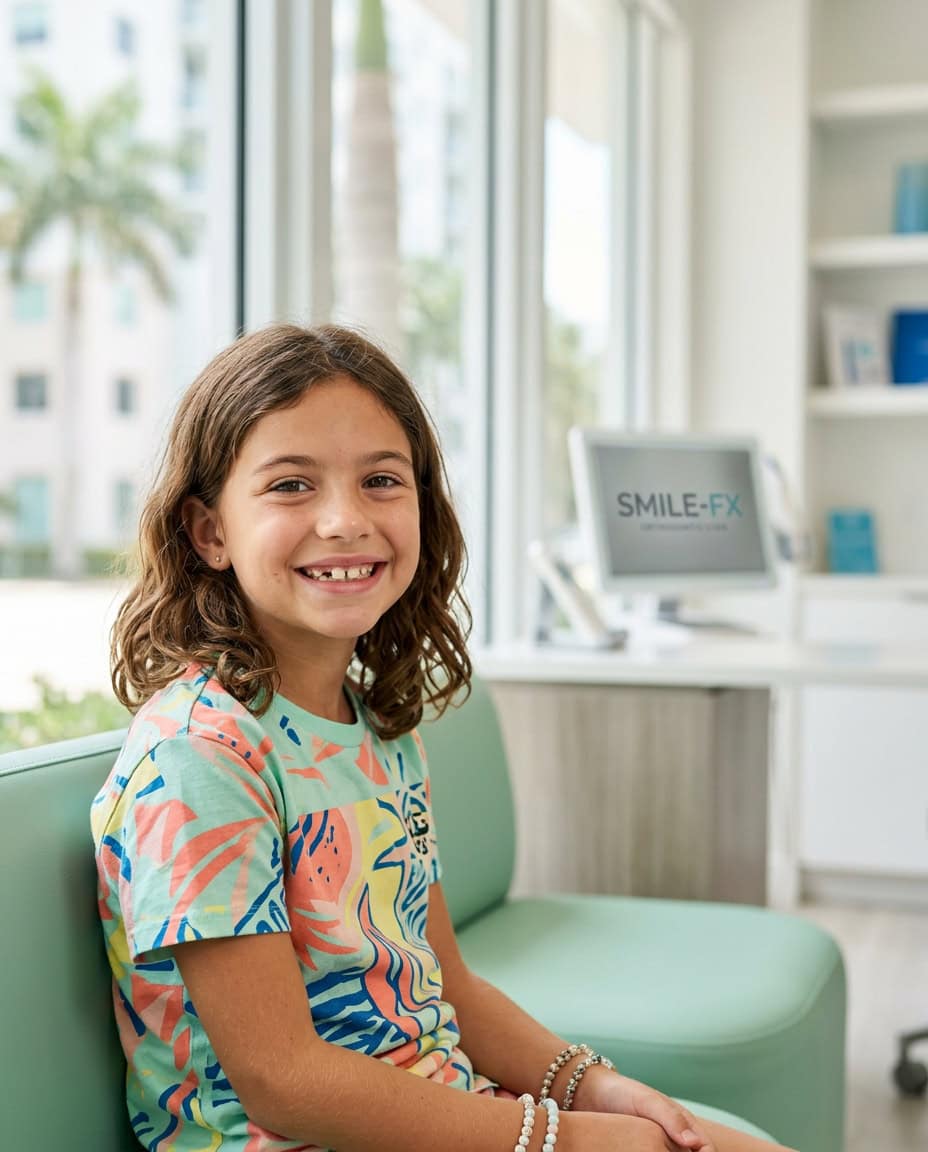
SMILE-FX has designed the evaluation experience specifically for younger patients. The studio environment removes the sterile, anxiety-inducing feeling of traditional orthodontic clinics. Instead, families step into a space that feels modern and welcoming—more "curated lounge" than clinical setting.
During the evaluation, Dr. Liang or a member of her board-certified team will:
- Review your child's medical and dental history
- Perform a visual examination of teeth, bite, and jaw alignment
- Capture 3D digital scans using optical technology (no messy impressions)
- Take advanced 3D CBCT imaging if needed to assess airway and skeletal development
- Discuss findings clearly, without pressure or unnecessary recommendations
- Outline options if treatment is recommended, including timing and approach
- Answer your questions thoroughly
The entire evaluation is complimentary, and you'll leave with a clear understanding of your child's orthodontic status and any recommended next steps.
The Difference Between Phase 1 and Phase 2 Treatment
If early treatment is recommended, it typically unfolds in two phases:
Phase 1 (Ages 7–10, approximately 12–24 months): Focuses on guiding jaw growth and creating space for permanent teeth. May include palatal expanders, partial braces, or functional appliances. The goal is to establish a foundation for proper eruption of permanent teeth.
Phase 2 (Ages 12+, typically 18–24 months): Once all or most permanent teeth have erupted, comprehensive treatment aligns every tooth and perfects the bite. Phase 2 is often shorter and less complicated if Phase 1 was completed.
Research shows that children who complete both phases typically achieve superior esthetic and functional results compared to those who begin treatment only in their teens. The biological window closes—the jaw stops growing around age 15 in girls and 17 in boys. After that, some corrections require surgical intervention.
Why Dr. Liang's Credentials Matter for Early Treatment
Early orthodontic treatment requires a specialist who understands growth patterns, airway health, and interceptive mechanics. Dr. Tracy Liang holds several credentials that set her apart:
- Diplomate of the American Board of Orthodontics (ABO)—held by only approximately 30% of practicing orthodontists. This credential reflects advanced training, board examination, and adherence to the highest safety and clinical standards.
- Fellowship in the International Academy for Dental-Facial Esthetics—fewer than 1% of orthodontists in the United States hold this credential. It demonstrates expertise in facial growth, esthetics, and integrated treatment planning.
- Specialization in airway and sleep health—using 3D CBCT imaging, Dr. Liang evaluates and treats orthodontic cases where airway quality is a primary concern, not an afterthought.
- Expertise in interceptive growth management—specifically training and experience in capturing biological windows to prevent complex cases.
When you schedule an evaluation with SMILE-FX, your child's care is overseen by a board-certified specialist with advanced credentials—not a general dentist offering orthodontics as an add-on service.
Convenience for South Florida Families
SMILE-FX's location in Miramar serves families throughout Broward County and greater South Florida, including Pembroke Pines, Weston, Hollywood, Davie, Fort Lauderdale, and surrounding communities. For families considering early evaluation, the convenience of a nearby, technologically advanced practice makes a real difference. The studio offers flexible scheduling, virtual consultations for initial questions, and efficient appointments designed around active family schedules.
Many parents from across Broward County and South Florida make SMILE-FX their orthodontic home because the quality of care and technological integration justify the drive—even for families who have other orthodontic options closer to home.
AAO Guidelines Support Early Evaluation
The American Association of Orthodontists recommends that all children have an orthodontic screening by age 7. This is not marketing. It's evidence-based guidance from the profession's governing body, grounded in decades of clinical research showing that early identification and strategic intervention improve outcomes and reduce lifetime treatment burden.
Early evaluation costs nothing and carries zero risk. A screening simply gives you information—information that might reveal an opportunity to prevent a complex problem or confirm that your child is developing normally and needs no intervention at this time.
Common Questions Parents Ask
Q: Will my child need braces if we get an early evaluation?
A: Not necessarily. Many children are monitored without treatment. Early evaluation identifies risk; it doesn't predetermine treatment. Dr. Liang recommends treatment only when she identifies a specific problem that benefits from early intervention.
Q: Is early treatment more expensive than waiting until teens?
A: Often, early intervention reduces total treatment cost. By addressing growth patterns early, you may avoid extractions, surgery, or complex later treatment. SMILE-FX offers flexible financing to make care accessible regardless of when treatment begins.
Q: What if my child is older than 10 and hasn't had an evaluation?
A: It's never too late to see a specialist. If early intervention windows have passed, comprehensive orthodontic treatment remains highly effective. Dr. Liang has extensive experience with teens and adults, including complex cases that benefit from advanced technology and expertise.
Q: How often will my child need appointments?
A: Initial evaluations are single visits. If treatment is recommended, frequency varies by phase and treatment type. SMILE-FX uses remote monitoring technology, meaning many check-ins can happen virtually, reducing office visits by up to 40% compared to traditional practices.
Next Steps: Schedule Your Child's Free Evaluation
Whether your child is 7 and has never had an orthodontic screening, or older and you're considering treatment options, SMILE-FX offers a complimentary consultation and 3D scan. This visit gives you a clear picture of your child's orthodontic status, growth trajectory, and any strategic opportunities for intervention.
You can schedule your child's free evaluation in three ways:
- Call or text SMILE-FX directly
- Request a virtual consultation if scheduling an in-office visit is inconvenient
- Visit the SMILE-FX website to book online
Families from Miramar, Pembroke Pines, Weston, Hollywood, Davie, Fort Lauderdale, and throughout South Florida trust SMILE-FX because Dr. Liang combines board-certified expertise with cutting-edge technology and genuine care. Early evaluation isn't about pressure or unnecessary treatment—it's about giving your child the best possible foundation for a healthy, confident smile that lasts a lifetime.
Book your child's free orthodontic evaluation today. The biological window is brief. Let SMILE-FX help you understand whether your child is on track—or whether strategic early intervention could change their orthodontic future.
```